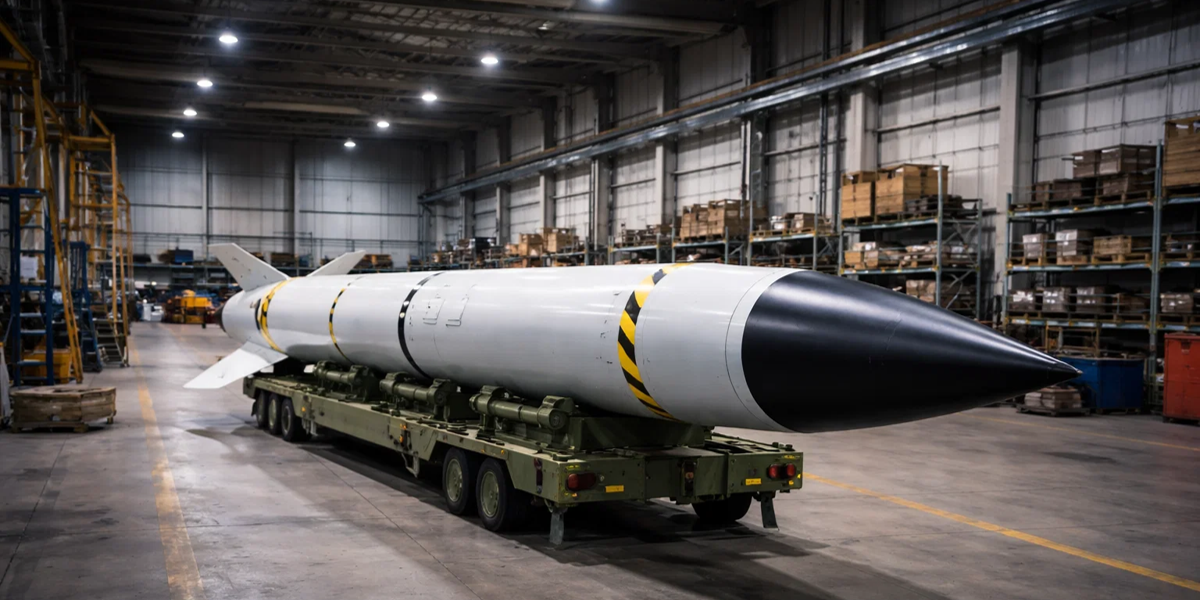
While many organisations and media firms spread fear and panic, is the threat of nuclear war as significant as widely believed?
From Whitehall to your local pub, fears of nuclear escalation in Ukraine and around the world come up in conversation relatively often. But oversimplification of international relations and an exaggeration by states regarding the power of their nuclear arsenals has helped peddle a nuclear narrative that is neither accurate nor helpful.
Where the risks do lie
Don’t get me wrong, there are some risks of nuclear war. Many states have changed their policies surrounding nuclear weapons to decrease the conditions under which they may be used.
Russia’s repeated references to tactical nuclear weapons in the context of Ukraine work to blur the formerly rigid line to separate conventional warfare from nuclear warfare. Though these weapons would be ‘tactical’ and highly localised, the risk of escalation if these weapons are used is high.
Near direct confrontation between Russian nationals and the US military aboard the Marinera oil tanker, formerly the Bella 1, has increased tensions between the states and created a risk of further escalation, which many have speculated time and time again could lead to nuclear escalation.
Many arms control agreements have also weakened over recent years, including those between Russia and NATO members. Which leads many to fear that some countries will expand their nuclear arsenals under perceived permissible grounds to do so. The key premise being the breakdown of agreements such as the New START treaty, which began in 2010, and which Russia suspended and withdrew from in 2023.

But how real are the risks?
The real risk of nuclear warfare is not as damning as many lead you to believe. While there are inherent risks, there are many factors that mitigate these risks significantly. The reality is that states across the board understand these risks and actively work to avoid escalation where it isn’t necessary. Organisations such as NATO work to put pressure on rogue states such as Russia, China and North Korea in relation to conventional military action and nuclear action.
Modern warning systems, intelligence and surveillance make surprise nuclear attacks extremely difficult for nations attempting to do so. This reduces the incentives for states to initiate first use of these weapons as global detection networks and transparency through satellite monitoring. These systems are multi-layered and not dependent on only one type or variation of sensor – increasing reliability and disincentivising. This multi-layered approach reduces the risk of false positives significantly. Meanwhile, the analysts and data experts who use the data received from such tools are usually slow and conservative in analysing the data and responding to further mitigate any risk of wrongly responding to a false positive.
Nuclear arsenals are also not uniformly reliable, modern or fully operational in many of the states we perceive to be nuclear threats – despite how these weapons are displayed or leveraged in public discourse. These arsenals require constant maintenance and testing, which means a large number of highly specialised professionals are needed, which may also be hard to procure.

Many nuclear-armed states actually operate mixed-quality stockpiles, where only a handful of their weapons are believed to be fully deployable at any given time. Warheads have a tendency to degrade over time, while delivery systems age and other technical machinery needed to deliver such warheads remains highly vulnerable to failure.
Authorisation for such weapons is often consolidated at the very top of the political chain, too. Granting permission to use such weapons is often a unique privilege of senior government officials, whether that be presidents, prime ministers or defence ministers. These systems are specifically designed in a way that slows down the process to prevent accidents and ensure that using such weapons is the correct call at any given time.
Although mutually assured destruction is becoming an archaic term and logic left in the past, the abundantly clear ability of one nation being able to respond to another’s actions with similar levels of destruction remains an effective way to disincentivise the first move of any nation to begin a nuclear conflict – because nations like Russia know that if they attack a country such as the United States with a nuclear weapon, the devastation they’d be subjected to wouldn’t make the encounter worthwhile for any party.
Why states amplify nuclear rhetoric themselves
Nuclear rhetoric is an easy, cheap and effective way for governments across the globe to warn one another of disapproval or condemnation, even when conventional military weakness may be an issue for a state. For example, Russia’s tactical nuclear weapons rhetoric regarding Ukraine works, not because they will deploy nuclear weapons to the region, but because it reminds nations around the world, that although Russia may be struggling to actually take control of a perceived weaker nation through conventional warfare, their nuclear arsenal still ensures that they can defend themselves from any aggression from other states, whether that be the US, or any other of Russia’s adversaries.
Why the media jump on the fearmongering bandwagon
Modern media ecosystems often reward worst-case framing. Nuclear war is an emotive subject with universal condemnation from those who consume the news around the world. Discussing the risk of nuclear annihilation and destruction is almost guaranteed to win clicks, secure attention and get high engagement. Although this isn’t always through malicious intent, with competitive news cycles and simplified expert commentary designed for even the most politically uneducated to understand, it’s no wonder that complex geopolitical stories are simplified down to the worst-case-scenario perspective of ‘x situation may cause a nuclear war’.
Nuanced assessments of probability, deterrence stability, or institutional safeguards don’t easily translate into headlines. Meanwhile, apocalyptic framing often does. People understand the risks of nuclear weapons, and apocalyptic framing is something that is highly emotive and easily understood by consumers of the media. This explains why the risk of nuclear conflict is often presented as imminent as opposed to structural.
With the consequences of nuclear disaster being widely understood by populations aware of the disasters in Nagasaki, Hiroshima, Chernobyl and Fukushima and with a population captivated by post-apocalyptic scenarios in pop culture, such as those presented in media successes such as the Walking Dead, 28 Days Later or more recently Prime’s Fallout series, talking about the risk of apocalypse and destruction is not only of news interest but is also a pop culture interest – and pop culture sells.

Should we all be worried?
To put it simply: no. The reality is, the risk of nuclear war is incredibly low and as regular citizens, there is very little we can do to prepare for it, or if it happens, survive it. Yes, there are people who do prepare for these sorts of disasters, but with such high costs in doing so and such low risks of such an event actually happening, the cost-benefit analysis is clear that it’s merely not worthwhile. So next time the media tells you that some mad dictator somewhere has threatened the US with a nuclear strike, just remember all the factors working against that and why the media might be selling this narrative to you.