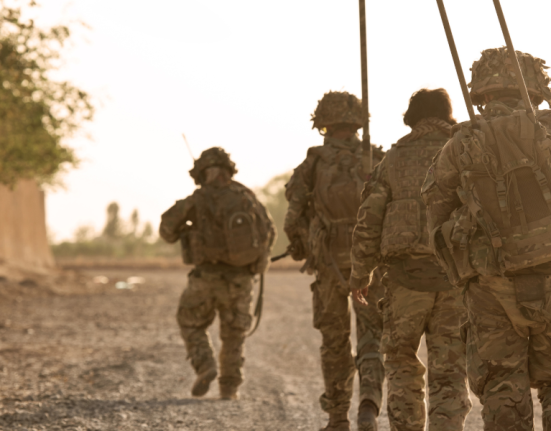
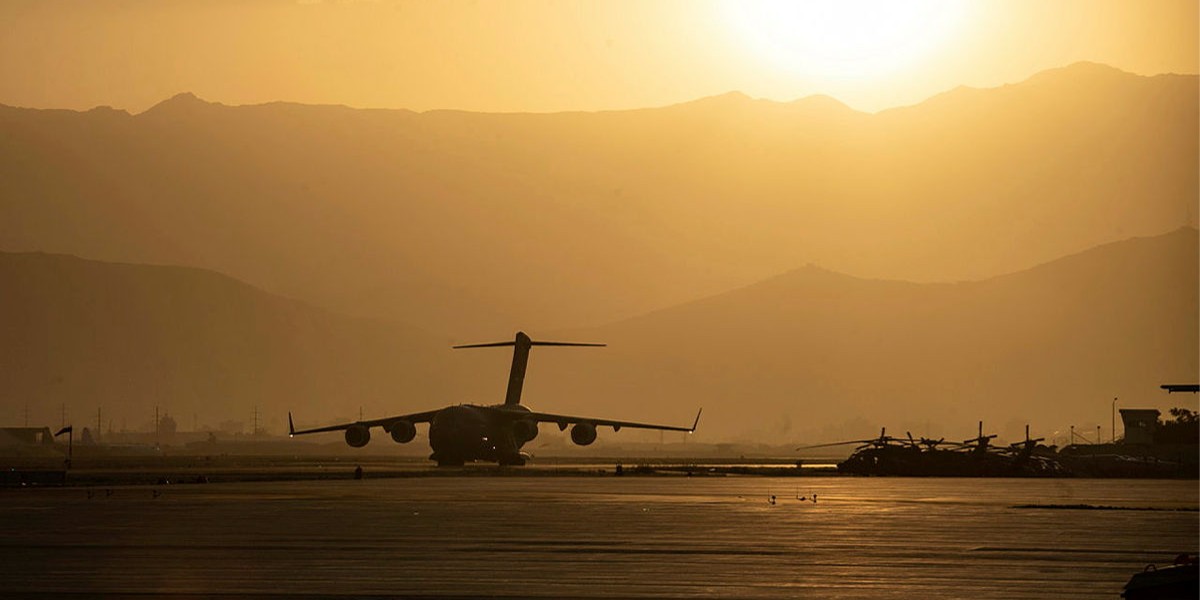
In 2021, much of the world watched in horror as Afghanistan slowly fell to the Taliban, with Kabul eventually falling in mid-August.
Immediate shock
Almost immediately after the nation fell, Afghanistan’s GDP fell with it. With an estimated decline of 20-30%. International aid and security spending cuts meant that economic activity generally fell significantly – and rapidly.
Following the takeover, the United States froze around $9 billion of Afghan central bank reserves, constraining liquidity and banking operations generally.
With development and humanitarian aid from the international community collapsing, much of the capital used to fund government services dried up.
These immediate shocks meant long-standing structural weaknesses emerged in the Afghan economy and led to changes in the shape of the economy in the long run – something not typical in economics, but not surprising given Afghanistan’s unique and bleak situation.
Structural weakness
Security has stabilised in Afghanistan after years of civil war, conflict and insurgency, but the economy has remained fragile and has struggled to grow significantly. Low growth, unemployment, poverty and economic hardship have plagued the economy since the nation’s capital fell.
Joblessness has remained high since the nation’s capital collapsed in August 2021. Surveys have found that the vast majority of Afghans have found it difficult to make ends meet since the Taliban’s takeover.
With a distinct lack of private investment and the drop in formal sector jobs supported by international donors or security actors, it’s no wonder that so many have found themselves struggling to get a job, keeping many Afghans in a perpetual state of poverty.
Modest signs of recovery
Despite the economic hardship facing the nation, some macroeconomic indicators have shown a degree of limited recovery. In fact, according to the World Bank’s December 2025 Development update, Afghanistan’s GDP is projected to grow by about 4.3% in 2025, following a 2.5% growth in 2024.
Inflation has not appeared to be a problem for the Afghan economy either, remaining relatively stable with stable food prices and sensible currency behaviour. However, prices still remain high and productivity is notably low, with the nation’s economy not being productive enough to generate strong livelihoods at scale.
Humanitarian crisis continues
While the macroeconomic figures may suggest a country of increasing prosperity and economic stability, the feeling for Afghans on the ground is starkly different. Social and human impacts of the takeover are severe and worsening daily.
Over 17 million Afghans, around 40% of the population, face acute food insecurity. This is up significantly from last year, when 14.8 million Afghans faced acute food insecurity. As winter approaches, this crisis is expected to only get worse. The World Food Programme has proven to only be able to reach a fraction of the population too, meaning many of those in need never get the support essential to survival.
Keeping comfortable in the months ahead may prove difficult for some Afghans. With cold winter temperatures in parts of the country sometimes hitting temperatures as low as -35 degrees Celsius in extreme cases, the nation’s winter hits harsher than many expect, given the stereotypical perception of the nation as an incredibly hot place.
Political economy
Although the Taliban regime can appear to claim some economic management successes like fiscal responsibility through relatively sensible tax revenue and public work projects, analysis of these suggests that these claims overstate successes and the progress attached to that progress.
Transparency is also an issue blighting the nation. Many major investment deals and infrastructure projects, especially those relating to oil often have shady contracts and lack follow-through amid significant security and governance challenges.
Regional powers and neighbouring countries are showing some limited interest in economic engagement, but lack broader international recognition and sanctions continue to constrain large-scale investment from taking place in the country, to the detriment of regular citizens.
Overall analysis
The Afghan economy since the fall can be split into 3 main time periods. Firstly, the period immediately after the fall of Kabul from 2021-2022 where GDP dropped drastically, aid dried up and employment decreased.
Then there was the period from 2023-2024 where the Afghan economy achieved some level of stability, but at low output levels. During this period there was also some improvement in tax revenue, but persistent poverty continued.
This year on the other hand can be split even further. Although evaluating the Afghan economy this year portrays a positive picture with some growth, in reality living standards remain low with deepening hunger and humanitarian insecurity, which highlights the limits on the recovery.
Overall, it’s clear that the Afghan economy is highly complicated. Complex supply chains, regional disparities and geographical challenges result in a nation riddled with inequality, famine, hunger and poverty. But with their economy on a slow incline to recovery. Though we cannot be certain on all of the economic changes that will occur in the region in 2026, one thing is for certain, the humanitarian crisis will almost certainly continue.