Data shows ‘de-dollarisation’ – a gradual retreat from the greenback – is under way
The US dollar’s centuries-long dominance at the heart of the international financial system is under mounting strain, with fresh data and market trends pointing to structural shifts that investors can no longer ignore.
Slide in global reserves
According to recent International Monetary Fund figures, the share of global foreign exchange reserves held in US dollars has fallen sharply from more than 70 per cent at the turn of the millennium to roughly 40 per cent today.
That marked decline highlights a trend central banks describe as “de-dollarisation”, a gradual retreat from reliance on the greenback in favour of diversified reserves.
The dollar has been the global reserve currency since World War II
For decades the dollar’s role as the world’s primary reserve currency provided investors with certainty around liquidity, stability and pricing benchmarks across asset markets.
The post-World War Two financial architecture cemented the currency’s position, with the US at the helm of institutions designed to manage global trade and capital flows.

The rise of China
But much has changed in the geopolitical and economic landscape. China, now the second-largest economy in the world, has expanded its influence in both trade and finance, stimulating demand for alternatives to the dollar.
Central banks from Europe to Asia have taken incremental steps to diversify holdings, while sanctions and political friction associated with US policy have reinforced the perceived vulnerability of dollar-dependent systems.
Rate cuts expected Stateside
The Federal Reserve’s anticipated monetary loosening in 2026 is another factor influencing currency markets. Multiple rate cuts are expected by analysts, a shift away from inflation-fighting towards supporting employment.
This contrasts with rate policies in Europe and Japan, potentially weakening the dollar against major rivals such as sterling and the euro.
Precious metals, notably silver and gold, on the up
In this context, precious metals have drawn fresh investor interest. Gold and silver have surged as safe haven assets amid concerns over dollar depreciation and geopolitical risk.
Precious metals often benefit when confidence in traditional fiat currencies falters, and analysts note growing allocations into bullion by both institutions and private investors. Recent reports show gold hitting record highs while silver also rallies strongly, reflecting hedging behaviour in volatile markets.
Crypto
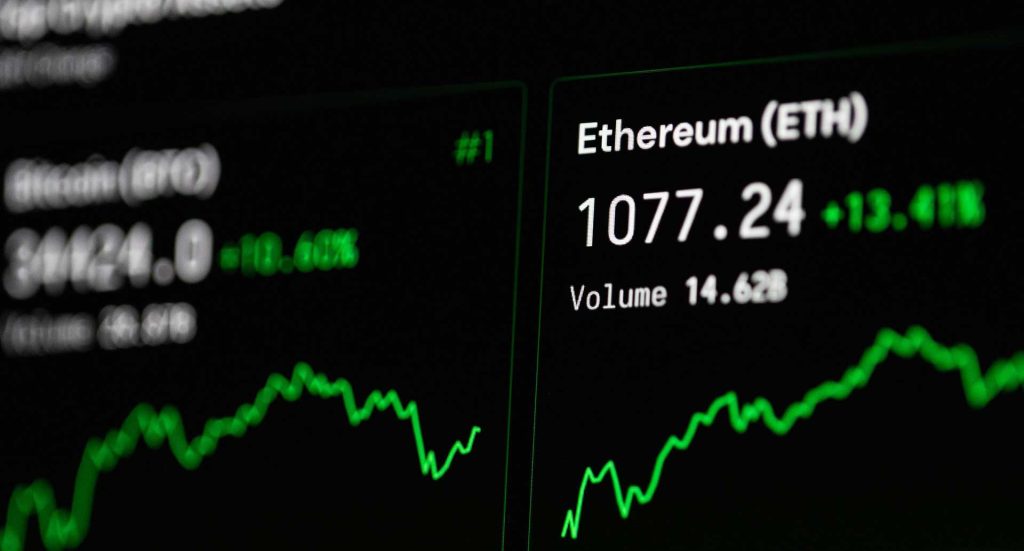
Cryptocurrencies add another dimension to this unfolding narrative. Bitcoin and other digital assets have increasingly been viewed by some investors as non-correlated stores of value, capable of operating independently of traditional monetary systems.
The surge in stablecoins, particularly those pegged to the dollar, illustrates how digital finance still intersects with US currency hegemony even as decentralised finance gains traction.
Renminbi hindered by limited convertibility
Despite persistent talk of a dollar replacement, market analysts and central bank research underscore that no single currency currently offers a fully credible alternative. The Chinese renminbi remains hampered by limited convertibility and geopolitical scepticism, while regional blocs and blended currency mechanisms are still emerging.
Era of unquestioned dollar dominance is on the wane
Investment strategist Nigel Green of the deVere Group described the shift as an evolution rather than a revolution, warning investors that the era of unquestioned dollar dominance is fading, which carries implications for global portfolios, asset allocation and risk management strategies.
For now, the US dollar remains central to global finance, but its preeminence is increasingly contested. Investors with a global horizon must navigate a multi-currency world where diversification and alternative assets are no longer optional but (and I’m not IFA btw) advisable.
NOTE: This is strictly the view of this columnist and should in no way be seen as independent investment advice.