
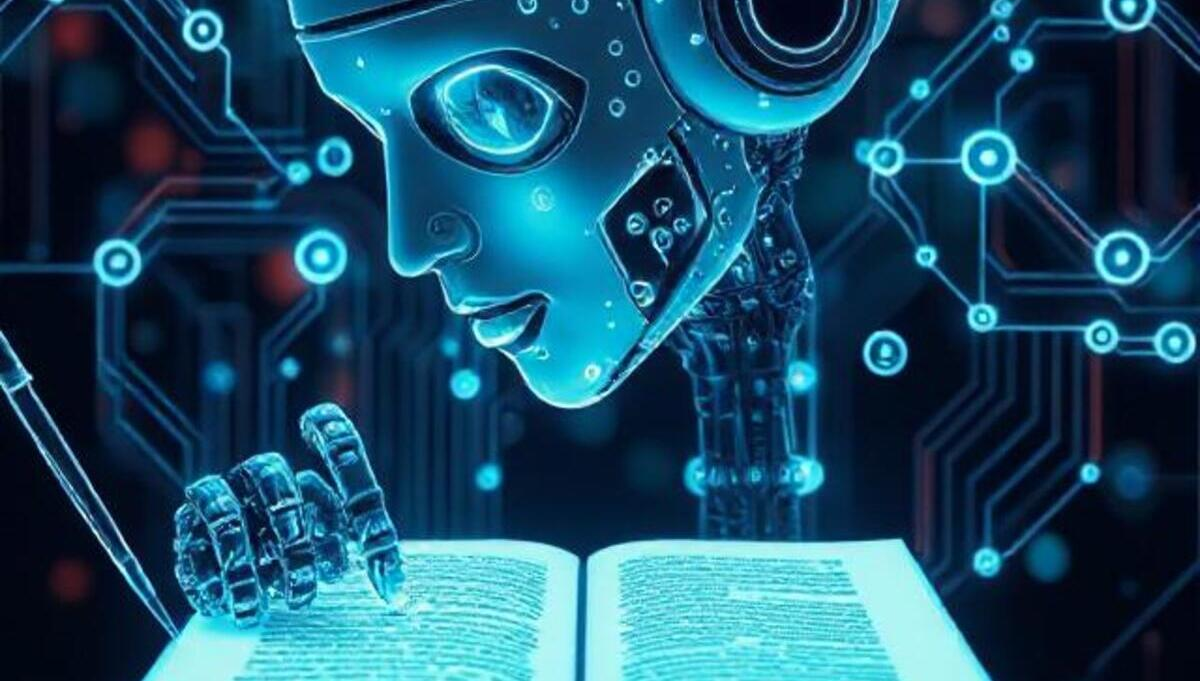
The mesmerising power of AI
The rise of artificial intelligence in the literary world is nothing short of astonishing. It is capable of generating prose with remarkable speed, creating verse that mimics rhythm and rhyme, and even offering insights into human emotion. As someone who has grown up in a family steeped in literature, I have always been acutely aware of the delicate artistry that goes into writing. Yet, I have found myself mesmerised by the potential of AI.
The timeless power of words chosen by human writers
As a literature student who has spent countless hours immersed in the works of Christopher Marlowe, Shakespeare, and the timeless elegance of Jane Eyre, I understand the weight of words. I know how a single sentence can move a reader, awaken a memory, or stir a dormant feeling.

I’ve recently read some excerpts generated by AI. The sentences flowed. The wit shone through. On some occasions, the phrasing struck me as profound, elegant, even inspired. I realised almost with a shiver that this technology could indeed dominate certain aspects of writing. In its hands, prose could become polished, structure precise, and ideas swiftly communicated in ways that many human writers might take days or weeks to achieve.
AI mimics human styles and wit
AI is brilliant. Its speed, adaptability, and seemingly limitless access to knowledge make it a formidable presence in the literary landscape. It can mimic styles, produce content tailored to readers, and even produce something that feels as though it understands humour, tragedy, and longing. It is easy to see how it might replace certain formulaic writing tasks or assist authors in refining their work. Its intellect feels boundless and its potential – terrifyingly vast.
And yet, for all its capability, AI cannot fully inhabit the human soul. It can analyse patterns and replicate emotion. It can suggest wit or poignancy, but it does not live, breathe, or suffer. It cannot walk the streets of a city that shapes its voice. It cannot linger over a memory until it becomes art. It cannot love or mourn in the way that informs the deepest literature. It can approximate the surface of our words, but it cannot feel the hidden weight that gives them life.
Literature penned by humans is sacred
This is why literature has always felt sacred to me. Growing up surrounded by the echoes of my family’s stories, I have seen the labour behind every paragraph. My father, who released three books last year that were widely celebrated, writes with meticulous care, shaping sentences until they carry resonance beyond the page. My grandmother, whose work has inspired readers across continents, created worlds from a language that reflects emotion, culture, and history. Their words are not merely sentences strung together. They are vessels of experience, memory, and imagination. AI may mimic that surface, but it cannot replicate the lived reality that informs it.
Christopher Marlowe
I have often asked myself whether a machine could ever evoke the same awe that I feel when reading lines such as, “Was this the face that launched a thousand ships, and burnt the topless towers of Ilium?” This is the kind of sentence that lingers, that travels with a reader long after the book is closed. The weight of myth, the poetry of the human voice, and the subtle interplay of imagery and emotion are not things a program can truly grasp. It can create versions, echoes, and impressive approximations, but the authenticity, the imperfection, and the tiny heartbeat that gives language its power remain uniquely human.
While a useful aide, AI will never be able to hope, dream or grieve
AI has shown me that it can enhance writing. It can suggest structures I might not have considered, help untangle cumbersome phrasing, or offer a fresh lens on a familiar trope. In the hands of a writer, it can become a tool and a collaborator rather than a replacement. There is a fundamental difference between assisting and replacing. AI can never truly own a story. It does not dream, hope, or remember in the way that humans do. It does not carry centuries of literary tradition within its circuits and it does not wrestle with the language that has shaped our emotions and identities.
For all the brilliance and promise of AI, my conviction is clear. Writers and authors will never be obsolete. Our words are not just arrangements of letters. They are acts of creation, rebellion and revelation. They reflect our histories, our joys and our griefs. They are tangible evidence of consciousness, of living through a world that machines cannot inhabit. AI may dominate efficiency, mimic style, or produce verse that is technically impressive, but it cannot replace the human impulse to create, to interpret and to wrestle with meaning in a way that transforms both writer and reader.
‘Literature is experience shaped by the uniqueness of the human soul’
AI can push the boundaries of imagination by offering new possibilities. But it will always be the reflection of something it cannot fully experience. Literature is experience. It is memory, perception and intuition shaped by the uniqueness of the human soul.
So when I think of AI, I am filled with awe, and yet with a deep, comforting certainty. Writers will continue to shape the human spirit in ways no machine can. They will continue to wonder, to dream, to stumble, to rise and to write lines that carry the weight of love, loss and triumph across generations.
“To be, or not to be: that is the question.” And in that question lies the heart of what makes us human. AI may try to answer, but only we can feel it, live it, and write it into eternity. Literature is ours. It belongs to no algorithm. Every sentence we craft is a spark that warms the soul, a smile shared across time, a whisper of our humanity that no machine can ever truly hold.
I end with a picture of a note my teacher gave me in 9th grade, a reminder of why words written by human hands will always matter.








10 Comments