
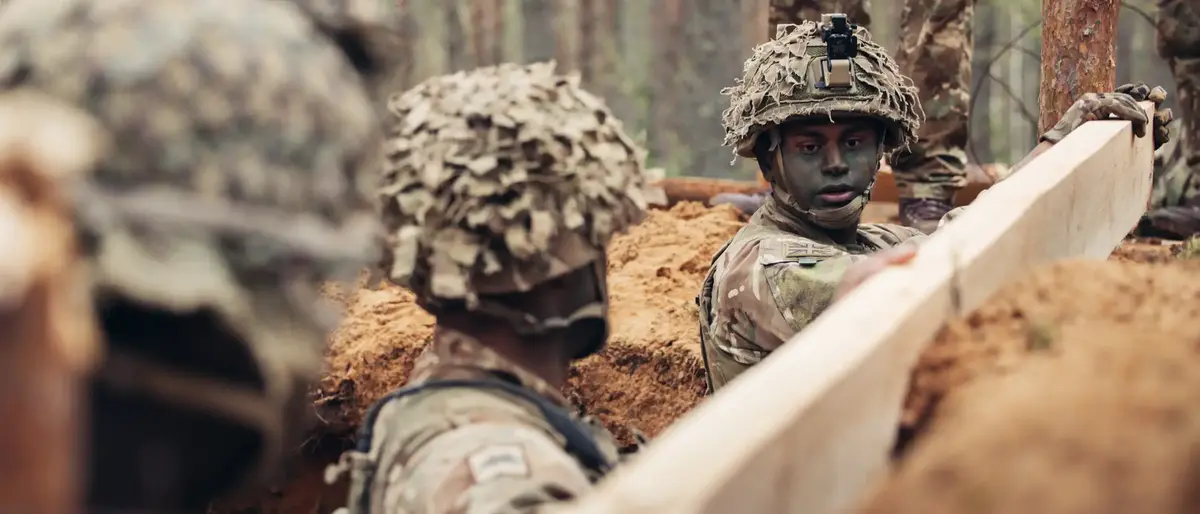
It sounds like a winner – but time will tell if it really is the real deal
The government’s new military gap year scheme has been unveiled with great fanfare, promising opportunity, discipline and a pathway into the Armed Forces for young people.
On paper, it sounds bold: a paid placement for under‑25s, launching in 2026, starting with 150 recruits and scaling to more than 1,000 a year. The Army, Navy and RAF will each offer their own version, from 13 weeks of basic training to year‑long introductory programmes.
The sales pitch
Defence Secretary John Healey said the scheme is intended to “give Britain’s young people a taste of the incredible skills and training on offer across the Army, Royal Navy and RAF.”
As families discuss future plans over the festive period, he said he hoped the Armed Forces will be seen as “a serious and exciting option” for young people across the country.

This is not a silver bullet
With the West Midlands home to thousands of serving personnel, veterans and defence‑related industries, the region is expected to watch the rollout closely, particularly as the scheme scales up to its larger annual intakes.
But let’s be honest. A scheme like this cannot be treated as a silver bullet for a generation that has been let down by years of under‑investment in the systems that shape their lives.
Time will tell if this style or substance
If we’re serious about giving young people a future worth fighting for, then a military gap year is only one tile in a much bigger mosaic.
The West Midlands knows this better than most. We’ve seen what happens when opportunity dries up, when youth services disappear, when courts are backlogged, when policing is stretched thin and when the pathways that should lift young people up simply aren’t there.
A braver, bolder conversation is required
This is where the conversation needs to be braver.
A nation cannot build resilience by investing in one institution while leaving others to creak under pressure. A strong Armed Forces requires a strong society behind it, including a justice system that works, where policing is properly resourced, where education and skills are funded for the long haul and where young people can see a future that extends beyond the next headline.
The military gap year may well offer structure, confidence and valuable skills. It may inspire some to serve longer. But if we want real, generational change, we need to think bigger. We need to map out what this country should look like in 20 or 30 years, not just in the next spending review. And then we need to invest consistently, courageously and at scale.
If delivered effectively, this could benefit the whole of society
Because opportunity is the best form of prevention. If we want safer streets, stronger communities and a more resilient nation, we must invest in every rung of the ladder, not just the one that makes the news.
The scheme is a start. But it will only matter if it sits within a wider, long‑term commitment to rebuild the systems that shape young lives. Anything less is just another sticking plaster on a generational wound.