Birmingham experts pioneering autoimmune disease treatment breakthrough
- Nearly £4 m in Wellcome Discovery Award funding for Birmingham research team
- Including newly announced Nobel Prize winner, Prof Shimon Sakaguchi
- Globally significant work that could save millions of lives
Illness-combating cells are being removed from autoimmune liver disease sufferers and multiplied before being returned to stop the body attacking itself.
The revolutionary new treatment method – cellular therapy applying regulatory T cells, using the body’s own cells to heal itself – could make arduous steroid treatment, with its rough side-effects, and liver transplantation, a thing of the past for many patients.
Once deployed, the pioneering therapy promises to save millions of lives worldwide.
Multiplying the body’s regulatory T cells
Cellular therapy involves isolating a patient’s regulatory T cells, and propagating more of them to desired numbers and characteristics before infusing them back into the patient’s body to provide a natural boosted defence against the bad cells.
To achieve effective cellular therapy, better understanding of regulatory T cells biology in human tissue, such as the liver, is required.
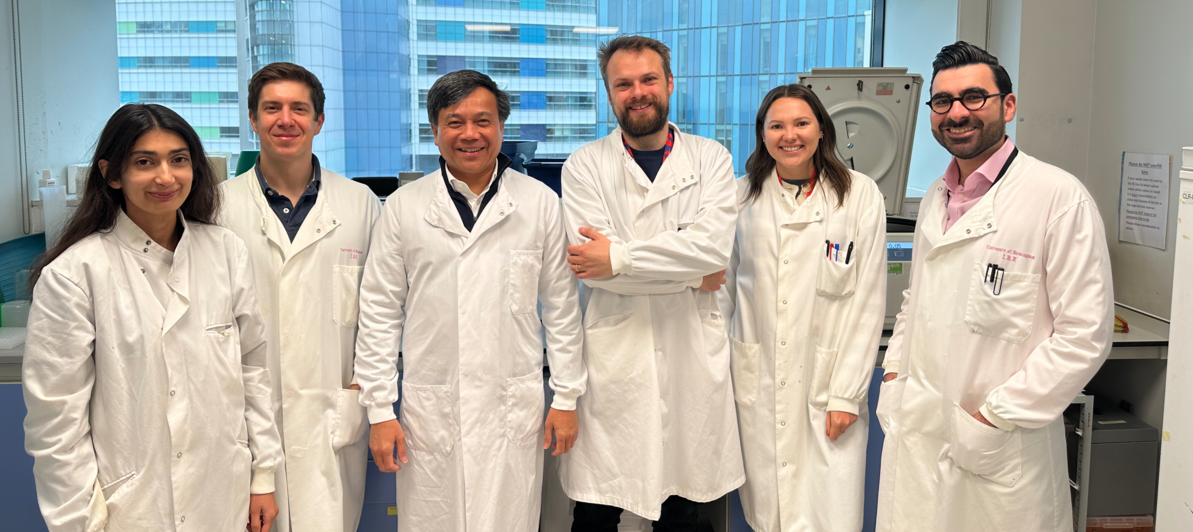
The groundbreaking discovery to translational work is being led by Ye Htun Oo and team, professor of autoimmune liver diseases and translational hepatology at the College of Medicine and Health, which is led by Prof Neil Hanley of the University of Birminghan (UoB).
‘Generating more good guys to fight the bad guys’
“We’re generating more good guys (regulatory T cells) to go in and defeat the bad guys (cells that get confused and attack other cells),” said Prof. Oo, a naturalised Brit who moved to the UK from Burma in 1997.
“Regulatory T cell therapy means we can give patients better personalised treatment without the damaging side-effects of steroids, Azathioprine, or mycophenolate.
“This could save many lives. People may no longer need liver transplants. It also bodes well for people with autoimmune disease is such as inflammatory bowel disease, multiple sclerosis, rheumatoid arthritis and other autoimmune illnesses.”
£3.83m in funding from Wellcome Discovery award
Professor Oo’s project recently won the Wellcome Discovery award of £3.83m to fund the next eight years of fundamental research that will lead to clinical trials to bring the cellular therapy for autoimmune liver diseases, and other autoimmune conditions, closer to becoming an everyday treatment for patients.
In a stunning coincidence, one of the members of Prof Oo’s project team, Professor Shimon Sakaguchi, of the University of Osaka in Japan, was this month awarded a Nobel Prize in recognition of his trail-blazing work in this area. In 1995 Prof Sakaguchi discovered regulatory T cells.
Prof Oo met Prof Sakaguchi at a conference in 2007 while he was working on his PhD on the use of T cells in treating liver disease.
“At the time I was a no-one – but I was very persistent,” said Prof Oo.
In 2017, after Prof Oo became the first British scientist to visit Prof Sakaguchi’s lab in Osaka, the pair published a research paper together.
Nobel Laureate Prof Sakaguchi is a UoB degree-holder
In 2019, Prof Oo persuaded his Japanese mentor to come to Birmingham where he was awarded an honorary Doctor of Science degree by the University of Birmingham.
Prof Oo said: “It’s worked out rather wonderfully. One week we get awarded nearly £4m. The next week one of our team investigators becomes a Nobel Laureate. That’s a remarkable chain of events – and we can legitimately say Prof Sakaguchi is a UoB scientist because he holds science degree from Birmingham.”

200 trials under way worldwide
Around 200 trials are under way worldwide currently on regulatory T cell therapy, with different teams working on different areas. Prof. Oo is leading the liver disease team.
Professor Sakaguchi said: “This exciting collaborative award will allow us to work together to understand regulatory T cells biology and progress towards future therapy with these cells for patients with autoimmune liver diseases and multi-organ autoimmunity.”
The UoB-led autoimmune live disease team is made up of the following experts:
- Programme Lead Prof Ye Htun Oo – College of Medicine and Health, University of Birmingham
- Co-investigator – 2025 Nobel Prize winner Professor Shimon Sakaguchi, from Osaka University
- Co-investigator – Prof Graham Anderson – University of Birmingham
- Co-Investigator – Professor Calliope Dendrou – University of Oxford.