
Why most Gen Z believe the British monarchy should be put in the dustbin of history
As we head into 2026, the monarchy is heavily criticised and unpopular, especially among Gen Z Britons.
For Gen Z – those born between 1997 and 2012 – the monarchy is no longer viewed as a powerful symbol of protection and national heritage, but rather as a “democratic deficit” – an example of hypocrisy in a country that preaches the idea of democratic meritocracy.
Younger people are no longer buying into the idea of the royal family. There is a serious divide within the generations. According to a YouGov survey, 80% of over 65-year-olds want the monarchy to stay compared to 37% of 16 to 24-year-olds.
There are many reasons why the monarchy has experienced a fall from grace.
The ex-prince Andrew fallout
The former prince, Andrew, is widely disliked due to his connection and friendship with convicted sex offender Jeffrey Epstien.
Andrew Moutbatten-Winsor, as he’s now known, maintained a long-standing friendship with the sex offender even after his 2008 conviction. He lied about it, but then it all came out in old emails. We all heard the news.
In the court of public opinion, this was viewed as a betrayal of public trust. Without being too old-fashioned about it, if taxpayers’ cash is funding your lifestyle, it stands to reason that you should hit minimum behavioural standards.
That 2019 Newsnight interview
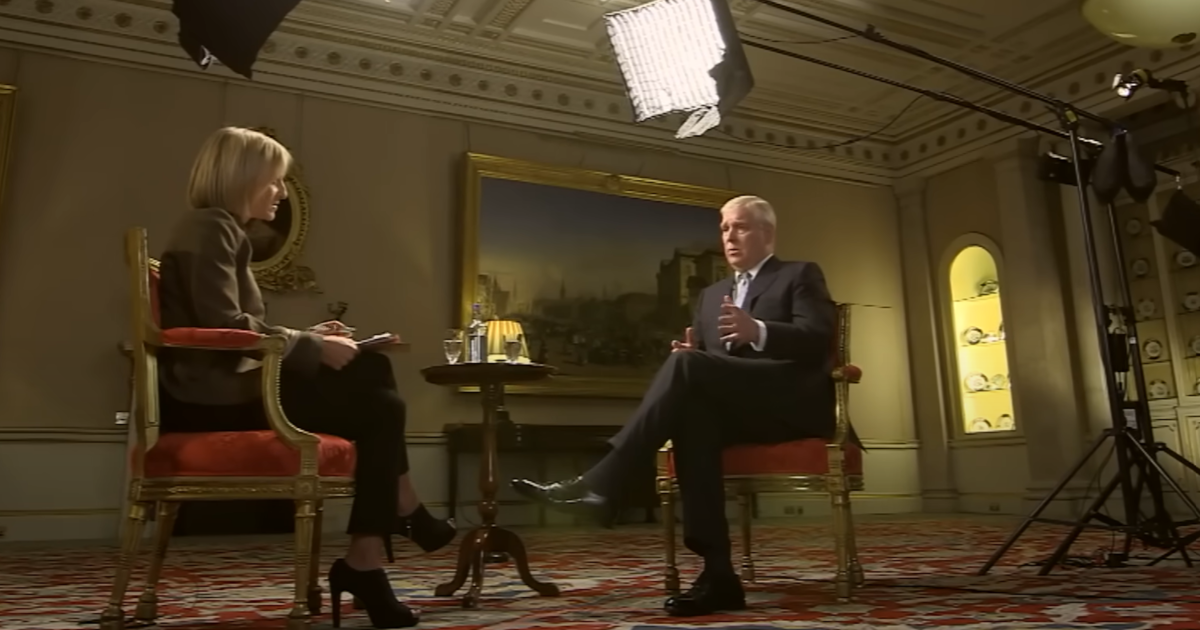
The turning point for many people was Andrew’s disaster class 2019 Newsnight interview, where the former prince demonstrated a complete lack of empathy for Epstein victims and confirmed what many suspected – that he dwells in a cocoon of privilege and has lost touch with reality, including the masses who help bankroll his lifestyle.

Then came the Virginia Giuffre’s allegations. Giuffre accused Andrew of sexual abuse when she was 17 and he was 42. In her book ‘Nobody’s Girl,’ she details an encounter where she describes how she was sex-trafficked by Epstein to the former prince.
Andrew paid Giuffre, since deceased, an undisclosed financial settlement to end her civil sexual assault lawsuit in 2022 – reportedly around $12 to $20 million. While it must be said that in the eyes of the law, Andrew is innocent, for Gen Z, this settlement wasn’t a resolution; it was viewed as buying her silence.
This unedifying saga added to Gen Z’s negative view of the monarchy as out of touch, tone-deaf and belonging to a bygone era.
Officially, £132m – in reality more than £500m
Another frustration for Gen Z is the million sovereign grant, which in 2025/26 is £132 million – a taxpayer-funded chunk of change that has risen 53% on the previous year.
At a time when we are living in a cost-of-living crisis and people are living paycheck to paycheck, this increase seems ridiculous to the common person.
The sovereign grant isn’t the full extent of it either. Campaign groups such as ‘Republic’ argue the true cost is actually closer to £510 million annually, which includes costs for state buildings and security details. Republic says this could fund 13,000 new nurses and teachers.

Huge income from the Duchies of Lancaster and Cornwall
There is also a major lack of transparency when it comes to the Duchies of Lancaster and Cornwall.
They have a vast amount of land and assets that generate tens of millions in private income for the King and Prince of Wales.
Exempt from IHT – ‘hypocrisy’
The inheritance tax loophole is that while the average British citizen faces a 40% inheritance tax on estates over a certain threshold.
The monarchy is entirely exempt. This, simply put, is hypocrisy. No man or woman should be above the law.
The King pays voluntary tax. Critics point out that he is not legally required to do so. This plays badly with young people as they enter a jobs market where they are paying high taxes and high rents.
But this problem isn’t just where the money goes; it is the fact that we commoners have no say in how it’s spent.
Democratic deficit
The most popular reason for disliking the monarchy is the institutional lack of democracy.
The UK officially has a constitutional monarchy – an institution founded on hereditary privilege where positions of power result from bloodline.
This is the polar opposite of the meritocracy model taught to young people in schools.
The ‘referee with no accountability’
People defend the monarchy, saying it acts as a ‘constitutional referee’ staying above parliament to ensure political stability.
However, this view is criticised. The royal prerogative – the idea that the Crown has the power to declare war, appoint Govt ministers and sign treaties. However, the King no longer does this is. His role is ceremonial. The task is done by the Prime Minister. This makes the public wonder what the point of the Crown is.
Also, we are stuck with our royals for life. They can’t be voted out of office. When Andrew was involved in his scandals, we were still paying for him. While he has now fallen from grace and had many of his unearned privileges removed, he is still funded by the taxpayer. If an elected politician behaved as he has done, he’d be long gone.
‘Cosplay for the elite’
The younger generation values equality for all. The pageantry of the monarchy is strongly viewed as ‘out of touch’. 2025 polling shows 51% of the general population still support the monarchy and that number drops to 31% for people under 25.
The KCL youth poll showed that when asked about an absolute monarchy, the majority rejected it. They preferred an elected head of state
“We are told we live in the ‘Mother of all Parliaments,’ yet our Head of State is chosen by birthright. You can’t call yourself a modern democracy while maintaining a system of inherited absolute authority,” was a common Gen Z sentiment from the 2025 ‘Future of Britain’ report.
The tourism myth
One common defence for the monarchy is that they bring in more than they cost through tourism. However, this has been criticised by many people.
Data from Visit Britian shows that people visit places like Tower of London and Buckingham Palace for their history, not the current royals. This means that if the monarchy was abolished, people would still visit these places and we, the public, would save a lot of money.
In France, where the monarchy was abolished in 1792, people still visit their own palace and jewels.
Critics further argue that if we got rid of the royals and opened Buckingham Palace to the public, revenues would increase in much the same way the Louvre in Paris generates more money than if it had remained a private residence.
The money earned from the royals through tourism is less than 0.01% of the UK’s GDP. For a public with housing problems and cost-of-living challenges, a ludicrously expensive ‘mascot’ for the sake of 0.01% seems like a bad idea.
The Crown and decolonisation
For Genz, the Crown isn’t just a symbol of power and protection; it is a symbol of colonialism. In 2025, many countries are calling for reparations.
From the Mau Mau uprising in Kenya, which killed 11,000 people, and the extraction of wealth from India and the Caribbean, the British Crown was the legal authority under which these actions were ordered. Many young people argue that we cannot celebrate the institution when the institution has committed heinous crimes, damaging multiple countries.
There is an ongoing debate over the Koh-I-Noor diamond and the Great Star of Africa. Many argue they should be returned to their places of origin. In a society that views looting and stealing as a crime, the King wearing these priceless gems is arguably a brazen display of stolen goods.
Push towards independence
Many Caribbean nations, such as Jamaica and the Bahamas, are moving toward becoming republics. They aren’t just leaving for “independence”; they are explicitly blaming the Crown for the lack of systemic support following centuries of exploitation.
The monarchy is not falling because of a single scandal or a single tax break. Rather, it has become a historic symbol of systemic failure. It is outdated. It is not fit for purpose in 2026.
History’s dustbin
In a time when people want transparency, the monarchy is secretive. The people want equality, transparency and meritocracy.
It is time we consigned this outdated relic to the dustbin of history.