The Government’s approval of the Jackdaw gas field may have answered one major question about the future of North Sea energy, but a far bigger decision still looms on the horizon.
That decision is Rosebank.
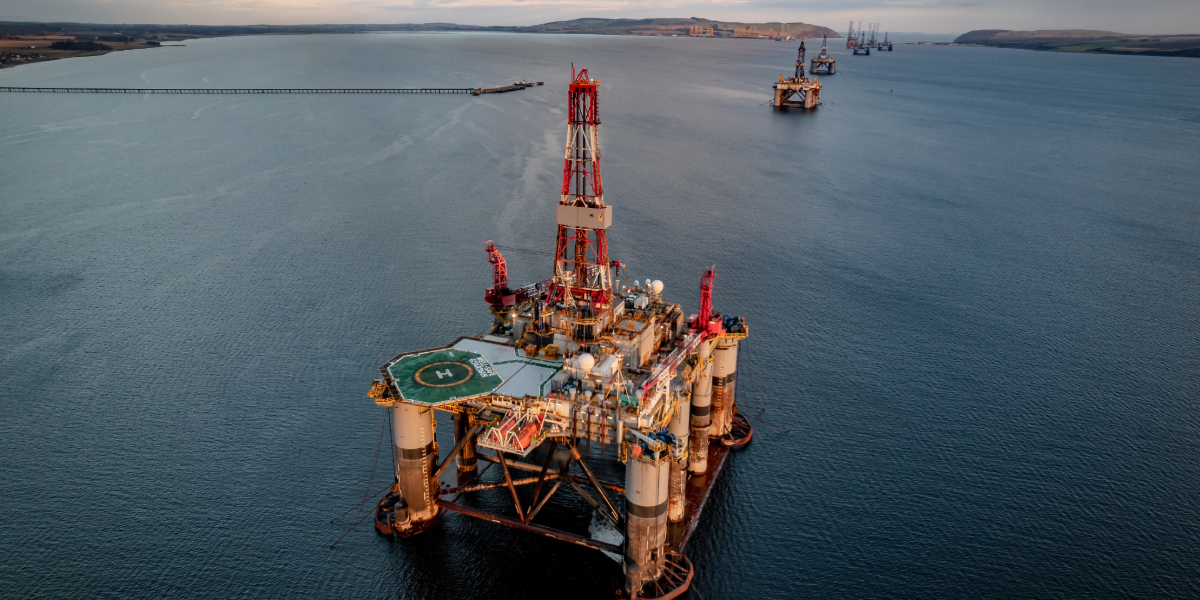
Located northwest of the Shetland Islands in the North Atlantic, Rosebank is the UK’s largest known undeveloped oil field. While not on the scale of the giant fields that powered Britain’s oil boom during the North Sea’s heyday, its estimated reserves of between 300 million and 500 million barrels make it one of the most significant energy developments still awaiting approval.
The debate surrounding Rosebank is different from Jackdaw, and arguably far more politically sensitive.
Jackdaw is a gas field. Once extracted, much of that gas will flow directly into Britain’s energy network, helping supply homes and businesses across the country. Rosebank is an oil field. The oil extracted there would be loaded onto tankers and sold into international markets, where it could be refined and processed anywhere in the world. Some may eventually return to the UK, but much of it is likely to be refined elsewhere due to Britain’s declining refining capacity.
That distinction sits at the heart of the controversy.
Supporters argue Rosebank represents a major economic opportunity at a time when Britain’s domestic energy production continues to decline. They point to thousands of jobs supported across the offshore supply chain and warn that investment is already leaving the North Sea as the industry contracts.
In Scotland, particularly around Aberdeen, concerns have been growing that jobs in oil and gas are disappearing faster than new opportunities are being created in renewable energy. Rosebank is not being presented as a solution to that challenge, but supporters believe approval would send a powerful signal that Britain remains open for energy investment during the transition to net zero.
Industry leaders argue that certainty matters. They say companies are more likely to invest in both traditional and renewable energy projects if they believe the UK continues to offer a stable and predictable policy environment.
Yet opponents see the issue through an entirely different lens.
Environmental campaigners argue that opening a major new oil field is incompatible with Britain’s climate ambitions. They question the logic of approving fresh fossil fuel developments while simultaneously asking households and businesses to reduce their carbon emissions.
For them, Rosebank has become symbolic of a broader question facing developed economies across the world: how serious are governments about reducing dependence on fossil fuels?
That debate has intensified following comments from US President Donald Trump, who urged Britain to go “full blast” on North Sea drilling, arguing that greater domestic production would strengthen the economy and improve energy security.
The reality is more complicated.
North Sea production is declining because many of the largest and most accessible fields have already been exploited over decades. Even supporters of new developments acknowledge that fields such as Jackdaw and Rosebank represent some of the final major opportunities available within UK waters.
The Government maintains that approving Jackdaw remains compatible with its legally binding commitment to achieve net zero emissions by 2050. Ministers argue Britain will continue to use natural gas for decades and that domestically produced energy can be preferable to imports from overseas.
However, the timing is politically awkward.
The decision comes amid growing international concern about climate change and just weeks before ministers are expected to participate in another major round of global climate discussions. Critics argue that approving new fossil fuel projects risks undermining Britain’s reputation as a leader in the transition towards cleaner energy.
That leaves ministers attempting to balance two competing realities.
The first is that Britain continues to depend heavily on oil and gas. Millions of homes are heated by gas, industries rely on hydrocarbon fuels and energy security remains a major concern amid global instability.
The second is that the country has committed to reducing emissions dramatically over the coming decades and investing heavily in renewable technologies.
Rosebank sits precisely at the intersection of those two realities.
For supporters, it represents economic pragmatism and energy resilience. For opponents, it represents a failure to move fast enough towards a low-carbon future.
What is clear is that the decision will be about more than one oil field off the coast of Scotland.
It will signal how the Government intends to manage one of the most difficult challenges of modern politics: maintaining energy security and economic growth while delivering on ambitious climate commitments.
Jackdaw may have been approved.
Rosebank, however, could become the true test of Britain’s energy strategy for a generation.