By West Midlands News
Cars are getting smarter. Much smarter.
Many new vehicles can already tell when you’re drifting out of your lane, braking too late or taking your eyes off the road. The next generation is going even further, with technology designed to monitor not just what you’re doing, but how you’re feeling.
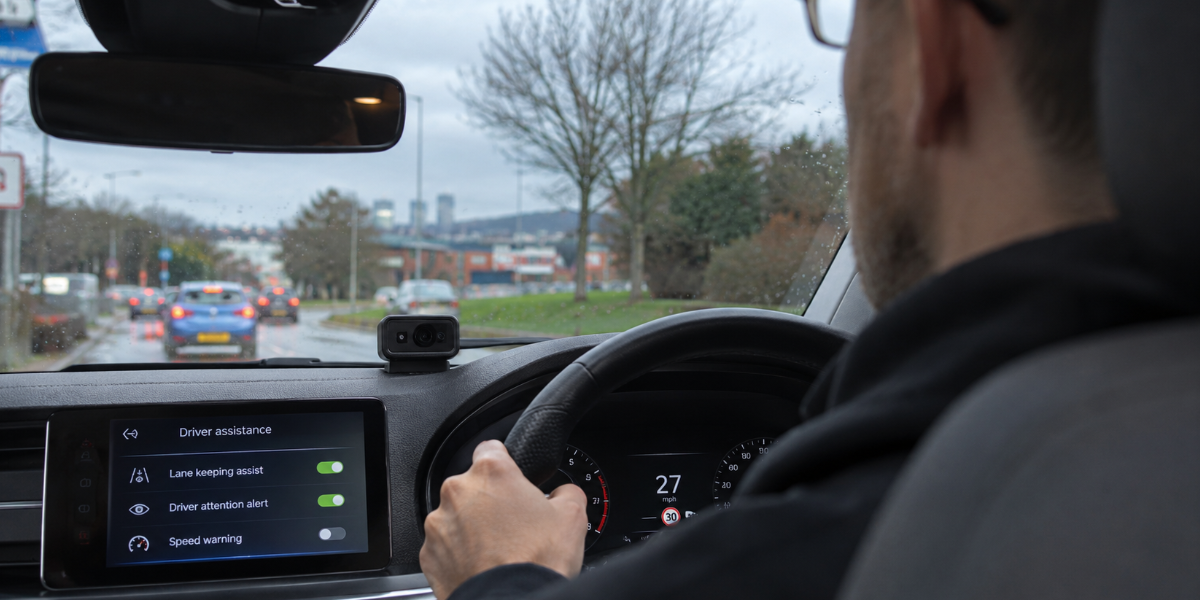
Using cameras positioned around the cabin, some systems can track eye movements, head position, hand placement and facial expressions. Developers say the aim is simple: make roads safer by identifying distracted, tired or impaired drivers before an accident happens.
Few would argue with that objective.
If a vehicle can detect that a driver is nodding off and trigger an alert that prevents a collision, that is undoubtedly a positive use of technology. Likewise, systems capable of recognising when a motorist is looking at a phone rather than the road could save lives.
The debate becomes more interesting when technology begins assessing emotions.
Some developers believe future vehicles could recognise signs of stress, frustration or anger and respond accordingly. Navigation systems could suggest quieter routes. The vehicle could alter warning settings. In theory, the driving experience could be tailored to an individual’s state of mind.
It sounds innovative. Perhaps even helpful.
But it also raises an uncomfortable question. Who decides whether a machine has correctly interpreted how someone feels?
We’ve all sat in traffic and frowned in concentration. We’ve all felt frustrated by roadworks, a missed turn-off or an unexpected diversion. Human emotions are complex, often fleeting and heavily influenced by circumstance.
A camera may see a facial expression. An algorithm may make a judgment. But those are not necessarily the same thing as understanding what a person is actually experiencing.
That matters because data rarely stays in one place.
Once information is collected, questions inevitably follow. Could insurers one day use behavioural data gathered inside vehicles to help calculate premiums? Could it be examined after a collision? Could it become evidence in disputes over driver behaviour?
For many motorists, that is where enthusiasm for the technology begins to fade.
There is a significant difference between a car recording that a driver took their eyes off the road for ten seconds and a computer deciding that someone was angry, distracted or emotionally unfit to drive. One is an observable fact. The other is an interpretation.
Supporters argue that more information leads to safer roads and better outcomes. Critics worry that society is moving towards a future where everyday activities are increasingly monitored and assessed by algorithms.
Both sides have a point.
Road safety should always be a priority, and technology has an important role to play in reducing accidents. But when systems start making assumptions about human behaviour and emotional state, the science needs to be robust and the safeguards even stronger.
Because while most of us are comfortable with our cars helping us drive safely, many may feel differently about a future in which the vehicle is quietly building a profile of who we are every time we sit behind the wheel.
The real challenge for the automotive industry isn’t whether the technology can do it.
It’s convincing the public that it should.