The career-boosting falsehood of today’s net zero religion
The green agenda has become untouchable.
Net zero strategies, clean transport, low-emission zones and sustainability frameworks now dominate political language, corporate messaging and public sector planning. Who could object? Clean air. Lower carbon. A healthier future.
In principle, it is noble.
In practice, it is often far more complicated.
Take Birmingham’s Clean Air Zone, not as a political target, but as a practical case study.
The policy aim is clear. Reduce harmful emissions. Improve public health. Create a cleaner urban environment. These are not fringe ambitions. They are sensible goals shared by almost everyone.
Pollution moves – it doesn’t obey policy guidelines
But science and data tell us something uncomfortable: pollution does not disappear when you apply pressure to a system. It redistributes.
DEFRA’s own monitoring shows that nitrogen dioxide (NO₂), the primary traffic pollutant in urban environments, varies sharply by location. Roadside sensors consistently record higher concentrations than nearby background sites only streets away. This tells us something fundamental. Pollution behaves like a fluid. It moves. It flows. It does not vanish because a policy document says it should.
When vehicles are priced out of a zone, they do not evaporate. They reroute.
Older buses, delivery vans, small trader vehicles and private cars all seek the path of least resistance. That path is rarely the affluent core. It is usually the cheaper, less visible roads that pass through poorer residential districts.
The policy looks green in the centre. The burden shifts outward.
The Ford Cortina – a gas-guzzling work of art
For anyone old enough to remember them, think of the Ford Cortina. A beautiful shape. A cultural icon. And by today’s standards, an environmental disaster. It burned fuel greedily and pushed visible exhaust into the air. You could sit in traffic and watch a faint greenish haze hang behind it. That kind of pollution was honest. You could see it. You could smell it.
Today, the damage is less visible.
It is embedded in policy.
Too often, modern green policy resembles a polished green cloud with a toxic lining. Environmentally pure in presentation, socially corrosive in reality. It looks clean from a distance while quietly shifting harm elsewhere.
The quiet incentives inside local government
Another layer of this story sits quietly inside local government itself.
Every new green framework creates something very practical: funding streams. Projects. Delivery teams. Partnerships. Pilots. Consultations. Monitoring units. Strategy groups.
At a time when councils are under extreme financial pressure, these green schemes do more than shape environmental outcomes. They create organisational oxygen. They protect posts. They justify departments. They generate career opportunities.
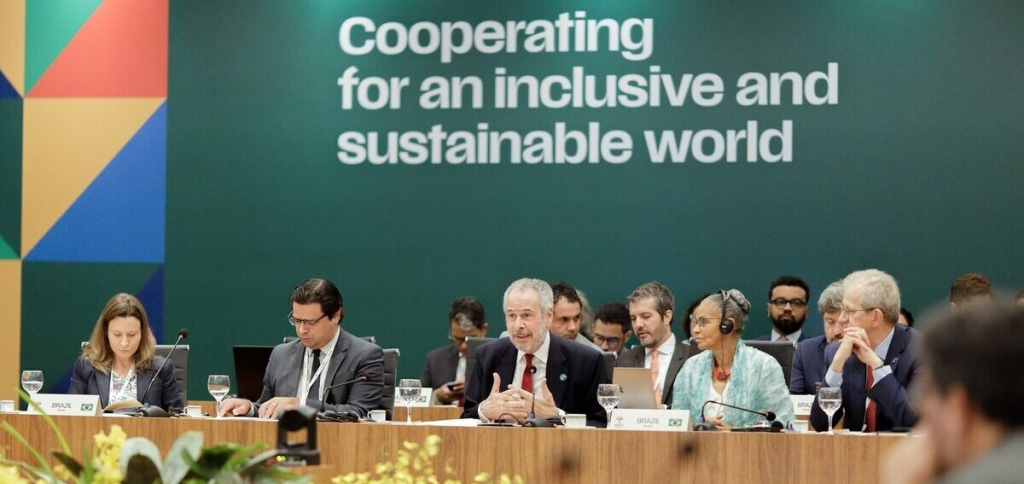
Green initiatives mean career opportunities
Officers who have lived through years of budget cuts and restructuring suddenly find themselves attached to well-funded, politically protected programmes. Clean air. Net zero. Sustainability. These are not just policies. They are lifelines inside shrinking institutions.
This is how apparently neutral policy develops a quiet internal momentum. Not because individuals are malicious, but because systems reward certain outcomes. Green projects are easier to defend than social care cuts. Easier to celebrate than housing failures. Easier to photograph than prevention work.
When policy becomes career infrastructure, criticism becomes harder. Not because people are evil, but because their livelihoods become structurally attached to the continuation of the programme.
That is not conspiracy.
That is organisational psychology.
The political optics problem
There is another uncomfortable layer to all of this, and it sits with politicians themselves.
Green policy has become political theatre.
It is highly visible. It is socially fashionable. It offers clean backdrops, safe headlines and polite moments of self-congratulation. Ribbon-cuttings. Applause. Panel discussions. Receptions with cucumber sandwiches and the crusts neatly removed.
To a politician, these policies look like progress.
But politics works in electoral cycles, not life cycles. The photograph is immediate. The health outcomes are delayed. The displacement effects are invisible from the launch stage.
Traffic jams aren’t photogenic
No politician stands beside a dual carriageway in the outer suburbs with a camera crew. No one hosts a press event in streets where displaced traffic now idles past schools and care homes. Those places are not photogenic.
This creates a structural problem, not a moral one.
Politicians are rewarded for what is seen, not for what is shifted out of sight.
The risk is not that leaders want their voters poorer or less healthy. It is that modern politics rewards visibility over verification, appearance over audit, narrative over consequence.
The result is policy that looks green, sounds green and wins green applause, while quietly transferring cost and risk to those with the least political voice.
That’s not malice.
That’s optics.
Back to who pays the price
The same pattern appears economically.
Most green policies rely on cost pressure. Charges. Penalties. Compliance costs. Forced upgrade cycles.
If you can afford it, you adapt.
If you cannot, you absorb the pain.
That pain does not fall on multinational fleets or corporate boards. It lands on self-employed tradespeople, carers, delivery drivers and the working poor whose livelihoods depend on older vehicles and thinner margins.
The uncomfortable question is not whether environmental policy is necessary.
It is whether it is honest.
The modern green agenda has become aesthetic. It photographs well. It launches well. It attracts funding streams, awards, conferences and professional ecosystems. A policy branded “green” attracts applause before it attracts scrutiny.
Meanwhile, the harder work of fairness is left undone.
Birmingham’s Clean Air Zone is not the villain in this story. It is simply the clearest window into a wider truth.
Green policy tends to be style over substance
Green policy is increasingly designed around optics rather than outcomes. Visibility rather than equity. Celebration rather than accountability.
This is not an argument against clean air.
It is an argument against selective cleanliness.
A policy cannot be called sustainable if it quietly shortens lives, empties pockets and limits choices for the poorest while claiming moral victory in the city centre.
If green policy is to be taken seriously, it must become socially honest, not just visually attractive.
Otherwise, we are not cleaning the air.
We are simply moving the dirt out of sight, inside a green cloud with a toxic lining.