
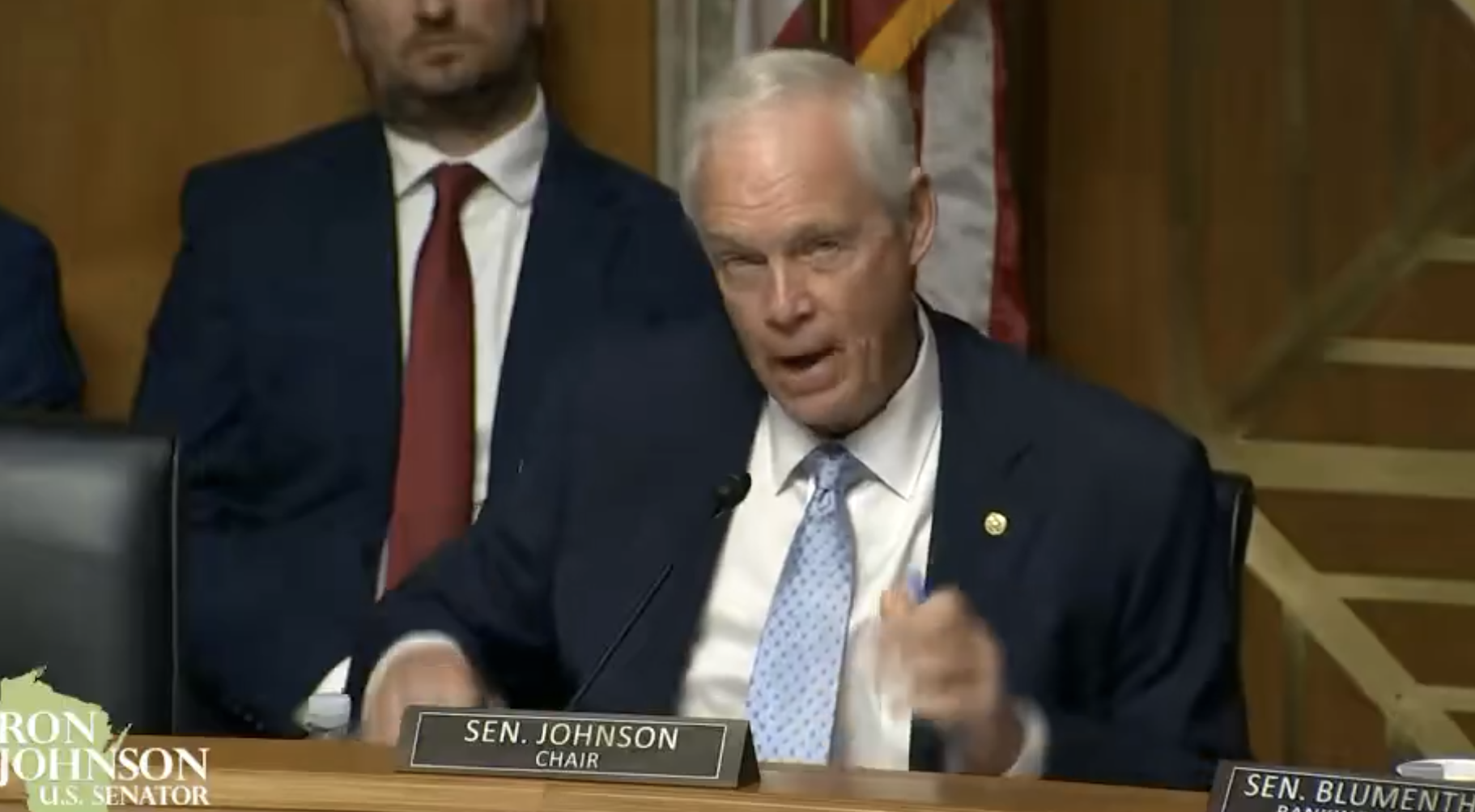
Ron Johnson’s subcommittee demands answers on whether federal officials withheld evidence of cardiac risks from the public
Wisconsin senator Ron Johnson, Chairman of the Permanent Subcommittee on Investigations, continues to push forward with his inquiry into the federal government’s handling of Covid-19 vaccine safety data.
Following a series of subpoenas and the release of an interim majority staff report, Johnson’s investigation has placed a renewed spotlight on how federal health agencies, including the Department of Health and Human Services, the Centers for Disease Control and Prevention, and the Food and Drug Administration, communicated vaccine-related risks to the public during the pandemic.
Focus of the inquiry
At the centre of the inquiry are allegations that federal officials downplayed warning signs associated with mRNA Covid-19 vaccines, specifically concerning cardiac-related adverse events such as myocarditis.
The subcommittee released a report detailing internal agency communications from early 2021. The report alleges that despite receiving safety signals regarding heart inflammation, health agencies delayed issuing formal public warnings, choosing instead to publish less prominent clinical guidance.
Biden administration whitewashing
Chairman Johnson has maintained that the Biden administration actively suppressed information to prevent public hesitancy and protect the rollout of the vaccines. In a statement, Johnson argued that records obtained from HHS reveal a pattern of avoiding transparency.
“If the Covid-19 injections were as safe and effective as Biden health officials consistently touted, then what would they have to hide?” Johnson asked, pointing to documents produced following his subpoena for unredacted records.
Recent hearings and public response
The inquiry has also featured high-profile testimony. During a Senate hearing, Senator Johnson directly pressed Robert F. Kennedy Jr. regarding alleged vaccine safety signals and claims that adverse event data had been obscured.
The exchange highlighted the ongoing friction between the subcommittee’s focus on vaccine monitoring systems and the broader defence of public health frameworks.
Throughout the inquiry, Johnson has hosted events including a hearing titled “Voices of the Vaccine Injured.” These panels have given a platform to individuals and medical professionals who argue that vaccine safety monitoring systems are inadequate and that side effects have been largely overlooked by the medical establishment.
Public health perspectives and criticisms
While Johnson’s investigation has galvanised critics of pandemic-era health mandates, public health experts and scientific organisations have pushed back.
Critics argue that the subcommittee’s hearings and reports amplify rhetoric that contradicts the consensus demonstrating the vaccines’ efficacy in reducing severe disease and mortality.
The Centers for Disease Control and Prevention and other international organisations maintain that adverse events such as myocarditis are rare and typically treatable. Independent researchers emphasise that the benefits of the vaccines vastly outweigh the risks, particularly when compared to the morbidity caused by Covid-19 itself.
Professional groups, including the Gerontological Society of America, have written to the subcommittee urging policymakers to consider the broader value of vaccination in protecting medically vulnerable and older populations.
Further investigation
As Senator Johnson continues to demand further records from HHS and holds subsequent hearings investigating the intersection of science and public policy, the inquiry remains a highly polarised issue.
While some view the investigation as a necessary step towards transparency and government accountability, the broader medical community continues to advocate for reliance on rigorous, established clinical trials and consensus-driven public health data.