
Hanna Sebright, CEO, reflects on her 17 years of progress – while managing the immediate issue of aviation fuel
This Thursday, May 21, Midlands Air Ambulance Charity (MAAC) celebrates 35 years since its founding in 1991. For its chief executive, Hanna Sebright, this will be a proud moment.
“My passion levels for MAAC are stronger now than when I started working here in 2009,” says Hanna.
“Now, when you see the fruits of your hard work, it makes you feel stronger and more purposeful.”
Life-saving clinical experts from the MAAC will attend around 4,500 callouts to medical emergencies this year. When Hanna joined the charity 17 years ago, that number was 2,500. The sophistication of MAAC crews’ clinical treatment capability has expanded significantly, too. No longer is it simply “an air ambulance taxi.”
MAAC’s headquarters and airbase are in Cosford, Shropshire. It has two other airbases – at the northbound Strensham motorway services in Worcestershire, serving the southern swathes of its patch, and at Tatenhill, Staffordshire, serving the north.
Rising costs
The cost of running MAAC’s service across the six counties (Gloucestershire, Herefordshire, Shropshire, Staffordshire, Worcestershire, and the West Midlands) it serves has more than tripled over Hanna’s tenure, from £6m to £20m a year, not helped by the current Middle East conflict spiking fuel prices.
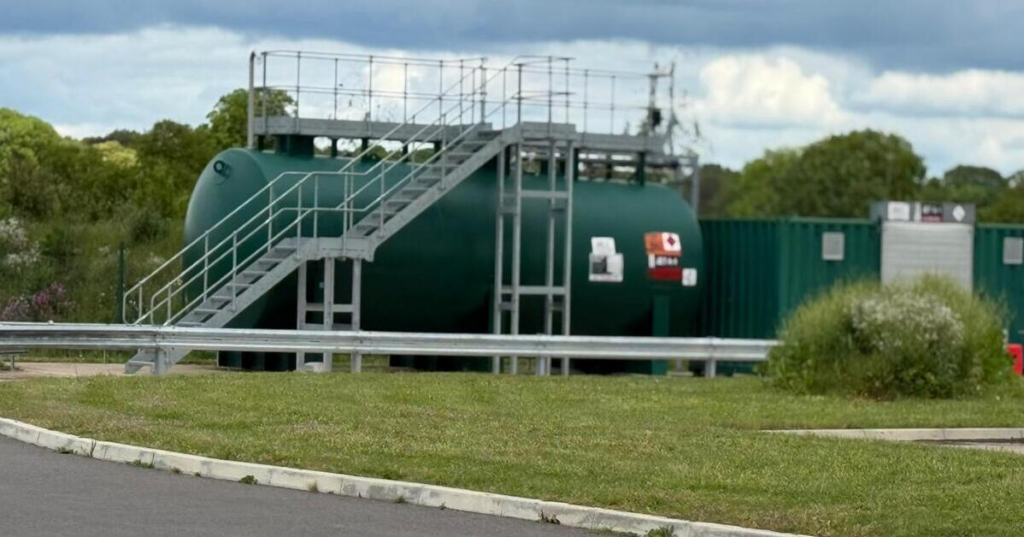
“As soon as the conflict broke out, we filled our fuel tanks, so we currently have enough to last us until June, when we will next need to refill them – but at double the cost of what it was in March,” says Hanna.
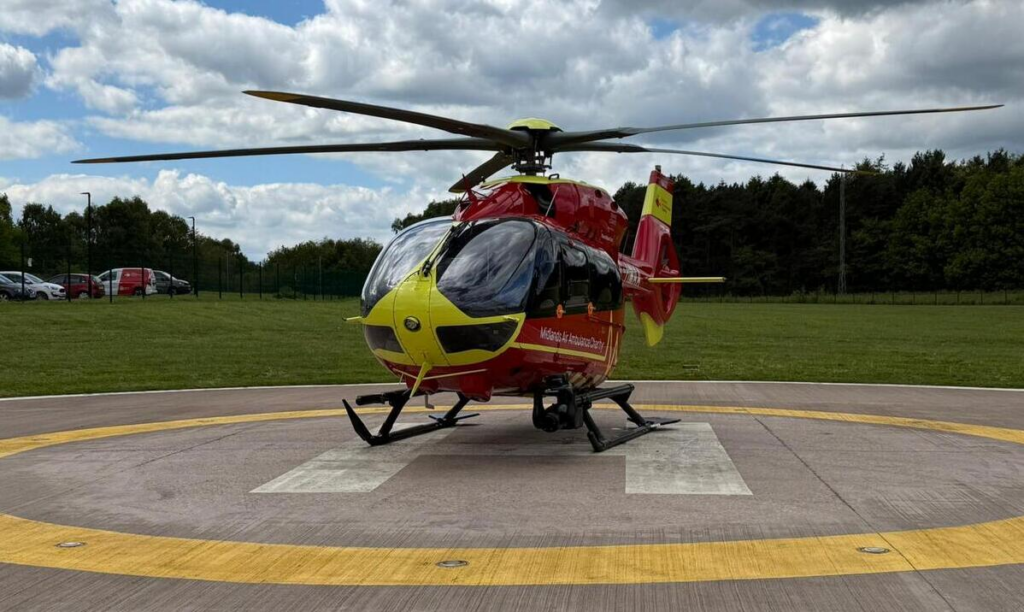
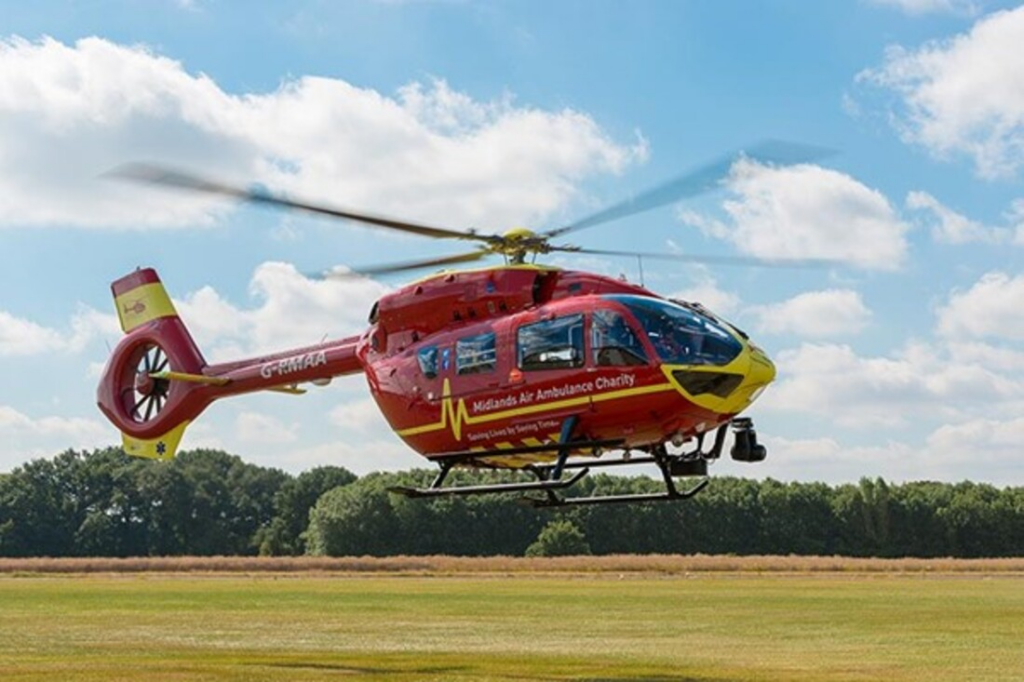
MAAC’s current scenario-planning involves shaping a plan for the event of a possible global jet fuel crisis. In such circumstances, she says, they would rely more heavily on their fleet of six rapid-response cars, as opposed to their three Airbus helicopters.
“Our priority is to protect our clinical service and not compromise patient care.”
Proud
“What makes me so proud of MAAC is how we’ve professionalised over the years. Contrary to many people’s assumptions, running a charity like this is not easy, exemplified by having to grapple with our current fuel costs quandary.
“Since I started here, I have watched the charity mature into a fully formed, grown-up organisation delivering evermore sophisticated standards of clinical care.”
The air ambulance service in the Midlands is England’s second-oldest, founded in 1991, four years after Cornwall’s.
How much is Midlands Air Ambulance needed today?
“The need for our service is greater now than it used to be. When I joined in 2009, we handled about 2,500 emergency call-outs a year. Today, we do nearly double that.
“Back in 1991, when the MAAC was established, we were essentially an air ambulance taxi to get people to hospital. Those days are long gone. Today, we stabilise and treat patients while notifying the receiving hospital. What we do has gone up a level across the board.”
Cardiac arrest patients 17% more likely to survive
“In 2025, we attended nearly 800 cardiac arrest patients, delivering advanced, specialist interventions where every minute counts. Across the Midlands, our teams lead high‑quality cardiac arrest care while providing expert‑level support to regional ambulance services at the most critical moments.
“Where a public access defibrillator was used before Midlands Air Ambulance crews arrived, more than half of cardiac arrest patients treated by the charity survived to reach hospital.
We are continually investing in patient care, improving and evolving, with ongoing projects designed to help identify patients earlier and reach them more quickly when minutes matter most.”
What life-saving incidents have stuck with you?
Southport stabbings – 2024
“Everyone we go out to is incredibly important, but the crews feel it particularly whenever small children are involved,” says Hanna, who was at the helm of MAAC when it was among the emergency responders to the Southport stabbings in July 2024.
“That day, our team helped save the life of a little girl injured in the attack. She has since won an award for bravery and gone on to raise £14,000 for MAAC.”
Alton Towers – 2015
The Smiler rollercoaster incident at Alton Towers in 2015, which left five people seriously injured, is another stand-out memory.
“We were there with two other air ambulance services, and we helped a young couple, aged about 17 or 18, who had been on their first date that day. He later lost a finger, and she had to have a leg amputated. We stayed in touch, and the year before last they got married. That was a very emotional moment for all of us at MAAC.”
Pregnant woman stabbed – 2016
In 2016, a MAAC helicopter crew responded to reports of a woman, eight months pregnant, being repeatedly stabbed in Sutton Coldfield. Twenty-four stab wounds led to severe injuries to the mother and her unborn child.
“Our incredibly skillful Babcock helicopter pilot was able to land in a tricky spot, and the crew got to work. Both mother and baby survived.”
Why should donors back the MAAC?
With operating costs having trebled over the course of Hanna’s tenure, and demand steadily rising, Midlands Air Ambulance is needed more than ever. It will keep doing what it does – provided funding remains steady.
“All of our income is from donors, not the government. We have around 180 paid staff and 250 volunteers, all keeping our 24/7 aircraft and critical care car response service running.”
‘You never know when it might be you’
MAAC’s donors include the M6 Toll – a fast, straight road where accidents are often serious – and Pallet Track, a huge organisation with a workforce doing high-risk manual work, and Phoenix Life, the life insurance firm, one of whose Birmingham staff received life-saving care after suffering a cardiac arrest.
“The reason for supporting MAAC is: You never know when you, your family, your loved ones, your friends, or colleagues might need our help. These things can happen to all of us, and if they do, we’ll be there to help.”
How would you spend £5m of ‘unrestricted’ funding if you were given it today?
Note: Charity finances are complicated, not least due to donated funds being earmarked, or “restricted,” for specific activities. “Unrestricted” funds can be applied to any activity within a charity’s operation.
“Financial planning at MAAC is extremely complex,” Hanna says.
“We are a healthcare organisation, we run aircraft, we have a retail operation and all the back-end services, while still being a charity and never forgetting our core purpose. We are a highly complex and diverse organisation.
“If we were to receive a £5m unrestricted donation today, I would invest in extending all strands of our service to be 24/7. At the moment, we are 24/7 for our air and car response, but we can’t yet afford a doctor on every single platform. Having a doctor on all of them would improve the survival chances of critical care patients even further.
“I would also look to invest in our fast-growing advanced lifesaving education and training programme. This is one of our main areas of growth right now, and it’s bringing in commercial revenue. We need a mobile unit and more space at our Cosford headquarters.”
What’s your vision for MAAC over the next 25 years to 2061?
“We need to keep pace with Ai and digital advancements – not necessarily be in the lead but definitely keep pace – because that’s such a rapid growth area right now, and one that I believe can bring significant advancements in patient care and organisational efficiencies,” says Hanna.
“Currently, we record patient records electronically, which can be transmitted to receiving hospitals. But what could the world of technology bring to enhance patient care? Perhaps video-calling patients or their relatives before we arrive, and providing advice on treatment and including this interaction within their patient record? This would provide a broader and more accurate picture for hospitals taking over a patient’s care.
“Many communities now provide defibrillators accessible to members of the public when dialling 999 for a patient in cardiac arrest. Whilst beneficial, it still takes time for someone to go and collect it. Will it be possible one day for smartphones to be able to detect a patient in cardiac arrest? Deliver a defibrillation shock and activate a request for help from ambulance services?
“The opportunities in the future to further advance patient care are infinite, and MAAC must remain innovative, proactive and dynamic in driving forward our clinical service.”