As Andy Burnham eyes a role reshaping government from Manchester, the West Midlands risks being left behind
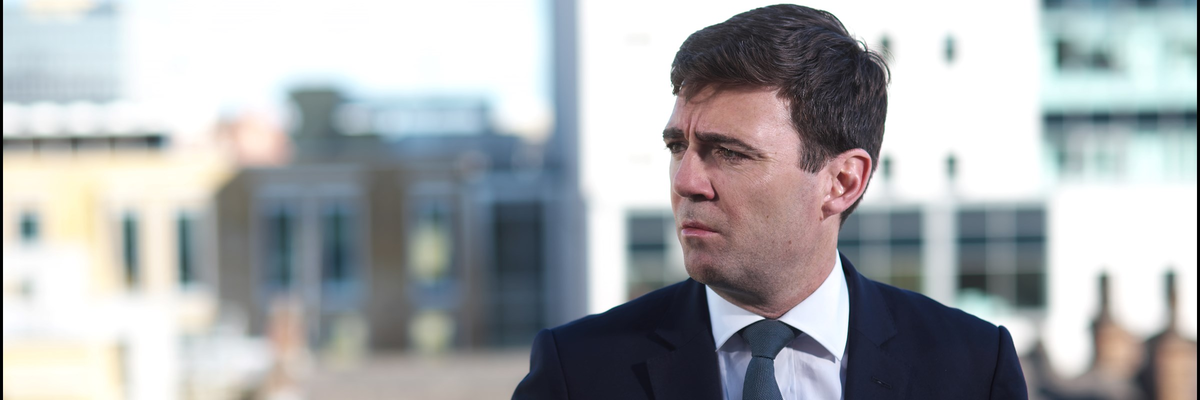
We are about to get a new prime minister, it seems, styled as “king of the North” and apparently determined to deliver geographical levelling up by bringing Manchesterism to the prime ministerial role. Whatever this means (will he wear a bucket hat at Prime Minister’s Questions?), he is allegedly looking to decentralise government by delivering some of it from Manchester. Whilst this is a novel, and possibly laudable, approach, all this focus on Manchester and the North hardly spells good news for the West Midlands, does it?
If there were any justice, surely Birmingham would be a better alternative. We are not from the North (though many in the South East contend otherwise) and we are not from the South either. Being in the middle, and lacking media presence and identity, presents a real risk of us being marginalised through division and identity confusion.
How we lost our media presence
News media drives so much these days, and of course politics and power act as a magnet for that media too. When the BBC closed Pebble Mill and ITV closed their centre on Broad Street, not enough was done to recognise the risk of our region being consigned to history, to fight the corner of our region, to stress its importance, its size and the influence it commanded.
And so we lost it.
It took years and the Commonwealth Games to recover even some of that ground. Sadly, not enough has been done to build on that legacy in the follow-up, amid a flurry of negative press, political missteps and a failure to unify our region.
The Manchester threat
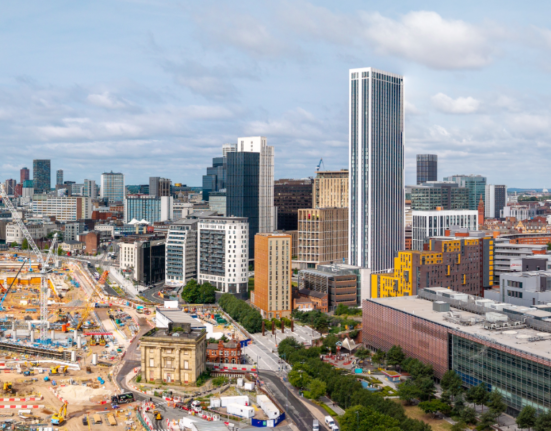
So the prospect of Mr Burnham shifting some of the Westminster bubble to Manchester, with its shiny MediaCityUK, worries me that our great city region will be further consigned to the margins. And what we lose is so difficult to get back.
One would hope that Mayor Richard Parker has spotted this risk and will actively use the channels of his political party, not least his relationship with Mr Burnham as a fellow former mayor, to ensure that we are not forgotten and that our region takes its rightful place at the centre of the levelling-up plan. The new TV studios in the old Typhoo factory should not be an afterthought.
But we as citizens have a part to play too.
Learning from Manchester’s playbook
Greater Birmingham is bigger and better than Greater Manchester. We simply have not got the PR right, nor sorted out the petty local parochialism that Manchester has, very effectively. Credit is due to Mr Burnham for cultivating that sense of regional identity, and perhaps our Mayor needs to take a leaf from the Greater Manchester manual.
Inward investment and global trade will be the key to the success of the cities of the future. The reality is that in Dallas, Dubai, Delhi and Doha, they have heard of London, and Manchester, and perhaps Birmingham, but not Smethwick, Willenhall or Bilston.
The city of a thousand trades was always really a region of a thousand trades. Walsall, Coventry, Dudley, Wolverhampton and West Bromwich thrived in parallel with Birmingham. You would not have had one without the others. And it is the same with Manchester’s history too. You do not find people from Bolton refusing to associate with Greater Manchester, so what causes someone from Wolverhampton to disassociate from Greater Birmingham?
Pride in place, ambition for the region
I am from Walsall and quite proud of that. But I am also proud to come from, and to have made my livelihood in, the whole region centred around Birmingham. That carries real currency when I travel and speak to people across the country and abroad. Mention the West Midlands and you tend to get blank looks, perhaps the question: “Is that anywhere near Wales?”
So, as Mr Burnham looks to continue to improve the status of Manchester, let us all mobilise to pressure for our region to punch its weight too. Let us start by learning from Manchester’s marketing success, then catch up and overtake. Greater Birmingham, as a global brand, has to be the way forward if we are to avoid being forgotten.
Time to set aside parochialism
This will take compromise and some departure from long-standing parochial tradition. But we cannot cling to the past in everything. Mr Burnham does not appear to be doing so as he looks to shake up government delivery, and that is refreshing. Surely it is time to set aside historical mistrust, party politics and football rivalry, unify as Greater Birmingham, and become the global city region we deserve to be. That means demanding the influence we are owed from any nationally facing government in the years ahead.