The new light mobility vehicles will compete for a Ministry of Defence contract and be offered to NATO defence organisations
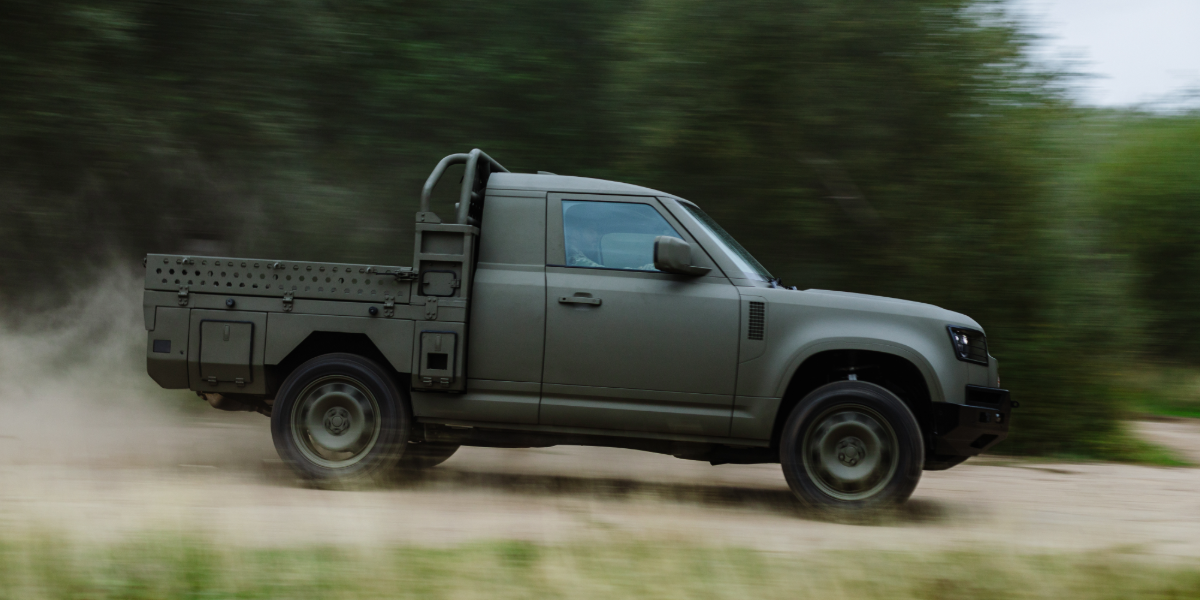
Defender has revealed three new variants of its next generation military vehicle, the Defender Wolf Series II, as it prepares to bid for the UK Ministry of Defence Light Mobility Vehicle tender.
The vehicles were unveiled on 16 September at the British Army DVD 2026 event, held at the Millbrook proving ground in Bedfordshire. They comprise a Tactical Mobility Vehicle (TMV), a Mono-Tactical Mobility Vehicle (M-TMV) and a Utility Vehicle (UV), each specified according to the Ministry of Defence’s tender requirements.
The three models are the first Wolf Series II vehicles to be developed under JLR’s newly established Defender Defence Division. Alongside the UK bid, they will be offered for sale to NATO defence organisations, and the company describes them as the first of many variants to come.
The vehicle is British designed and engineered, with British made engines and technologies, including an engine built in Wolverhampton. It is Defender’s first military vehicle launch since the original Land Rover and Defender Wolf vehicles, which served the British Armed Forces for more than 70 years.
Patrick McGillycuddy, Defender Managing Director, said: “I am delighted to reveal three new variants of Defender Wolf Series II, our next-generation military vehicle. Through our newly established Defender Defence Division, we will offer Defender Wolf Series II to defence organisations worldwide, while also bidding for the UK Ministry of Defence Light Mobility Vehicle tender.
“Defender Wolf Series II is exceptionally robust and versatile. Its D7x monocoque construction enables us to adapt the platform to the wide range of roles and operational requirements demanded by military organisations. It is a modern successor to the world-famous Defender Wolf and Land Rovers that have served the British Armed Forces for more than 70 years. Designed and engineered in Britain, with an engine built in Wolverhampton, Defender Wolf Series II also delivers sovereign capability.”
Wolf Series II is based on Defender’s D7x architecture and monocoque construction, the platform used by the current generation of Defender. According to the company, this creates a stiffer body structure for harsh environments and offers greater payload capacity than the “ladder on frame” technology used in previous military vehicles.
During development, Defender underwent more than 62,000 tests for engineering sign-off, and its chassis and body architecture were engineered to withstand JLR’s Extreme Event Test procedure.
The company also pointed to its recent success at the Dakar rally and a demonstration at the Ministry of Defence’s independent testing ground, where it says Defender was the only vehicle to successfully navigate all of the obstacles.
Defender says its engineers have end-to-end control of the engineering process, which it states allows it to remove unnecessary complexity and deliver a modern military fleet at pace and scale, backed by JLR’s global supply chain.
Wolf Series II joins the existing Defender Expert portfolio, which already supplies emergency organisations around the world, including border forces, police, military and fire services.