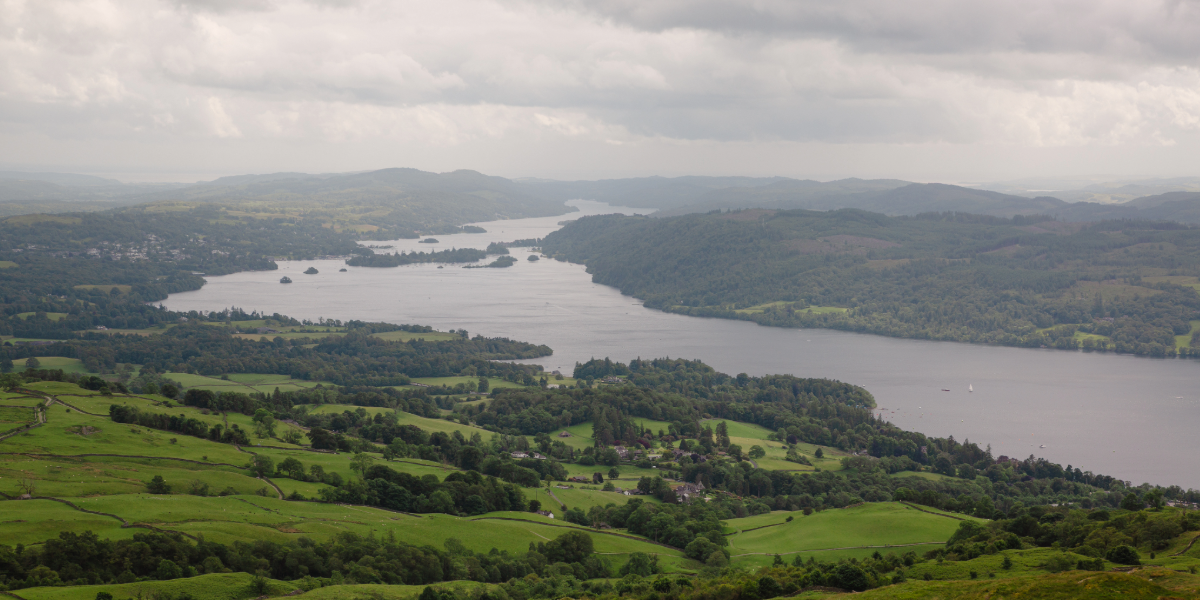
There are few places more iconic than Windermere. For generations, England’s largest lake has represented the very best of Britain’s natural beauty, drawing millions of visitors each year to a landscape recognised across the world. Its waters, framed by the fells of the Lake District, have become part of the nation’s identity. Today, however, that image is being challenged by an increasingly visible environmental warning sign. Each summer, parts of the lake are turning a murky green.
This is algal bloom, a phenomenon driven by warming temperatures and nutrients entering the water. Scientists and environmental campaigners point to agriculture as part of the problem, but sewage discharges are widely regarded as a major contributor. Put simply, sewage acts as a fertiliser. The more nutrients entering the lake, the greater the opportunity for algae to thrive.
What begins as discoloured water quickly becomes something far more serious, threatening wildlife, damaging ecosystems and potentially creating risks to human health. A lake that should be a symbol of environmental success is instead becoming a symbol of environmental decline.
The solution sounds straightforward. Stop sewage entering the lake.
The reality is anything but straightforward.
A newly published feasibility study has outlined one of the most ambitious environmental infrastructure projects Britain has ever considered. The proposal would see homes around Windermere connected to an expanded sewage network, while a giant tunnel, around four metres wide and stretching as far as nineteen kilometres, would carry wastewater away from the lake catchment for treatment before its eventual discharge closer to the Irish Sea.
Supporters believe the project could effectively end sewage discharges into Windermere and provide a long-term solution measured not in years, but generations. It is an ambitious vision for one of Britain’s most treasured landscapes.
Such ambition comes at an extraordinary cost.
The proposed scheme is expected to take around seven years to construct and carries an estimated price tag of £3.6 billion. That would place it among the most expensive water infrastructure projects ever undertaken in the United Kingdom.
The figures inevitably raise difficult questions.
Who should pay?
Those backing the scheme argue that Windermere is far more than a local amenity. It is a national asset, a globally recognised landscape and a crucial part of Britain’s environmental and cultural heritage. Millions visit every year. Local businesses depend upon it. Entire communities have been built around its presence.
Viewed through that lens, asking local residents alone to shoulder the burden appears unreasonable.
Some have therefore suggested spreading the cost nationally, adding only a relatively modest amount to household water bills across England. Others favour a localised contribution from those living closest to the lake. Both arguments have merit.
Yet there is another question that many households will ask.
Why are consumers being asked to pay once again?
For years, water companies have faced criticism over sewage spills, ageing infrastructure and investment priorities. At the same time, customers have continued to see bills rise while being told that further billions are now needed to modernise systems many believe should already have been upgraded.
Windermere has become a symbol of that wider frustration.
The lake’s condition forces Britain to confront an uncomfortable reality. How did one of the country’s most treasured landscapes reach the point where a £3.6 billion rescue plan is being seriously contemplated? Why were warnings not acted upon sooner? Could earlier investment have avoided the need for such a vast intervention?
Those questions extend well beyond Cumbria.
They speak to a national tendency to delay difficult decisions until the cost of solving them becomes significantly greater. Infrastructure is often discussed in political speeches but too frequently overlooked until problems become impossible to ignore.
The result is that Britain now finds itself debating how to save one of its most famous lakes rather than discussing how it prevented the problem in the first place.
Successive governments have promised tougher environmental standards. Regulators have pledged stronger oversight. Water companies point to billions already invested across their networks.
Yet the image that remains with the public is remarkably simple:
England’s largest and most celebrated lake is turning green.
The proposed tunnel may eventually become a landmark engineering achievement, remembered as the moment Britain finally committed to protecting Windermere for the next century. Equally, the debate surrounding it has already exposed fundamental questions about environmental stewardship, public investment and corporate responsibility.
This conversation is no longer really about a tunnel beneath the Lake District.
It is about priorities.
It is about deciding whether nationally significant landscapes deserve nationally significant investment. It is about recognising that environmental protection is invariably cheaper than environmental recovery. Most importantly, it is about acknowledging that some places are simply too important to lose.
Windermere is more than a lake. It is part of Britain’s story.
If the country cannot secure the future of one of its most iconic natural assets, people will inevitably question what hope exists for the countless rivers, streams and waterways that receive far less attention.
The green water spreading across Windermere is not merely an environmental issue.
It is a warning.
The question facing Britain now is whether it acts before that warning becomes something far more permanent.