Small bus companies invited to bid for 20 routes as mayor pushes ahead with plans to bring services under public control
Passengers across the West Midlands could see changes to the way their buses are run as plans to bring the region’s network under public control take another step forward.
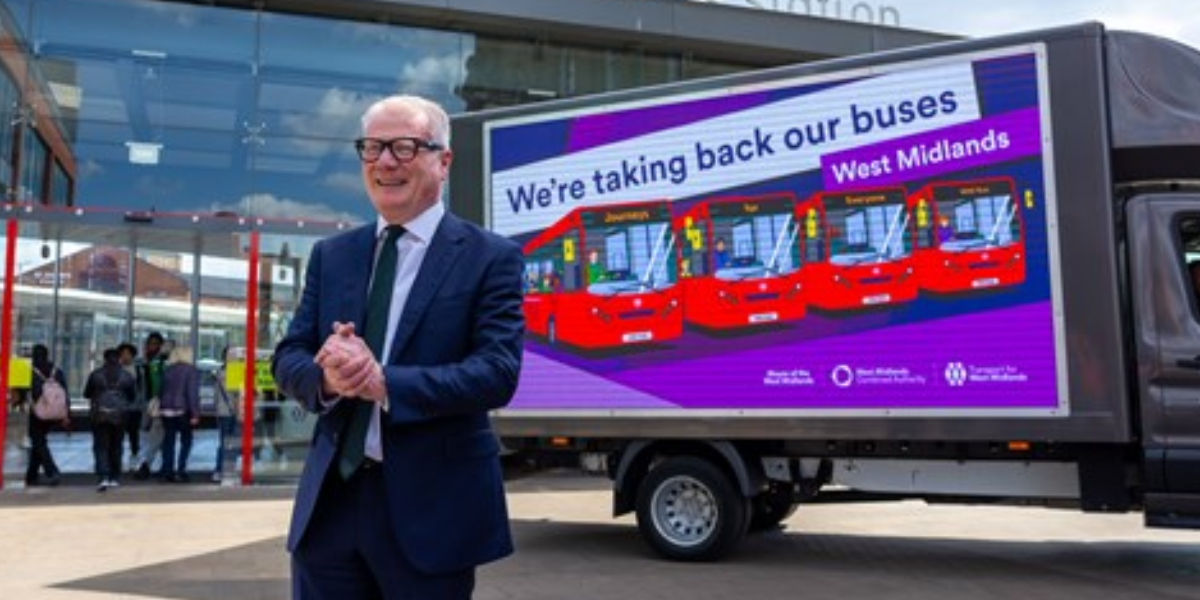
On 20 October, West Midlands Mayor Richard Parker announced that smaller bus companies would be invited to bid for contracts covering 20 selected routes across north Birmingham and Walsall. The move forms part of a wider plan to give the regional authority greater control over routes, timetables and fares. Source: West Midlands Combined Authority
Seven contracts are being offered, creating opportunities for independent operators to compete alongside larger companies. Two of the contracts will cover individual routes, making it easier for smaller businesses to take part.
The announcement is part of a major overhaul of bus services, with the first franchised services expected to begin in October 2027.
But while the plans promise greater accountability and the possibility of more reliable journeys, questions remain over whether passengers will notice a real improvement in their everyday travel.
What is changing?
Under the current system, private bus operators largely decide which services to run commercially, within the existing regulatory framework. Under franchising, Transport for West Midlands and the West Midlands Combined Authority will take greater control of the network, setting routes, timetables and fares while contracting companies to operate the services.
The aim is to create a more joined-up system, with consistent standards across the region.
Mayor Richard Parker said the new contracts would give independent operators a better chance of competing for work.
He said: “By creating single-route contracts, we’re giving local businesses the chance to win, grow, and play a part in delivering a public transport system our region can be proud of.”
The mayor has argued that bringing buses under public control will help deliver better routes, affordable fares and more reliable timetables.
However, these are objectives rather than guaranteed outcomes. Passengers will ultimately judge the changes by whether buses arrive on time, whether fares remain affordable and whether services meet the needs of local communities.
Why does it matter to passengers?
For many people, buses are an essential part of daily life. Students rely on them to get to school and college, workers use them to reach their jobs, and older residents may depend on them to access shops, healthcare and other services.
When a service is delayed or cancelled, the consequences can extend beyond an inconvenient wait. A missed connection could mean arriving late for work, missing an appointment or having to pay for alternative transport.
Reliability and affordability are therefore likely to be central concerns as the new system develops.
The regional authority has said that the franchising model will allow it to set standards for operators rather than relying primarily on individual companies’ commercial decisions.
The first phase will cover Coventry, north Birmingham and Walsall, with the next phase planned for Dudley, Sandwell and Wolverhampton in 2028. The final phase is expected to cover Solihull and south Birmingham in 2029.
The changes will not happen overnight, and existing services are expected to provide a relatively stable foundation during the initial transition.
Will smaller operators make a difference?
One of the key features of the announcement is the opportunity for smaller, independent bus companies to compete for contracts.
The authority believes these businesses can bring local knowledge and help deliver services that better reflect the needs of individual communities.
Smaller operators may be particularly interested in routes that would be difficult to manage as part of a much larger contract.
However, winning a contract is only the beginning. Operators will need the vehicles, staff and facilities required to run their services, while meeting the standards set by the transport authority.
The success of the approach will depend on whether suitable companies come forward and whether the contracts result in a dependable service for passengers.
It will also be important to ensure that smaller operators can compete fairly while maintaining consistent standards across the network.
What about fares and reliability?
Although the mayor has promised more affordable fares and better reliability, passengers should not assume that every route will improve immediately.
The first contracts are designed to establish the new system, with further improvements expected to develop over time.
The authority will need to demonstrate how it intends to measure performance and respond when operators fail to meet expectations.
Passengers will also want clear information about any changes to routes, timetables, ticketing and customer services as the new arrangements are introduced.
For communities that already experience limited services, a key question will be whether franchising leads to better connections or simply maintains the routes that already exist.
The authority’s decisions about where buses run, how frequently they operate and how much tickets cost will therefore be closely watched.
What happens next?
The first contracts are expected to be awarded in 2027, ahead of the planned October launch. The wider rollout will continue in stages until the end of the decade.
In the meantime, residents can share their views through the West Midlands Combined Authority’s Your Bus, Your Say initiative, which seeks feedback on what passengers want from the future network.
For now, the announcement represents a step towards changing how local bus services are managed, rather than an immediate improvement to journeys.
The real test will come when the new contracts begin operating and passengers can judge the results for themselves.
For thousands of people who depend on buses every day, the question is straightforward: will this shake-up deliver a service that is more reliable, affordable and convenient, or will the promised improvements take longer to arrive?
Only time — and the experience of passengers across the West Midlands — will provide the answer