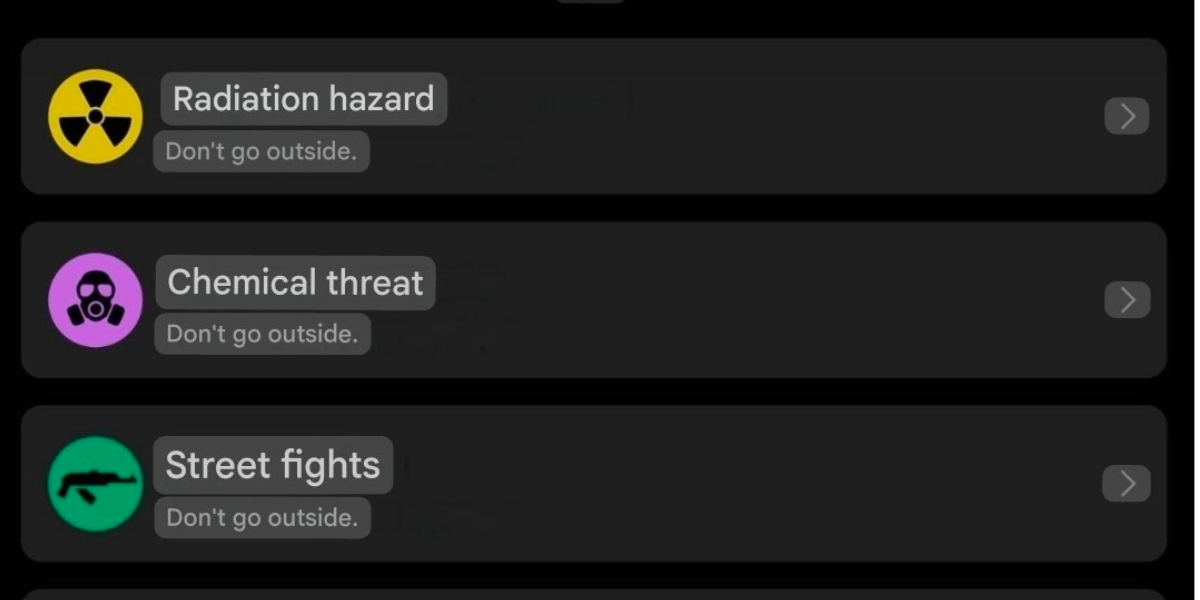
Last night, hackers took over Ukraine’s main air raid alert app and issued made-up warnings of nuclear, chemical and street-fighting threats – all of which were completely fabricated. Ukraine subsequently blamed the Russian state for the hack, but Russia responded unexpectedly, stating that their systems had also been hacked and denied any involvement in the hack on Ukraine.
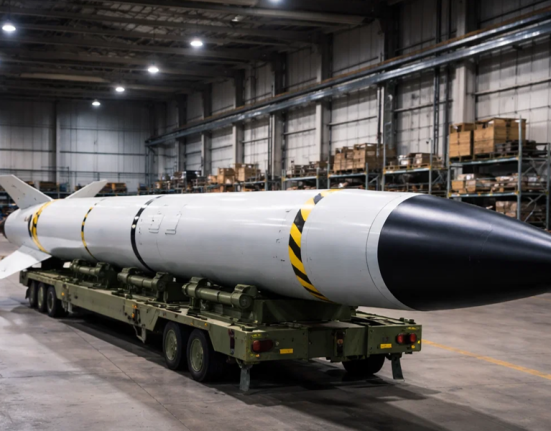
One message, written in Russian, warned of an incoming Oreshnik hypersonic missile, which was supposedly ‘on its way’ to Ukraine. The same message outlined a nuclear alert, causing rightful fear and distress among the population who received it.
The barrage of messages led sirens and alerts to sound across Ukraine, including in Zakarpattia in the far west of the country. Separately, in Lviv, a ‘radiation hazard’ signal was played across the region.
No real threat
Ukraine’s air force assured the nation that there was no radiation threat and that the app had ‘probably been subjected to hostile interference’. App developers later confirmed that unauthorised people had interfered with the app – leading to a temporary suspension and the disabling of push notifications.
But other ways of alerting the public remained operational however, it also guided residents in Kyiv to the separate Kyiv Digital app, which kept working normally throughout the period of disruption. Meanwhile, the State Emergency Service said that the national alert system was operating normally by midnight and urged people to listen to loudspeakers and avoid clicking on unknown links and avoid sharing unverified information.
At around 2am, developers said that the app was gradually coming back online, but had stopped showing targets on its map – they also reassured users that the app did not store personal data and thus, users were not at risk.
The attack on Russia’s systems
In the early hours of this morning, Russia’s Emergencies Ministry said via Telegram that its warnings app had suffered a ‘massive cyberattack’ that put ‘false information’ on it.
The messages, as reported by the Kyiv Independent said that ‘nuclear warheads’ had been launched at every part of Russia and advised those who received it to stock up on three weeks of food and hide in basements. The ministry said it was patching the weakness and restoring normal service.
Who was blamed?
Ukraine’s Centre for Strategic Communications blamed Russia in a post on X whilst Moscow has not said who it thinks attacked the app. Some outlets have suggested the attack on Russia’s system may have been a Ukrainian response, but this cannot be confirmed.
How the systems were breached also remains unclear. Neither Ukraine nor Russia has given technical details beyond the phishing warnings.
Wider context
The attacks come just after a local ceasefire around Oleshky, a Russian-occupied town in the Kherson region, had ended. The ceasefire allowed civilians to be evacuated and crucial aid to be delivered.
The truce was the longest of the war and was famously brokered by the US First Lady, Melania Trump. Ukraine said it attempted to extend the ceasefire, but the offer was refused by Moscow. The cyber attack on Ukraine’s app occurred shortly after the ceasefire ended, though no correlation can be accurately drawn between the two.
What this means for the war.
In the immediate aftermath of the hacks, both sides have seemingly resolved the issues with relative ease and efficiency. Whether these attacks are one-off incidents or the first in a string of new attacks on civilians is yet to be fully understood. Regardless, they reveal how modern conflict, such as the war in Ukraine has extended far beyond conventional warfare into an era of significant cyber conflict.