Pupils across Birmingham, the Black Country and the wider West Midlands could soon have their phones locked away for the entire school day, under tougher government guidance announced this week.
The Department for Education (DfE) has informed schools in England to go beyond “not seen, not heard” policies, where devices stay in pupils’ bags during the day. Ministers say the old approach is no longer efficient.
What is changing?
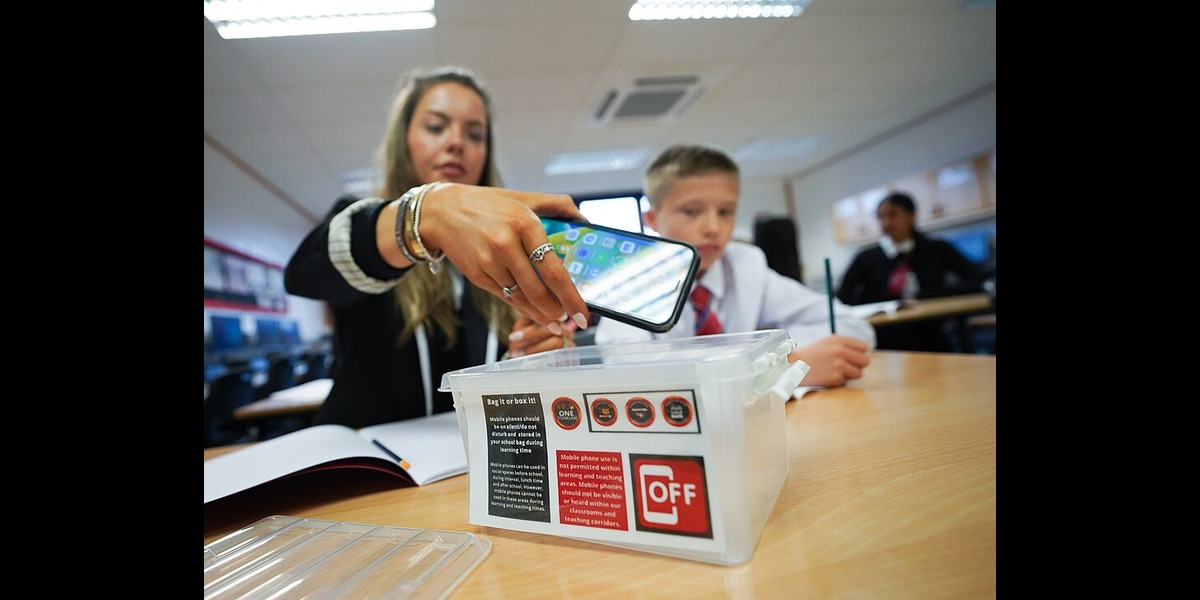
The aim is for phones to be inaccessible to pupils from the moment they arrive until the final bell. Many schools are being steered towards whole-school approaches such as lockable pouches, handing phones in at the start of the day, or secure storage.
The revised statutory guidance is due to come into effect in September 2027, giving schools around ten months to get ready.
Education Secretary Lucy Powell said children should not be using smartphones at any point in the school day. She added that school is for learning and friendship, not scrolling.
Ministers point to their own survey figures to back the move. Only 16% of secondary pupils say phone rules are followed all the time. The DfE also cited concern about digital distraction in lessons and a recent international decline in reading and maths performance.
Who is picking up the tab?
The big worry for school leaders is cost.
Pepe Di’Iasio, general secretary of the Association of School and College Leaders, said pouches or secure storage for every pupil would cost a very significant amount. He said it is not feasible unless the government provides the funding.
Paul Whiteman of the NAHT said many schools already restrict phones, but going further comes at a price. He said schools will need extra funding and support to introduce the more robust measures.
The Liberal Democrats echoed the call for full funding. They also want safeguards so that pupils with SEND or caring responsibilities can still reach a phone when they need one.
How are West Midlands schools coping already?
Some schools in the region are already ahead of the curve.
At Brownhills Ormiston Academy in Walsall, students lock their smartphones away in pouches at the start of every school day. The school brought them in after more than ten years of “not seen, not heard”.
Elsewhere in the Black Country, the Shireland Collegiate Academy Trust has taken a different route. In a letter to families this summer, Thorns Collegiate Academy, in Quarry Bank said any phone seen during the school day, even if switched off, will be confiscated. Each school in the trust has bought a supply of pouches. These are kept for the small number of pupils who repeatedly break the rules.
Will it work? A Birmingham study urges caution
Researchers at the University of Birmingham say a ban alone is not a cure-all.
Their Smart Schools Study found restrictive school phone policies were not linked to better pupil mental wellbeing. It also found that schools with more relaxed rules spent an average of 108 hours managing phone use.
There was a financial upside to stricter rules. Restrictive policies were estimated to cost schools around £94 less per pupil each year than looser ones, largely because of the staff time saved.
The researchers also found that bans do reduce phone use during the school day, but some pupils made up for it by using their phones more outside school. Professor Victoria Goodyear, who led the work, said the findings do not mean schools should not ban phones. She said school policies alone are not enough to tackle the harms linked to phones and social media.
Ofsted inspectors will also be looking closely. The watchdog will examine schools’ phone policies and how well they are applied when judging behaviour.
What parents need to know
- Pupils will not be reachable on their personal phones during school hours, so families will need to use the school office for urgent messages.
- The national guidance is designed to end the patchwork of different rules from school to school.
- Parents of children with medical needs or caring responsibilities should ask their school how exceptions will work.
- The government has also launched a consultation on independent safety certification for classroom technology. Education minister Paul Waugh warned last week of a “wild west” of EdTech products.
The politics
Prime Minister Andy Burnham’s government says the change is part of a wider push to make school “unmissable”, alongside curriculum reforms. The Children’s Commissioner for England, Dame Rachel de Souza, welcomed strong action to stop phones disrupting the school day. She also asked for support for all heads to apply the policy.
Shadow Education Secretary Laura Trott welcomed the change but repeated Conservative calls for a full legal ban on smartphones for under-16s.