
Britain wants a nuclear revival. After years of delay, the government has committed billions to a new large power station, backed a next-generation of smaller reactors, and promised regulatory reform. Supporters see energy security and clean, reliable power. Critics see eye-watering costs and a record of delays. Both camps have facts on their side.
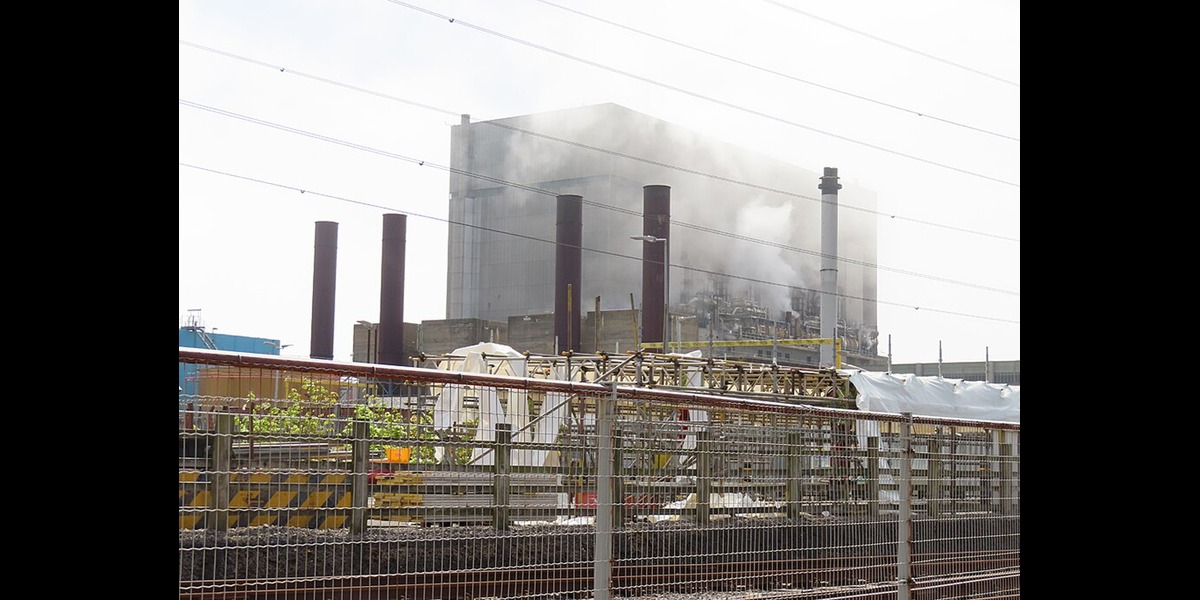
Start with the current position. The UK generates about 15% of its electricity from roughly 5.9 GWe of nuclear capacity, with nine operable reactors and two under construction. The two under construction are Hinkley Point C in Somerset and Sizewell C in Suffolk. The government’s 2025 final investment decision on Sizewell C put the UK’s next large nuclear station firmly on track after years of drift. Sizewell C will generate 3.2 GW, around 10% of the UK’s electricity demand over the last year.
The case in favour is straightforward. Nuclear delivers steady low-carbon power regardless of weather. Plants like Sizewell are expensive to build but run for 60 years with relatively low fuel costs. Land use is another argument: producing as much power per year as Hinkley Point C would take a solar farm twice the size of Oxford. Government has also tied nuclear to wider economic goals, arguing that once Sizewell C, small modular reactors and Hinkley are online in the 2030s, the UK will put more nuclear power into the grid than over the previous half century.
The case against starts with cost. Hinkley Point C’s cost has risen from £18 billion to over £35 billion. Sizewell C is expected to cost a minimum of £40.5bn. A parliamentary committee warned that taxpayers could face a £22bn bill if costs overrun, which MPs called a “terrible deal for the taxpayer.” The government’s own direct commitment is also large: it announced a £14.2 billion investment in Sizewell C.
Why is British nuclear so expensive? Witnesses told Parliament that the UK is between a third and a half as cost-effective as France and Finland, and that Sizewell B was built for about half what Sizewell C is set to cost. The same evidence contrasted plants costing around £38 billion to £40 billion in the UK with about £9 billion in South Korea. One academic presentation likewise argued that a fragmented regulatory system has led to conservative and costly decisions. That helps explain why the government has talked about reform, including a new Nuclear Regulatory Taskforce to clear a path for small modular reactors.
Small modular reactors, or SMRs, are the hoped-for fix. The idea is factory-built units assembled on site. Rolls-Royce is the preferred bidder to develop a number of them, which the government said can power around 3 million homes. A further £2.5 billion has been allocated to help develop SMRs. One Cambridge presentation estimated that each Rolls-Royce unit would be 470MW and cost about £2bn, with the first expected in the mid 2030s. Treat that as one academic’s estimate rather than an official budget. Parliament has also heard that Britain is pretty immature in the debate on how to finance small modular reactors.
Sceptics raise a broader strategic question. One critical analysis noted that no large reactor stations can come online after Sizewell C until the mid-2040s at the earliest, and that Sizewell C might be the last large reactor project for the foreseeable future. Meanwhile, the slow pace of new nuclear construction contrasts sharply with the rapid expansion of wind and solar. That raises a fair question about whether money spent on nuclear might deliver more clean power sooner elsewhere, though advocates reply that a grid heavy on wind and solar still needs firm, always-available capacity.
There is one more driver: demand. The UK’s nuclear push followed warnings about energy capacity and supply for data centre investment. Whether demand grows as forecast is uncertain, which makes long-lived assets more of a gamble.
My reading of the evidence is that nuclear’s technical case is strong, but delivery and financing are the real weak points. The biggest risk is not that nuclear power doesn’t work, but that it arrives late and over budget, with bills falling on consumers or taxpayers. Whether the current approach changes that will become clear only as Sizewell C and the first SMRs get built.