
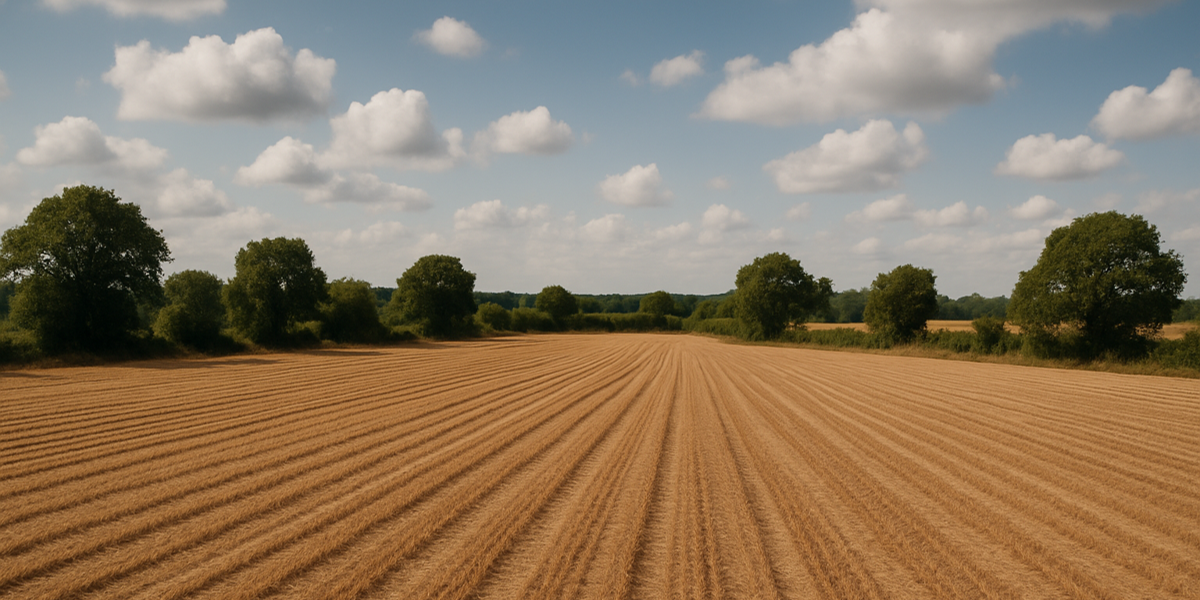
West Midlands farms under pressure
Farmers across England, including in the West Midlands, are sounding the alarm as a deepening drought threatens food production and devastates river ecosystems.
Following the driest spring in 132 years, drought conditions have now been officially declared across multiple regions, including the East and West Midlands, Yorkshire, and the north-west. This week Southern Water, covering Kent, Hampshire and Sussex, imposed hosepipe use bans.
The situation has pushed already stretched farmers into crisis mode, with parched soils, damaged crops and dangerously low river flows becoming widespread. For West Midlands agriculture – central to the UK’s food supply chain – the consequences are especially acute.
Harvest begins early, yields uncertain
According to the Agriculture and Horticulture Development Board (AHDB), this year has seen the earliest harvest start since records began in 2006. But despite an initial outlook for a bumper crop, farmers are now reporting average yields and reduced straw volumes. The sandy, silty soils typical of parts of the West Midlands are struggling to retain moisture, leaving crops vulnerable during vital growth stages.
Water shortages threaten ecosystems
Alongside the damage to agriculture, the drought is putting immense pressure on river wildlife. River flows in eastern, central and southern England – including parts of the West Midlands – have dropped to record lows between March and June, with June registering some of the driest soil conditions since at least 2013.
Hope with rain but winter is key
Rain is forecast and experts believe a wet summer and autumn could help recover soil moisture levels. But continued dryness into the winter would leave the UK in “real trouble,” said one local farmer.
For West Midlands farmers, the months ahead will determine whether this drought becomes a short-term setback or the start of a longer-term crisis. Either way, the need for climate-resilient farming and urgent water management reform has never been more evident.


