By Paul Cadman
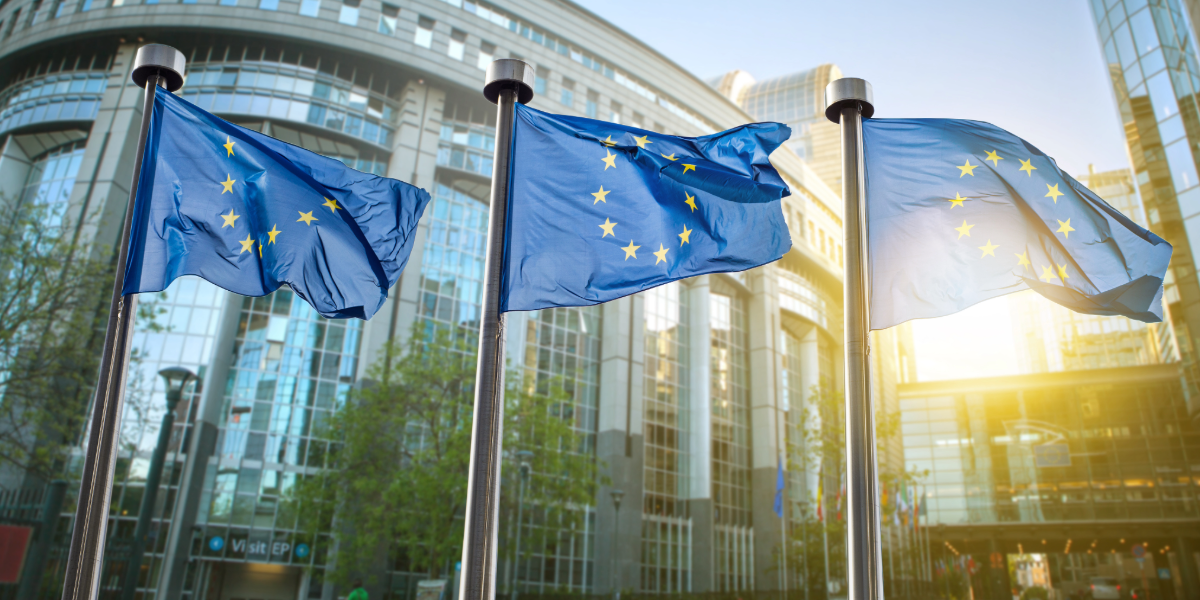
As UK and European Union negotiators worked through the night ahead of a major summit today, both sides were attempting to finalise the most significant adjustment to post-Brexit relations since Britain formally left the bloc.
At the heart of the discussions is what ministers are calling a “reset” of relations. Expected measures include a new Youth Mobility Scheme, understood to allow up to 100,000 young Britons and Europeans each year to live and work in each other’s countries, alongside agreements designed to reduce trade friction and improve cooperation in key economic sectors.
While politicians will inevitably focus on the headlines and the symbolism, the more important question is what the deal actually means for ordinary people, businesses and regions such as the West Midlands.
The answer is complicated.
For some, today’s agreement represents a welcome acknowledgement of reality. For others, it raises uncomfortable questions about where Britain is heading after Brexit. What is beyond dispute is that both London and Brussels now appear to recognise that continued economic and political distance comes with a cost.
The economic argument is perhaps the most striking.
David Henig, Director of the UK Trade Policy Project at the European Centre for International Political Economy, believes the economic gains from today’s agreement are likely to be modest but meaningful. Estimates suggest Brexit has reduced Britain’s economic output by around four per cent of GDP. By comparison, the measures currently being discussed are expected to deliver a long-term boost of approximately 0.4 per cent.
That immediately places the agreement in context.
Even supporters of closer ties with Europe accept that this deal will recover only a fraction of the economic ground many economists believe has been lost since Brexit. It is not a return to European Union membership. It is not the restoration of the Single Market. It is not a reversal of the decision taken by British voters in 2016.
What it represents instead is a pragmatic attempt to make the current arrangements work more effectively.
The significance of that should not be underestimated.
The European Union remains Britain’s largest trading partner by a considerable margin. Around half of UK trade still involves EU member states. Geography has not changed since Brexit. The Channel remains narrow. Supply chains remain interconnected. Businesses continue to buy, sell and invest across European borders because it makes commercial sense.
That is especially true in the West Midlands.
Few regions have as much at stake in the UK’s relationship with Europe.
The West Midlands economy was built on making things, exporting products and attracting investment from overseas. Automotive manufacturing, advanced engineering, logistics, life sciences and higher education all depend heavily on international relationships.
Companies across Birmingham, Solihull, Coventry, Wolverhampton and the Black Country continue to trade extensively with customers and suppliers across the European Union. For many businesses, Brexit introduced additional paperwork, customs checks, regulatory barriers and delays which increased costs and reduced competitiveness.
Major employers such as Jaguar Land Rover, Aston Martin and hundreds of specialist manufacturers remain deeply integrated into European supply chains. Components frequently cross borders multiple times before a finished vehicle reaches the customer.
For those businesses, even relatively small reductions in bureaucracy can have a significant impact.
Less paperwork means lower operating costs.
Fewer delays mean improved efficiency.
Greater regulatory certainty increases confidence to invest.
That is why business groups across the country are likely to welcome any measures that reduce friction, even if they fall far short of restoring pre-Brexit arrangements.
There is also a tendency in parts of the British debate to view these negotiations as Europe doing Britain a favour. The reality is considerably more balanced.
The European Union has every bit as much interest in expanding trade with the UK as Britain has in strengthening economic ties with Europe. The UK remains one of the world’s largest economies, one of Europe’s leading military powers and one of the EU’s most important export destinations.
German car manufacturers sell hundreds of thousands of vehicles into Britain every year. French food producers, Dutch logistics companies, Spanish tourism businesses and Italian manufacturers all benefit from strong economic links with the UK. British consumers remain a hugely important market for European goods and services.
The numbers explain why Brussels has been willing to invest political effort into improving relations. Britain remains one of the EU’s largest trading partners. Reducing barriers and improving market access does not simply benefit the UK. It benefits companies, workers and investors across Europe as well.
That is why this should never be viewed as one-way traffic.
The West Midlands has much to gain from smoother access to European markets, but businesses across Europe are equally keen to maintain and expand access to Britain. Economics, rather than politics, is driving much of this reset.
Britain needs Europe, but Europe also needs Britain.
The European Union remains the larger economic bloc and enters negotiations from a position of strength. However, both sides understand that stronger commercial ties create mutual benefit. For a manufacturing region such as the West Midlands, that shared economic self-interest provides a far stronger foundation than political rhetoric ever could.
One of the most contentious areas of the negotiations has been food standards.
At first glance, arguments about veterinary regulations and agricultural standards may appear highly technical. In reality, the issue sits at the heart of Britain’s future trading relationship with Europe.
The UK is understood to be seeking closer cooperation in order to make it easier for food and agricultural products to move between markets. The challenge, however, is that easier access often requires greater regulatory alignment.
That inevitably revives one of Brexit’s central debates.
How much sovereignty is Britain willing to trade for easier access to its largest export market?
Supporters of Brexit campaigned heavily on the principle that British laws should be made in Britain. Critics argued that economic reality meant the UK would continue to be influenced by EU regulations regardless of formal membership.
The current negotiations suggest those arguments have not disappeared.
In fact, they may simply have entered a new phase.
British ministers are reportedly seeking greater opportunities to help shape future EU standards, particularly in areas affecting trade. Yet countries outside the European Union do not receive voting rights on EU legislation.
As Henig points out, influence is usually exercised through diplomacy, consultation and lobbying rather than direct participation.
The practical reality is that if Britain wishes to sell into European markets, European regulations will continue to matter.
For businesses, this is often viewed through a far more practical lens than politicians apply.
Most employers are not especially concerned about ideological arguments over sovereignty. They want certainty. They want predictable regulations. They want products moving efficiently and customers receiving goods on time.
The same applies across much of the West Midlands economy.
Ask a small engineering company in Dudley, a vehicle component manufacturer in Coventry or an exporter in Wolverhampton what matters most, and the answer is unlikely to involve constitutional theory. It is more likely to involve delivery schedules, order books and profit margins.
The proposed Youth Mobility Scheme could also carry significant implications for the region.
If implemented as expected, the arrangement would allow up to 100,000 young Britons and Europeans each year to live and work in each other’s countries.
For younger people across Birmingham, Solihull, Sandwell and Walsall, the scheme would reopen opportunities which many felt disappeared after Brexit.
The ability to work abroad, gain experience, develop language skills and build international careers remains highly attractive to many young people.
At the same time, businesses facing recruitment difficulties may welcome the prospect of a larger pool of potential workers.
Skills shortages continue to affect multiple sectors across the West Midlands, particularly engineering, hospitality, logistics, healthcare and construction.
While the scheme will not solve those challenges overnight, it could provide useful additional flexibility within the labour market.
The region’s universities may also stand to benefit.
Institutions such as Birmingham, Warwick, Aston, Coventry and Wolverhampton have long relied upon international students, research partnerships and academic collaboration across Europe.
Any measures improving educational cooperation or student mobility would be welcomed at a time when university finances face increasing pressure.
Perhaps the most interesting aspect of today’s summit is not the detail of the agreement itself, but what it says about the broader political direction of travel.
For years the Brexit debate centred on whether leaving the European Union was the right decision. Increasingly, the discussion appears to be changing.
The debate is becoming less about leaving and more about managing the consequences of having left.
Politicians on both sides of the argument are beginning to confront the reality that Britain and Europe remain economically intertwined regardless of constitutional arrangements.
Regional leaders such as Andy Burnham have repeatedly argued that Brexit has imposed costs on local economies. Similar concerns are privately voiced by many business leaders across the West Midlands.
At the same time, there remains little political appetite for reopening the fundamental question of EU membership.
The result is a search for practical cooperation without formal reintegration.
That may ultimately define Britain’s relationship with Europe for years to come.
Today’s agreement will not transform the economy overnight. It will not erase the political divisions of the past decade. It will not recover all the economic opportunities that supporters of closer relations believe were lost.
What it does represent is an acknowledgement that cooperation remains necessary.
For the West Midlands, that matters.
This is a region that succeeds when it trades, manufactures, innovates and attracts investment. It thrives when barriers are removed rather than erected. It benefits when businesses can access markets, recruit talent and compete internationally.
Whether people supported Brexit or opposed it, most would agree on one thing.
The future prosperity of the West Midlands depends on economic growth, good jobs and successful businesses.
If today’s summit helps move the country even a small step closer to those goals, then it will have achieved something worthwhile.
The bigger lesson may be that economic realities have a habit of outlasting political slogans. Six years after Brexit reshaped Britain’s place in Europe, both sides appear to be accepting a simple truth: when your largest neighbour is also your largest customer, finding ways to work together is not a concession and it is certainly not one-way traffic.
It is common sense.