Prof Neil Hanley tells the story behind the story – of UoB pioneers’ journey of global medical breakthroughs
Last week, a story came out of the University of Birmingham (UoB), led by Professor Parth Narendran and his team, on the results of a new screening programme for Type 1 diabetes called ELSA.
It attracted a lot of interest across the major news outlets (including BBC, ITV, Sky), and rightly so. But in many ways, this is “only” a scene in an episode that has yet to conclude, with the next series already being filmed.
What is Type 1 diabetes?
At risk of mashing the facts, here is a back-of-the-envelope history: In type 1 diabetes, you lack the hormone insulin and you cannot control your blood sugar levels. You also lose insulin’s capability to control massive amounts of the body’s metabolism.
Insulin really is the key regulator. Consequently, in insulin’s absence, Type 1 diabetes is with you as a significant risk every day, 24-7, and there’s no day off … for life.
‘Type 1 diabetes was a death sentence – until we discovered insulin’
Just over a century ago, we discovered insulin, the hormone missing in Type 1 diabetes sufferers because the cells that manufacture it in the pancreas, the beta cells, get destroyed by the body’s immune system.
Autoimmune disease results in the body literally destroying itself. Before this and until we could manufacture insulin at scale, Type 1 diabetes was a death sentence. If you live in parts of the world today unable to keep insulin fresh (think refrigeration, think electricity supply), or unable to access treatment, it still is.
Advances in medical sciences are saving lives
Insulin therapy by injection saved lives: production, clever formulation and supply led by major pharmaceutical companies like Eli Lilly and Novo Nordisk. Nobel Prizes were won along the way and rightly so.
Therapy today with closed-loop sensing of glucose levels tied to insulin delivery algorithms in a pump is wonderfully sophisticated. This in itself is a fantastically impactful research story.
Cell therapy progress from the 1980s to 2000s
Now, fast forward to the 1980s-early 2000s. Cue the start of serious cell therapy, transplanting beta-cells to restore the body’s own supply of insulin on demand: right place, the right time, right amount.
While the early stuff was rough and ready, it has gotten a whole lot better. In the last 20 years or so, islet transplantation, according to clinical circumstances, has become a relatively accessible therapy, allowing people life-changing freedom from insulin injections. But it is still hampered by supply.
Like all kinds of organ donation from people who have died when otherwise healthy (like a road traffic accident), it requires a tragedy to deliver the benefit. Inevitably, we are trying to eliminate the tragedies. As strategies go for cell replacement, it isn’t ideal.
Insulin-secreting beta cells – another breakthrough
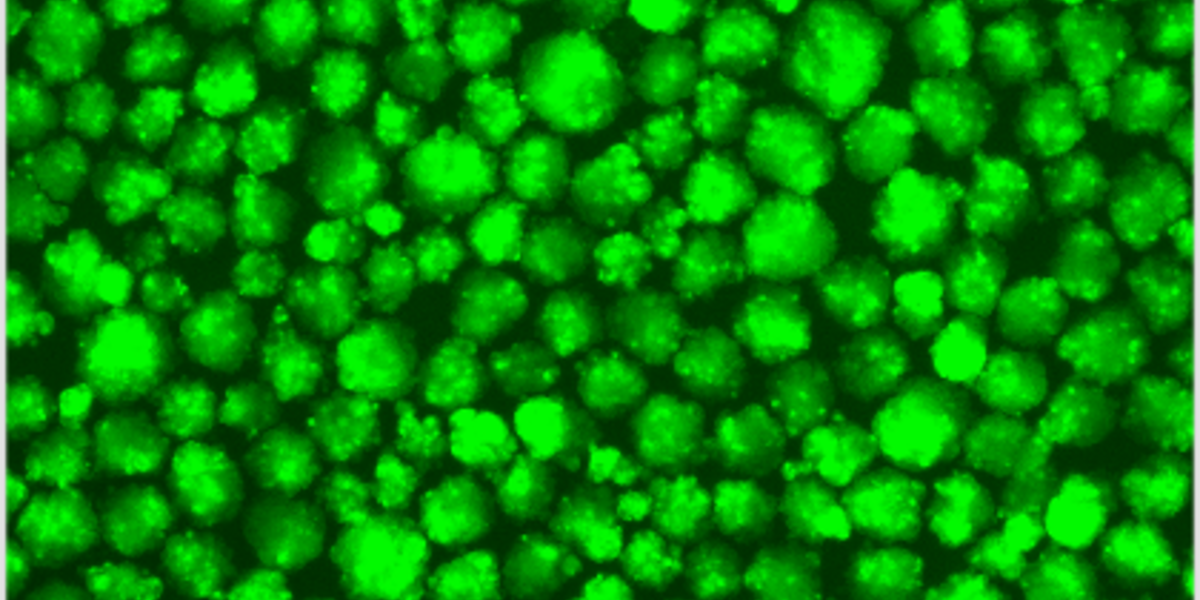
Cue another breakthrough, in parallel over the last 25 years – making insulin-secreting beta cells in the lab from stem cells has gone from … “Could that be insulin?” to “wow, they really do look like beta-cells.”
UoB is at the forefront of this global success story
Massive business and, slowly but surely, a great success story is unfolding. Our scientists, like Ildem Akerman at the University of Birmingham, are part of a global network translating what was once discovery science towards clinical fruition. It’s coming.
Birmingham screening programme detects diabetes before it kicks in
So, what about last week’s headlines? Our Birmingham screening programme can pick up diabetes before it kicks in.
Yes, this is a fantastic breakthrough, hats off to Parth and the team.
Their internationally leading work prevents a cliff-edge diagnosis, emergency hospital admission, huge upset and massive disruption. For the child or teenager, your daughter, your son, early detection means you don’t disrupt life so much. You buy some time to adjust. You smooth out a transition.
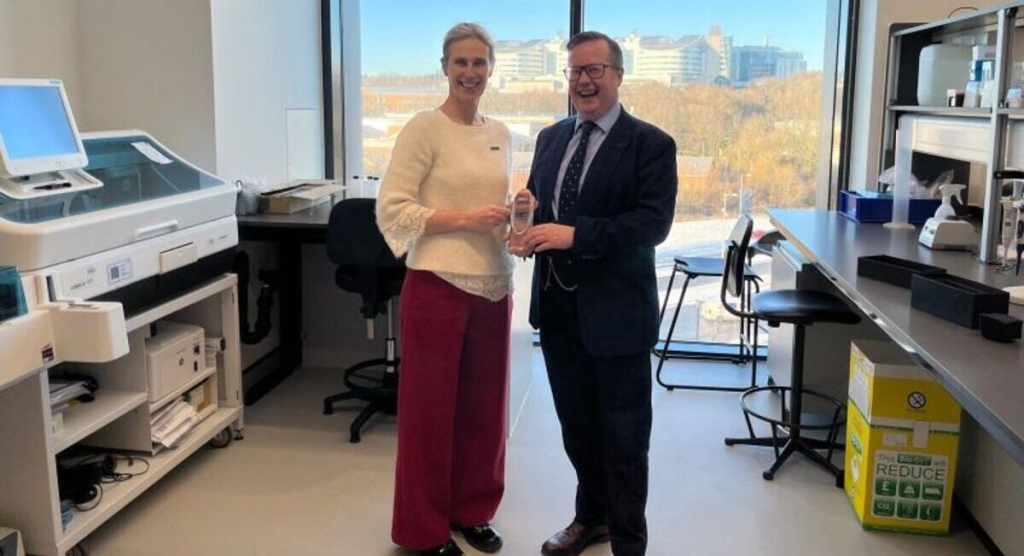
Prof Alex Richter in UoB’s Clinical Immunology Service
Superficially simple and yet a multi-faceted success story. Researchers in our Clinical Immunology Service at UoB, under its lead Alex Richter, quickly realised that fresh blood sampling drawn from a vein, as happens in hospitals and GP surgeries, wasn’t fit-for-purpose when it came to community screening.
Re-engineering diagnostics tests
So, they reengineered the diagnostic test so it could be undertaken on dried spots of blood mailed in from home. In fact, “the test” is actually measuring three different antibodies – a three-in-one solution, each one needing to be proven reliable in its new setting.
The future – bringing advanced medical care to the Global South
What’s coming? We all want easy-to-use lateral flow tests (LFTs) – unimaginable a decade ago but now mainstream and commonplace in society.
Alex and team have taken their blood spot tests and assays and produced a neat little LFT transforming where and how testing might be undertaken.
In the middle of a rural community in sub-Saharan Africa? OK. Detect the disease before diabetes, and there is a chance to intervene without the need for a remote laboratory, which might be hundreds of miles away.
No one is saying this makes life easy, but it could certainly help.
Birmingham med tech pioneers saving lives worldwide
Let that sink in … Pioneered in Birmingham, saving lives worldwide.
But there is more, much more. We are on a path to a whole new destination.
There’s more – including Sanofi
In Birmingham, we have also been leading the way with industry partners like Sanofi on piloting novel treatments to turn off the body’s immune attack against the beta cells.
This sets off a whole new opportunity. This is no longer early detection, turning a crash landing into a smooth descent. Now we are staying airborne. Detect the disease before it manifests, while there are still beta-cells making insulin, and intervene to turn off the disease – and Type 1 diabetes might be avoided.
No doubt at first this will only be delay, albeit a valuable one, maybe bumping the disease from childhood to teenage years to adulthood. But in time, there are reasons to expect better.
Huge hope for the future and emerging health tech advances progress
Lessons from other immune-mediated disorders like rheumatoid arthritis tell us that personalised combinations of different therapies are entirely feasible. These drugs are in development or potentially already exist, ready for re-purposing.
Combine all this with the ever-advancing cell therapy, and in years to come we might just have answers not only for those newly diagnosed but for those with existing diagnoses – restoring beta cell function and blocking future immune attack for people with established Type 1 diabetes.
It’s taken a while, but you can see success coming.
This mission is personal
For me, there is a personal angle: the charity, Breakthrough Type 1 Diabetes (BT1D), which funded the current research with Diabetes UK, gave me my first big break nearly 30 years ago by awarding me a three-year project grant.
It was generous, but it wasn’t altruism: my work looked at how we first make beta-cells inside the body during human development – the roadmap for how we might try to make insulin-producing cells in the lab.
Through that award, it was inspiring to meet the world’s leading scientists, but more than that, I got to spend time with the children, parents and families impacted by Type 1 diabetes who had made it their life’s mission to “search for a cure.”
BT1D was formerly called the Juvenile Diabetes Research Foundation (JDRF), formed by family networks out of New York to “search for a cure in the lifetime of their children” – their original strapline. As a young doctor, it changed my view on life and inspired my lab team about the purpose of their discovery research.
Hard yards begin now
While the science of what’s next might be clear, in some ways, the hard work now really begins. Knowing something works is one thing – turning it into widely available screening, diagnosis and treatment is the hard yards.
It will need joint working with local government and community health leaders (how to screen, when to screen?
For instance, could we combine testing with childhood vaccination programmes; if so, how might we resource it). It will need the major pharmaceutical companies developing the new immune-modulating drugs to see the endeavour as commercially viable.
The government is driving towards the same goal we are
In a world of finite resources, it needs Government-associated bodies like NICE to see value for money and clinical commissioners to back widescale roll-out.
What is clear is that preventing Type 1 diabetes, shifting care to the community and innovating massively in new diagnostics and therapies, could not be closer to the heart of the Government’s NHS 10-year plan.
Through collaborative working with universities and healthcare settings, the goal must be scaling cell therapy biotechs, and this is central to the Government’s Life Sciences Sector plan. It’s also exactly what UoB is doing right here in Birmingham.
Call to action: Everyone needs to ‘keep thumping the drum’
People call this “the triple helix” route. In this case, add an extra strand. It’s a quadruple helix. We are going to need those same champions in the charity funders like BT1D and Diabetes UK to keep thumping the drum. The people who fought for years to bring insulin pump therapy into routine care, the people who want to make type 1 diabetes a problem of the past.
‘We might just crack this’
It’s complex, but we might just crack this.
That’s the current episode. I reckon the next series will be really exciting.