
‘Neurosurgery, clinical trials, combating cancer – things I saw on a life sciences tour of Birmingham‘
When a small group of invited guests arrived at the University of Birmingham earlier this week, they knew they were in for a unique experience. What they didn’t expect was to witness first-hand how science and patient care are seamlessly linked across a single city.
The day began with Professor Jason Parsons and his team introducing their cutting-edge work in radiotherapy. From proton beam therapy to FLASH radiotherapy, their research is helping to improve treatments for brain and head and neck cancers, making them both more effective and less harmful.
Queen Elizabeth Hospital
Just minutes away, at Queen Elizabeth Hospital, guests then joined Dr Victoria Wykes, Associate Clinical Professor of Neurosurgery, as she and her team performed an operation to remove a brain tumour. Within moments of the procedure, a sample of the tumour was carefully carried back across campus to the university labs, ready to be studied.
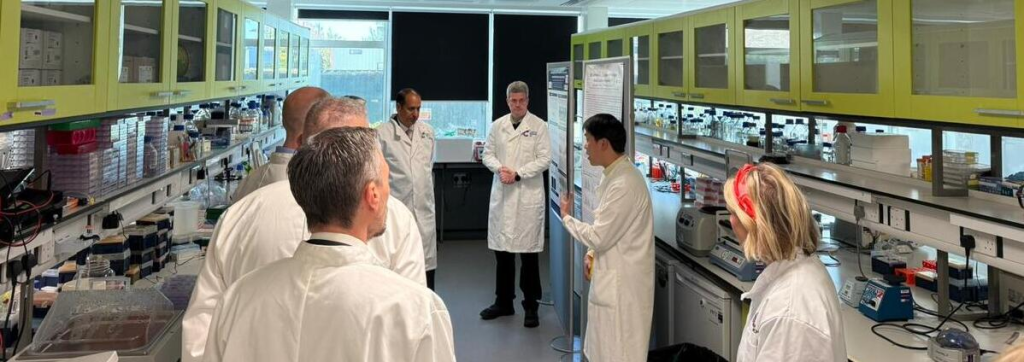
“Charitable and philanthropic donations have enabled us to build a unique research infrastructure, ensuring that the operating theatre serves as an extension of the laboratory,” she said.
“Our vision is that every patient with a brain tumour has the opportunity to contribute to research whether through our active patient and public involvement group (BERTI) or by providing consent to participate in clinical research studies.
‘Precision therapies’
“Our goal is to deliver a world-class, innovative clinical trial platform that integrates cutting-edge basic and translational science, to develop and test novel precision therapies, ultimately improving patient outcomes.”
It was a striking demonstration of Birmingham’s world-class “bench to bedside and back again” model, where research discoveries flow rapidly from laboratory to clinic, and patient experiences guide new scientific questions.
In the future, researchers hope these tumour analyses can be completed in real time, giving doctors answers within minutes and helping them make faster, more personalised decisions for patients.
The visit showcased the fantastic work made possible by the close physical proximity of the partners involved in this work, as well as the relationships built in Birmingham’s thriving Health and Life Sciences District.
Throughout the day, guests were welcomed by Professor Mat Coleman (Head of the Department of Cancer and Genomic Sciences) who acted as the lead host for the visit.
They also heard from experts including Dr Vinton Cheng (Associate Clinical Professor, medical oncology), Professor Lorraine Harper (Birmingham Health Partners) and Professor Neil Hanley (Pro-Vice-Chancellor and Head of the College of Medicine and Health and Executive Director of Birmingham Health Partners).
The group included civic and community leaders such as the Lord Mayor of Birmingham, yours truly (CEO of the One Thousand Trades), and senior representatives from Selco Builders Warehouse, a valued corporate partner of Cancer Research UK.
Patient-focused research
Professor Mat Coleman, Head of the Department of Cancer and Genomic Sciences, said: “It was a real privilege to welcome our guests – in partnership with Cancer Research UK – to experience one example of our integrated patient-focused research cycle.
“We are passionate about driving rapid advances in understanding cancer and harnessing this knowledge for improving treatments and patient quality of life.
“This research benefits all cancer patients and their families, including our local population, which has one of the highest cancer mortality rates in the UK. By taking a collaborative approach, including with our external partners, we feel inspired by what the future holds.”
The University of Birmingham is a world-leading research institution – over the last couple of years it has secured approaching £0.5billion of investment into health and life sciences research as new grants and awards.
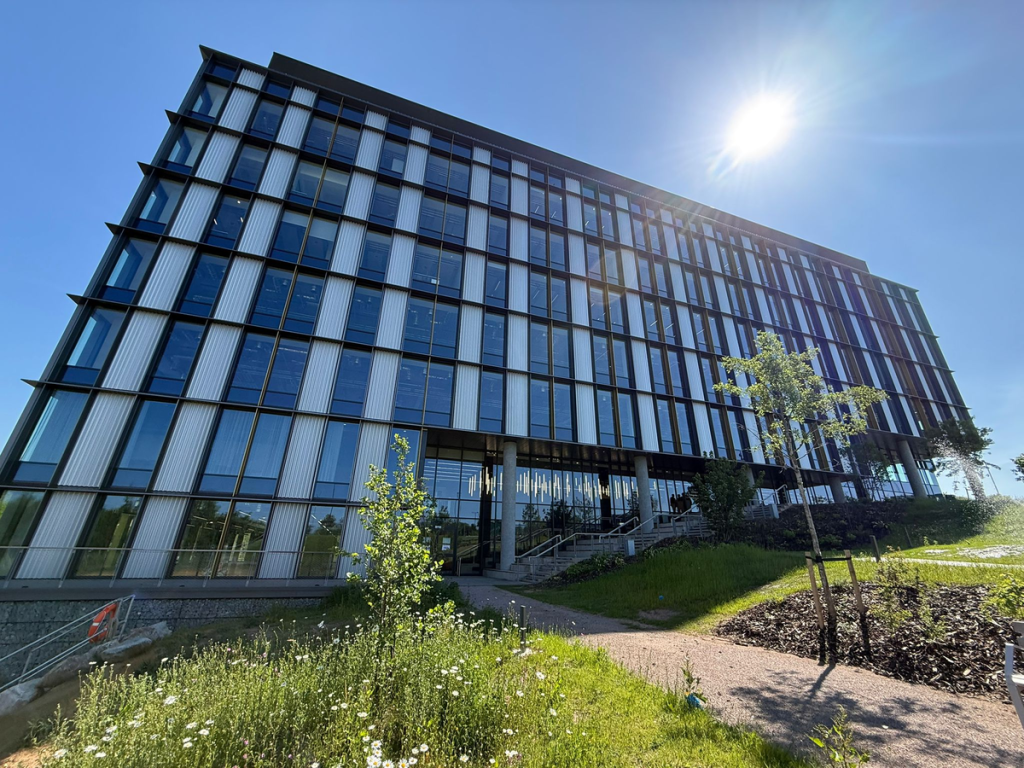
Birmingham’s Health & Life Sciences District has everything in one place: the brightest researchers working with clinical leaders, a diverse local population that represents the world, partnership with industry and the newly opened Birmingham Health Innovation Campus.
“It is always a pleasure to host guests and to showcase this capability and to learn how we can get even better” said Professor Neil Hanley, Pro-Vice-Chancellor and Head of the College of Medicine & Health and Executive Director of Birmingham Health Partners.
33,700 people diagnosed with cancer annually in the West Midlands
Every year around 33,700 people are diagnosed with cancer in the West Midlands. Research taking place in Birmingham, much of it funded by Cancer Research UK, is helping to change the outlook for people affected by the disease and move closer to a world where everyone lives longer, better lives, free from the fear of cancer.
In West Midlands around 33,700 people are diagnosed with cancer each year (2018, 2019, 2021) In West Midlands, around 15,000 people die from cancer each year (2021-2023)