
Submarines and drones reshape future warfare
The Royal Navy has entered a new era of underwater and aerial operations with the rollout of three cutting-edge autonomous platforms, developed in partnership with British industry, defence scientists and research organisations.
The £400 million Anti-Submarine Warfare (ASW) Spearhead programme has produced three demonstrator systems – CETUS, PROTEUS and SCYLLA – in just seven years.
Officials say the projects are not only strengthening Britain’s naval capabilities but also advancing key AUKUS defence objectives.
CETUS: Britain’s largest autonomous submarine
The centrepiece is CETUS, a 12-metre, 25-tonne autonomous submarine designed and built by Plymouth-based firm MSubs. With a substantial payload bay, the vessel can be configured for anti-submarine warfare, seabed operations and intelligence missions.
Lt Cdr David Iwanek, who sponsors underwater battlespace capability, called CETUS “our first venture into large-scale uncrewed submarines”, adding that it “could change the way we fight”.
The submarine began sea trials in February 2025 and has since been formally named XV Excalibur. It is one of the most complex uncrewed submersibles currently in use by any navy.
PROTEUS: Rotary wing innovation
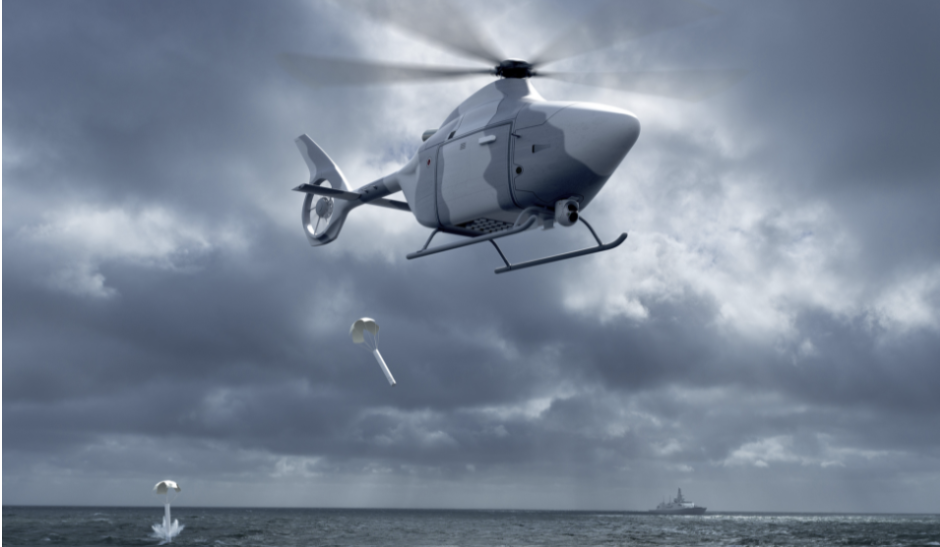
The PROTEUS project, delivered by defence firm Leonardo, has created a 3-tonne autonomous rotary platform in record time – moving from concept to hardware in just three years.
Initially tasked with deploying sonobuoys and relaying communications, PROTEUS reduces reliance on costly crewed helicopters for dangerous anti-submarine missions. Future roles are expected to include logistics support, search and rescue coordination, and broader maritime surveillance.
Programme leaders say the rapid development cycle for PROTEUS demonstrates how streamlined acquisition processes can save both money and lives.
SCYLLA: Submarine-launched autonomy
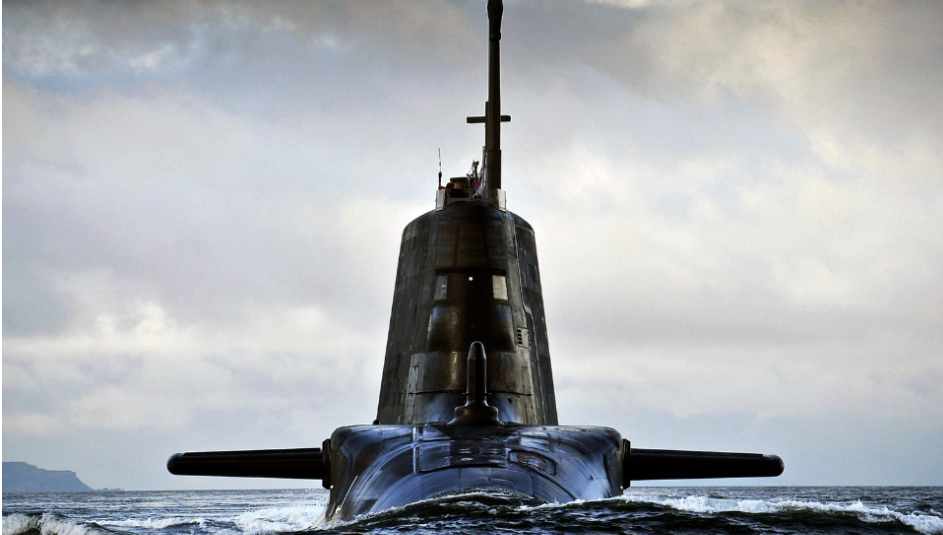
The third demonstrator, SCYLLA, is designed to launch and recover itself from a submarine’s torpedo tube. With a modular mid-section for interchangeable payloads, it is being trialled on ASTUTE-class submarines and is expected to reach Initial Operating Capability between 2026 and 2027.
Supporting AUKUS Pillar 2 objectives, SCYLLA will enhance the UK’s ability to conduct covert seabed warfare, intelligence collection and surveillance without modifying existing submarines.
Commander Chris Hill, Programme Director for ASW Spearhead, said: “SCYLLA delivers a paradigm shift in ASW capabilities, the most significant since the introduction of Tomahawk.”
Streamlined innovation
The success of the ASW Spearhead programme lies in its approach. A seven-step governance framework, backed by long-term funding, gave industry the confidence to innovate while ensuring safety and operational standards. The Defence Science and Technology Laboratory (Dstl) played a central role in providing technical expertise and assessing capability proposals.
Securing Britain’s future
Officials say the three projects validate a new way of working – one that reduces delays and costs while rapidly delivering complex technologies. They place the Royal Navy at the forefront of naval innovation, aligning Britain’s defence with AUKUS partners and preparing forces for the demands of modern maritime conflict.
As CETUS, PROTEUS and SCYLLA move from testing to operational use, the Navy believes they will not just extend capabilities but transform how the UK secures the seas.