A senior military commander has publicly named Russia as one of four countries targeted by Britain’s National Cyber Force.
The UK has publicly confirmed that it is carrying out offensive cyber operations against Russia. General Sir Rob Magowan, head of the UK’s Cyber and Specialist Operations Command, confirmed this in an interview with Sky News on 20 November. Reports describe it as the first time a senior commander has revealed this publicly, and it is a rare glimpse of work that is normally kept secret.
Four countries named
Russia is not the only target. The National Cyber Force is also actively targeting threats from China, Iran and North Korea. Asked whether the force carries out offensive operations, Magowan said “Absolutely”, adding that the UK has been clear about this. He said all four countries present a threat to Britain’s way of life.
He did not give details of what had been done. He declined to name specific Russian targets or say what the operations achieved.
“A cost” for hostile activity
The message was about deterrence, meaning making the other side think twice. Magowan said these countries need to be “really clear” there will be a cost to them for operating in cyberspace. He said the UK would meet “threat with threat”.
He also tried to explain where this sits between peace and war. Asked if Britain is at cyber war with these countries, he said he wouldn’t say the UK is at war but it is not at peace either. Experts sometimes call this a “grey zone”, meaning hostile activity that falls short of open conflict.
What are offensive cyber operations?
In simple terms, defensive cyber work is about protecting British networks, such as hospitals, banks and government systems. Offensive work means going on the attack against an adversary’s own computer systems. According to Magowan, British specialists can examine how an adversary’s computer systems are structured, understand how their networks operate, and carry out operations within them.
The force isn’t aimed only at governments. He said its targets also include organised crime and people causing online harm, including to children.
Who is the National Cyber Force?
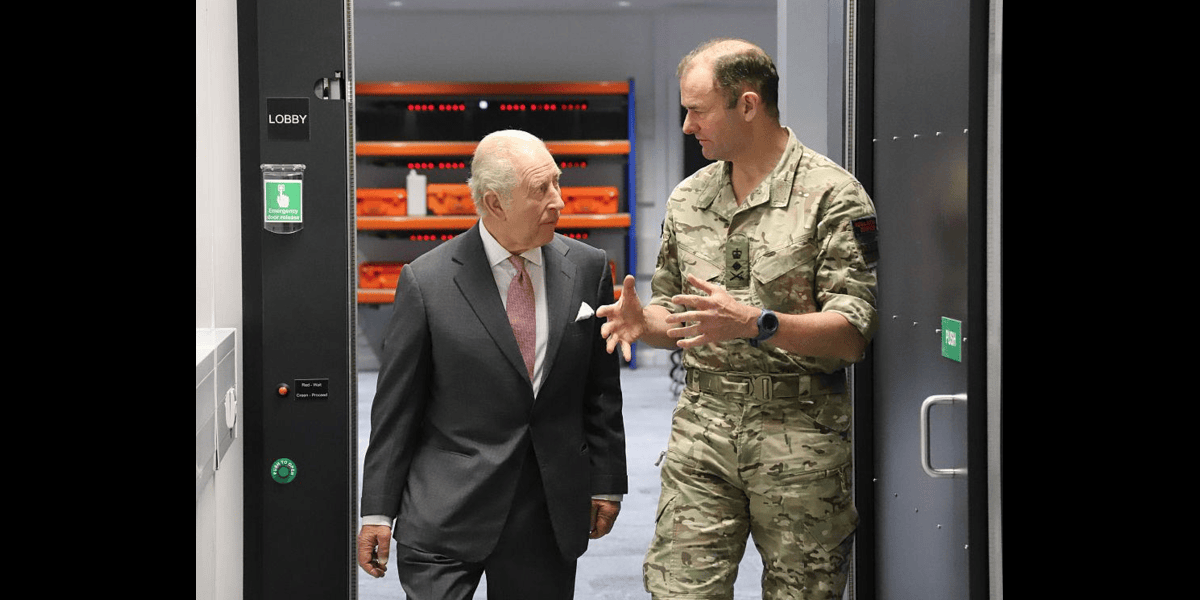
The National Cyber Force was created in 2020 as a joint agency of the Ministry of Defence, GCHQ, MI6 and the Defence Science and Technology Laboratory. It is jointly led by Magowan and GCHQ director Anne Keast-Butler. The Ministry of Defence handles operational planning, GCHQ provides intelligence support, MI6 contributes its intelligence network, and the Defence Science and Technology Laboratory supplies technical expertise. One report says his comments came in the same week King Charles officially opened the force’s new headquarters in Samlesbury, Lancashire.
The scale of the threat
The government has described the threat as serious. Over the past year, the National Cyber Security Centre received 1,831 reports of cyber attacks, 80 of which were classed as nationally significant. The report doesn’t say how many involved Russia.
Part of a wider response
Today’s disclosure follows a series of public moves against Russian cyber activity. In July, the UK and EU announced a joint sanctions package against 24 individuals and entities accused of supporting Russia’s cyber operations, disinformation and hybrid attacks across Europe. The UK said at the time that Russia’s GRU military intelligence worked with cybercriminals to recruit hackers from universities in Russia. Britain has made similar accusations before. In 2018, it blamed Russia’s military for the NotPetya attack, which disrupted companies across Europe, including UK-based Reckitt Benckiser. Russia denied it, calling the accusation part of a “Russophobic” campaign.
What it means
For the public, the immediate effect is likely to be limited. The operations are secret and no details have been given. But the confirmation tells us something about how the UK now sees the threat: as a constant contest in which Britain intends to strike back as well as defend. I found no response from the Russian government in the coverage I reviewed