By West Midlands News Political Editor
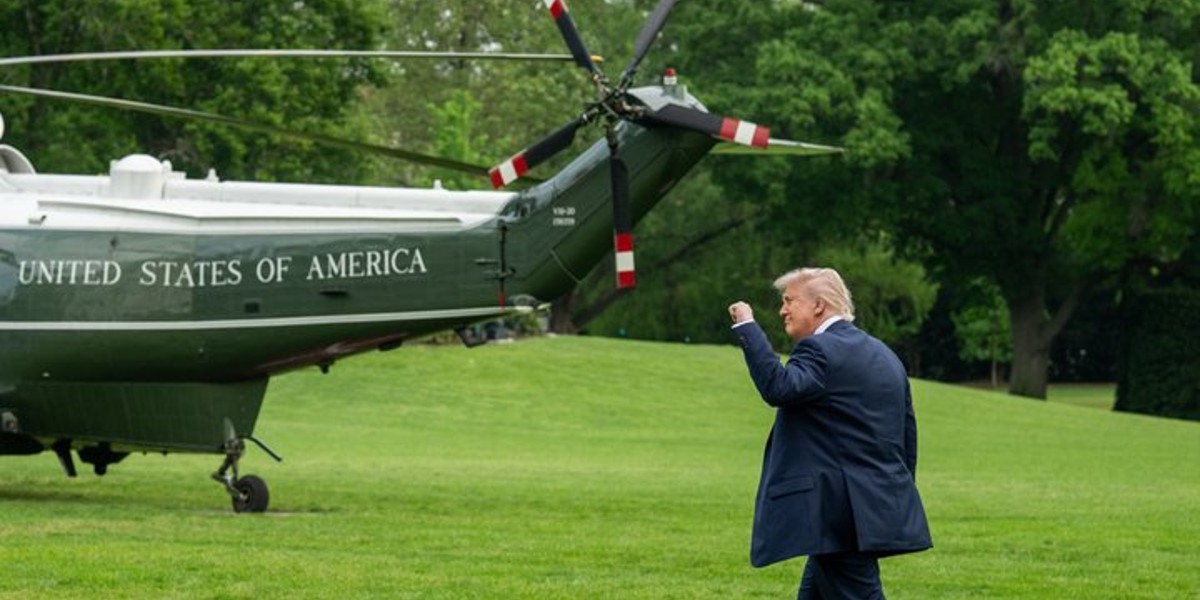
When Donald Trump arrived in China for a summit with Vladimir Putin and Xi Jinping, the expectations were enormous.
Supporters hailed it as a potentially historic moment. Critics dismissed it as political theatre before it had even begun. Either way, the sight of the leaders of the United States, Russia and China gathered around the same table was enough to command the world’s attention.
These are three men who collectively shape the lives of billions. Their countries possess vast nuclear arsenals, dominate global trade and influence nearly every major security question facing the international community. At a time of growing instability, wars and geopolitical tension, bringing them together was always going to be significant.
The question is whether the summit delivered anything beyond the symbolism.
On the surface, the meeting appeared impressive. The leaders spent 90 minutes in discussion before issuing a declaration stating that a nuclear war cannot be won and must never be fought. They spoke of stability, dialogue and cooperation. The images were striking and the rhetoric ambitious.
Yet when the summit concluded and the cameras moved away, there was remarkably little evidence of concrete progress.
No ceasefire proposal emerged for Ukraine.
No timetable was established for future negotiations.
No agreements were reached to reduce nuclear stockpiles.
No arms control framework was announced.
No detailed strategy was presented for dealing with the world’s most dangerous conflicts.
For an event billed as a landmark gathering of global powers, the outcomes appeared conspicuously limited.
That matters because Trump himself helped create the sense of occasion. Throughout his political career he has presented himself as the dealmaker who can achieve what others cannot, the leader willing to speak with rivals and break diplomatic deadlock where traditional approaches have failed.
His defence of the summit was clear.
Too many leaders, he argued, have avoided engagement with countries they disagree with. Problems are not solved by refusing to talk. Peace is not achieved by turning down opportunities for dialogue.
There is logic to that argument.
History is full of examples where diplomacy preceded breakthroughs rather than followed them. Richard Nixon’s opening to China transformed international relations despite producing relatively modest immediate results. Ronald Reagan’s meetings with Mikhail Gorbachev were initially criticised before helping lay foundations for the end of the Cold War.
Major diplomatic shifts rarely arrive fully formed.
Viewed through that lens, simply getting Trump, Putin and Xi together may have been an achievement in itself.
Yet the sceptical case is equally compelling.
The declaration’s central message, that nuclear war must never be fought, is hardly revolutionary. Similar language has featured repeatedly in international diplomacy over the decades. Few leaders would publicly disagree with it.
The real challenge has never been agreeing on the principle.
The challenge has always been translating it into action.
No action followed.
For all the discussion about peace, President Putin left the summit without altering his position on Ukraine. Asked whether he was ready to end the conflict, the Russian leader made clear that any settlement would still require concessions from Kyiv, including territory Ukraine continues to insist is not negotiable.
The central obstacle preventing peace remains exactly where it was before the summit began.
That reality raises uncomfortable questions.
If the gathering of the world’s three most powerful leaders could not produce movement on the biggest security crisis in Europe, what precisely was achieved?
Some Western analysts argue Trump may have handed significant diplomatic victories to both Xi and Putin without securing meaningful concessions in return.
China was able to position itself as the host of a globally significant summit, reinforcing Xi Jinping’s ambition to present Beijing as a major diplomatic power and broker of international dialogue.
Russia arguably gained even more.
For years Western governments have attempted to isolate Putin over the invasion of Ukraine. Yet here he was once again sitting at the centre of global diplomacy alongside the leaders of the United States and China. From Moscow’s perspective, the optics alone represented a success.
The photographs travelled around the world.
But photographs can benefit everyone in the frame.
The question is whether they delivered anything tangible for the United States or the wider international community.
That is where the summit remains open to interpretation.
Supporters see a president willing to speak with adversaries, lower tensions and keep channels of communication open at a time when global relations are becoming increasingly strained.
Critics see a master of political spectacle creating headlines that may not ultimately lead to meaningful results.
Both views contain elements of truth.
Ultimately, the danger for Donald Trump is that this summit comes to be remembered not for what it achieved, but for what it failed to achieve. The world’s three most powerful leaders gathered under one roof while war continues to rage in Ukraine, tensions simmer across the globe and nuclear stockpiles remain vast. Yet no ceasefire emerged, no weapons were reduced and no concrete path to peace was agreed. Trump will argue that getting rivals into the same room was itself a remarkable achievement and perhaps he has a point. History shows dialogue often comes before diplomacy bears fruit. But history is equally unforgiving of leaders who mistake headlines for results. For now, Xi Jinping has strengthened China’s standing, Vladimir Putin has broken through some of his diplomatic isolation, and Trump has secured the images he wanted. Whether he secured anything more substantial remains unclear. Until tangible progress follows, sceptics will continue to ask whether this was a genuine turning point in international affairs or simply one of the most expensive and consequential photo opportunities in modern political history.