National first for green churches
The Church of England’s Diocese of Birmingham has become the first in the country to receive a prestigious Silver Eco Diocese award, recognising its leadership on environmental sustainability.
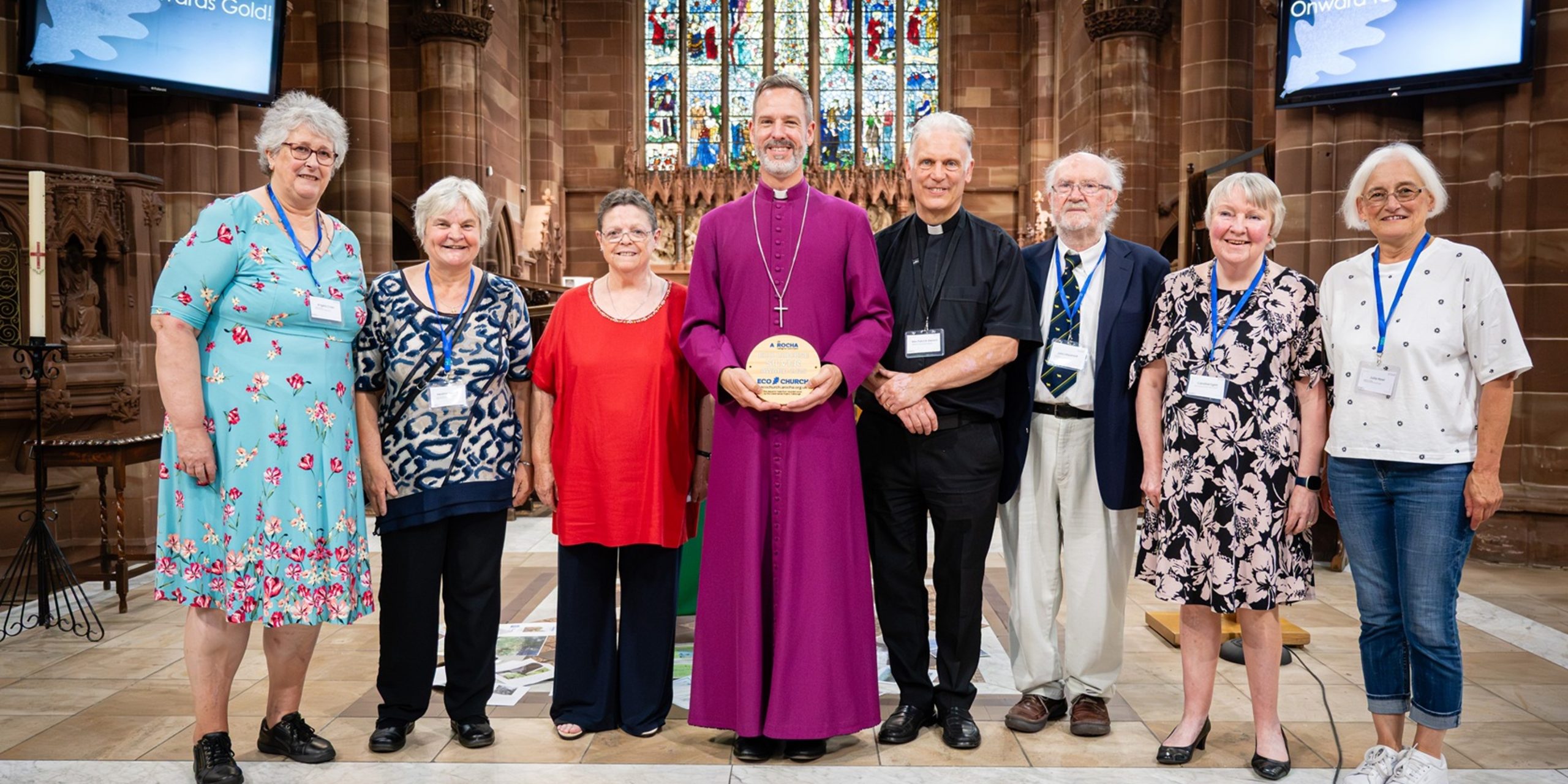
More than 100 churchgoers and clergy gathered at St Martin in the Bull Ring last month to celebrate the achievement with worship, speeches and stories from local churches making eco-friendly changes.
The award was presented by Polly Eaton of Christian conservation charity A Rocha UK, which runs the Eco Church and Eco Diocese scheme. She handed the plaque to the Bishop of Birmingham, the Rt Rev Dr Michael Volland.
“This is about care for creation,” said Bishop Michael. “We have to take action in our time, so we can hand on something beautiful to those who come after us.”
Churches go green
Individual congregations shared their initiatives during the service. St Martin’s, the host church, has begun composting food waste, recycling candle wax, and is now looking to install air-source heat pumps powered by rooftop solar.
At St Mary’s Acocks Green, bird boxes made from old organ pipes have appeared in the churchyard. Meanwhile, St Germain’s in Edgbaston used a heating breakdown as a chance to pioneer greener alternatives.
The Eco Church programme measures sustainability across areas such as carbon cutting, biodiversity, and energy use. Currently, 68% of Birmingham’s churches are registered, and 40% have already achieved at least Bronze level.
National first
While 33 out of 42 Church of England dioceses have reached Bronze status, Birmingham is the first to attain Silver. Its submission was praised for embedding environmental care throughout its structures and policies.
At the ceremony, Polly Eaton used the metaphor of a ladybird to describe collective action: “A ladybird may be small, but a group of ladybirds is called a loveliness. Don’t underestimate what your loveliness can do.”
St Philip’s Cathedral and other city churches are now working with businesses to improve urban ecology.
The Rev Andy Hobbs of Cofton Hackett and Barnt Green added: “God lovingly made this planet. Caring for what is His is an expression of our love for Him—and for those who are, and will be, most affected by climate change.”