More than a third of Britain’s bathing waters are now considered unsafe. The scandal is no longer just about sewage spills. It is about trust, infrastructure and whether the country has allowed one of its most precious natural assets to fall into decline.
By the West Midlands News Environment Editor
There was a time when the debate around sewage in Britain’s rivers focused almost entirely on storm overflows.
The public outrage was easy to understand. Heavy rain overwhelmed ageing infrastructure, raw sewage entered waterways and water companies found themselves under intense scrutiny.
What recent investigations reveal is arguably far more disturbing.
The problem is not confined to untreated sewage.
It is increasingly about treated sewage too.
Analysis of official bathing water data found that more than a third of Britain’s designated bathing waters contained such high levels of sewage contamination that they were considered unsafe for swimming.
That statistic alone should stop ministers, regulators and water company executives in their tracks.
This is not a marginal issue affecting a handful of isolated locations. It is becoming a national environmental and public health concern.
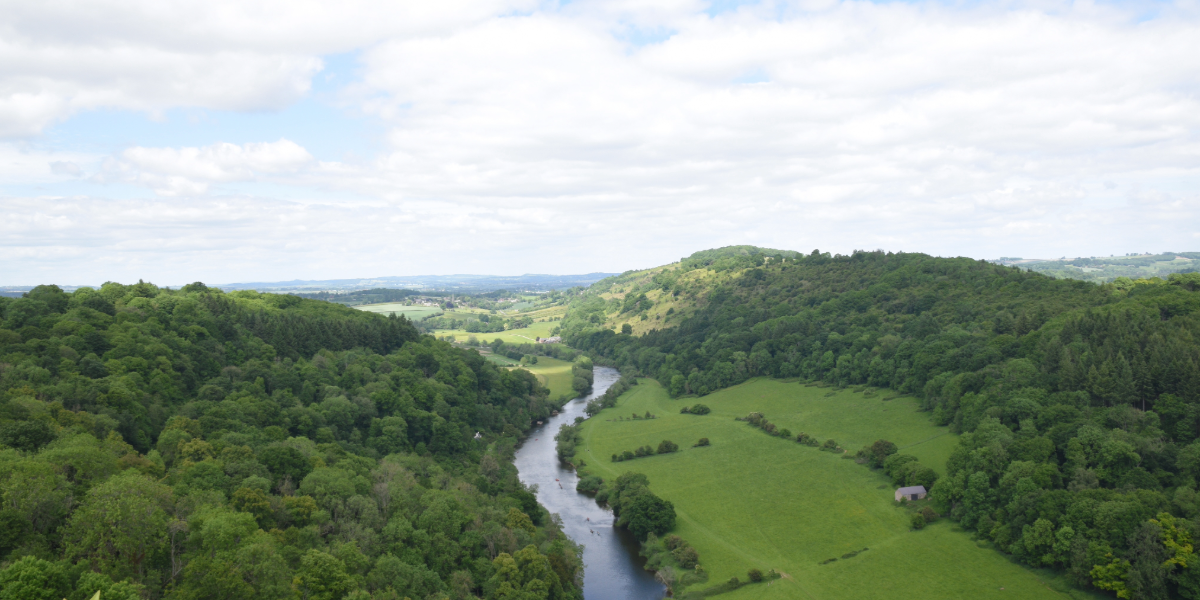
One investigation focused on the River Tone near Taunton, officially rated as Britain’s worst bathing water site this year. Local swimmers described suffering violent sickness after entering the water, reporting symptoms including vomiting, diarrhoea and muscle cramps within hours of swimming.
Those accounts are worrying enough.
The data behind them is worse.
Samples collected from a wastewater treatment works at Bradford-on-Tone and independently tested revealed E. coli levels of approximately 215,000 bacteria per 100 millilitres of water.
To put that figure into context, the level generally considered safe for bathing waters is around 900 E. coli per 100 millilitres.
The treated wastewater being discharged contained bacteria levels roughly 250 times above the threshold regarded as safe for swimmers.
That should alarm anyone who uses Britain’s rivers.
The assumption most people make is straightforward. Wastewater enters a treatment plant contaminated and leaves substantially clean.
The reality appears considerably more complicated.
Tests found bacterial levels upstream of the sewage works measuring 199 E. coli per 100 millilitres. Downstream, the figure rose dramatically to around 7,700.
Something was clearly happening between those two measurement points.
The water company involved insisted the treatment works was operating normally and pointed to numerous other sources of contamination, including agricultural runoff, wildlife, private septic tanks and road drainage.
Those factors undoubtedly contribute.
They do not remove a more fundamental question.
Why is treated wastewater still carrying such significant levels of faecal bacteria into rivers used by members of the public?
The answer lies partly in how Britain’s regulatory system was designed.
For decades regulators have focused on protecting ecosystems rather than those using rivers for recreation. The assumption was that bacteria released through treated wastewater would dilute naturally and disappear as rivers flowed downstream.
That assumption belongs to a different era.
Open-water swimming has exploded in popularity across Britain. Paddleboarding, kayaking and wild swimming have become mainstream outdoor activities. Rivers are no longer simply environmental assets.
They are public spaces.
Millions of people now use them accordingly.
Yet much of the regulatory framework has failed to keep pace with that change.
One of the most revealing aspects of the investigation concerned ultraviolet disinfection systems.
At some treatment works, UV technology is installed specifically to kill harmful bacteria before water is discharged into rivers. Experts describe the technology as highly effective.
The problem is cost.
Installing and operating UV treatment systems requires significant investment and many facilities do not have them.
The inevitable question follows.
If technology exists that can dramatically reduce bacterial contamination, why is it not being deployed more widely?
That question goes to the heart of Britain’s wider water crisis.
For years water companies have argued that upgrading ageing infrastructure requires long-term investment, regulatory approval and, ultimately, higher bills for consumers.
Yet many members of the public increasingly struggle to reconcile those arguments with the financial history of the industry.
The anger surrounding water quality is no longer simply about sewage.
It is about trust.
Since privatisation, England’s water companies have generated billions of pounds in revenues and paid out tens of billions of pounds to shareholders. During the same period, many operators accumulated significant debt while customers were repeatedly told that major infrastructure upgrades would take years and require further investment.
The industry argues that privatisation has delivered substantial benefits, including improvements in drinking water quality, investment in treatment works, reservoir upgrades and environmental improvements that would have been difficult to achieve through public funding alone.
Critics see a different picture.
They see an industry that has rewarded shareholders generously while allowing vital infrastructure to age. They see executive bonuses awarded against a backdrop of pollution incidents. They see consumers being asked to pay higher bills while rivers, lakes and coastal waters continue to generate negative headlines.
That disconnect explains much of the public anger.
Consumers are being asked to accept rising water bills.
Communities are being asked to accept pollution incidents.
Swimmers are being warned about contamination.
Meanwhile, the industry remains associated with shareholder returns, executive pay packages and complex financial structures built on large borrowing.
Whether that perception is entirely fair is almost beside the point.
It exists.
And it is growing.
Many people increasingly believe that if billions of pounds could be found for dividends and investor returns, billions could also have been found to modernise sewer networks, treatment facilities and ageing infrastructure more quickly.
That perception has transformed a water-quality issue into a political one.
Few things unite voters more quickly than a sense that they are paying more and receiving less.
Water is not a luxury product.
It is not a lifestyle choice.
It is one of the most fundamental public services in the country.
People reasonably expect that service to be delivered to a high standard.
Instead, Britain finds itself in the extraordinary position of debating whether rivers officially designated for recreation are safe to swim in.
The consequences extend beyond environmental concerns.
There are economic implications too.
Rivers and waterways increasingly play an important role in local economies. Tourism, outdoor recreation, hospitality businesses and waterfront developments all rely on clean and attractive natural environments.
When bathing waters become associated with sickness and contamination, confidence suffers.
That is particularly relevant in regions such as the West Midlands.
The River Severn, the River Avon, the River Tame and waterways across the region are increasingly used for recreation. Local authorities spend millions promoting green spaces, active lifestyles and outdoor pursuits.
Those ambitions become harder to achieve if the public no longer trusts the water.
The health implications should not be underestimated either.
Governments regularly encourage people to spend more time outdoors, improve their wellbeing and become more physically active. Such messages ring hollow if families fear becoming ill after entering rivers that are supposedly safe for public use.
The wider question is whether Britain has reached the point where incremental reform is no longer enough.
For years politicians have promised tougher regulation.
For years regulators have promised stronger enforcement.
For years water companies have promised improvements.
Yet every summer seems to bring another wave of concern, another set of alarming statistics and another round of explanations.
The public is entitled to ask how many more years this cycle will continue.
Nobody expects rivers to be sterile.
People understand rivers are natural environments.
They do, however, expect them to be safe.
That is hardly an unreasonable expectation in one of the world’s wealthiest nations.
The findings emerging from around the country suggest Britain may need to rethink not only how sewage is discharged, but how wastewater is treated in the first place.
The debate can no longer focus solely on storm overflows.
It must include treatment standards, infrastructure investment, shareholder returns, executive accountability and whether existing regulations reflect the way rivers are actually used today.
Because if more than a third of Britain’s bathing waters are unsafe, this is no longer simply an environmental issue.
It is a public health issue.
It is an infrastructure issue.
It is a regulatory issue.
It is increasingly becoming a political issue.
Most importantly, it is becoming a test of whether Britain is prepared to protect one of its most precious natural assets.
Britain is blessed with thousands of miles of rivers, streams, lakes and waterways. They should be a source of national pride, not public anxiety.
The real scandal is not that people are shocked by these findings.
The real scandal is that so many people are no longer surprised.
Just a few notes…
Bathing water safety
Analysis of official bathing water classifications found that more than one-third of designated bathing waters across the UK failed to meet standards considered safe for swimming during the latest reporting period. Bathing water classifications are based on levels of bacteria including E. coli and intestinal enterococci.
River Tone investigation
Water samples collected near the River Tone in Somerset found E. coli levels of approximately 215,000 per 100 millilitres in treated wastewater discharged from a nearby treatment works. By comparison, bathing waters rated as “good” typically require bacterial levels below approximately 900 E. coli per 100 millilitres.
Upstream and downstream testing
Independent testing cited in the investigation recorded bacterial levels of approximately 199 E. coli per 100 millilitres upstream of the treatment works and around 7,700 downstream, suggesting a significant increase following discharge into the watercourse.
Water industry profits and dividends
Since the privatisation of England’s water industry in 1989, water companies have collectively paid out tens of billions of pounds in dividends to shareholders while also taking on substantial debt. Critics argue that too much capital has left the industry through dividends and financing costs. Water companies maintain that private ownership has enabled major investment in drinking water quality, sewage treatment and network improvements.
Open-water swimming
Participation in open-water swimming, wild swimming and paddle sports has increased markedly over the last decade. As a result, rivers and lakes are increasingly being used for recreation rather than being viewed solely as environmental assets.
Industry response
Water companies have consistently argued that contamination in rivers can arise from multiple sources, including agricultural runoff, wildlife, road drainage, septic tanks and treated wastewater discharges, rather than sewage infrastructure alone.
Environmental regulation
Current environmental regulation focuses heavily on protecting ecosystems and biodiversity. Critics argue that standards have not always kept pace with the growing recreational use of rivers, lakes and inland bathing waters.
Editorial Note
This article is an opinion and analysis piece by the West Midlands News Environment Editor. It is based on published bathing water data, environmental monitoring results, industry responses, regulatory information and publicly available reporting. Figures quoted were correct at the time of publication.