“A week on and I’m still fuming about the Budget – not because it’s Labour, but because it’s not fair for the country”
I write this as someone who spent time on the sharp end of politics – managing campaigns, courting business backers, selling policy to voters – and seeing first-hand how much confidence, clarity and ambition matter if you want a society to move forward.
The recent 2025 Budget – along with the fiasco surrounding the Office for Budget Responsibility – feels less like a strategy for growth than a crude exercise in panic management. Ultimately, it does nothing to help business, and worse, it shakes the foundations of trust that any growing economy needs.
From promise to panic
When I look at the headlines, I see not a Budget that sets out to build but one that scrambles to haul in revenue. Tax thresholds have been frozen, and the burden on savers, property-owners and business-owners has increased. That may meet an immediate need for cash, but it sends the exact opposite signal to the people who should be expanding, hiring, investing. For firms already watching margins, the message is clear: this is a time to contract, not grow.
That chilling effect is playing out already, with firms across the UK cutting jobs and slowing recruitment as business confidence crumbles. According to recent surveys by the Bank of England and other bodies, private-sector employment and investment plans suffered a sharp slide ahead of the Budget.
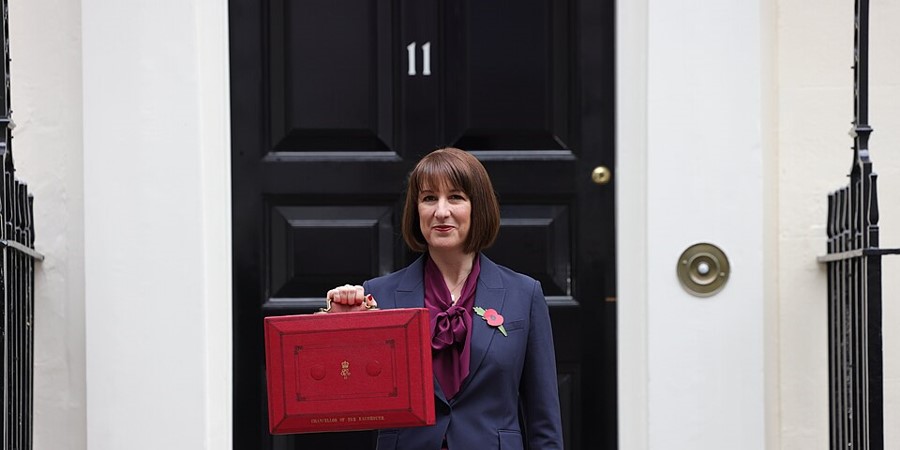
This isn’t just a short-term freeze on ambition – it’s the beginning of a stagnation cycle. Builders, manufacturers, service businesses all pause capex; hiring freezes ripple into fewer houses, fewer factories, fewer jobs. For a region like the West Midlands (or any part of the UK outside London), that kind of effect is deeply damaging – because we can’t rely on financial markets fluffing it up. We need real growth: new factories, vibrant small businesses, meaningful investment in regionally balanced industry. This Budget gives none of that.
A Budget undermined before it landed
But the Budget’s own credibility took a battering even before the first pound changed hands – through the chaotic leak of the OBR’s forecasts. The watchdog, tasked with providing independent fiscal scrutiny, published its Economic and Fiscal Outlook nearly an hour before the Chancellor’s speech. The report was accessed dozens of times from multiple IP addresses. In its own words, the OBR called it “the worst failure in its 15-year history.”
For a former campaign manager, used to playing fast and loose with spin but always respecting the sanctity of dates and facts, this is a scandal. Once the OBR’s integrity is compromised, nobody believes the numbers. Projected growth? Debt servicing? Productivity forecasts? All thrown into question. And when businesses – particularly those thinking of making long-term investments – look at that and see risk and uncertainty, they pull back.
You can’t build an economy on uncertainty. And you can’t ask firms to expand when they’ve just seen tax burdens increase, fiscal forecasts leak, and confidence vanish. The fact that the OBR had itself raised the alarm about leaks before the Budget added to the sense of chaos: they had warned the Treasury, and yet the vulnerabilities persisted.

Public investment cannot replace private ambition
Some defenders of the Budget argue that the government still carved out room for public investment in infrastructure, energy networks, and regional projects. That may be so – but it doesn’t begin to solve the structural problem of a sluggish private sector. Public infrastructure is important – but only if there are viable private firms ready to build, respond to demand, innovate. Without private-sector confidence you end up with half-finished schemes, skeletal towns, and the familiar echo of wasted potential.
What the government should have done – what any serious economic reset needs – is a clear agenda for growth. It should have offered targeted incentives for businesses to invest: R&D credits, capital allowances, schemes to support high-skilled regional manufacturing, incentives for expansion in underdeveloped regions. It should have ensured stability and transparency – with credible forecasts from an independent watchdog, not a sloppy leak and a hastily reshuffled chairmanship. It should have spoken to entrepreneurs, not just to financiers in the City. And it should have aimed to inspire confidence, not fear: persuade business that investing in Britain now means growth, not risk.
The silence where ambition should be
Instead, what we got reads more like retrenchment. A Budget that raises taxes, destabilises trust, and leaves businesses with no reason to believe that now is the time to build or expand. If I were advising business leaders – after years of negotiating with investors, organising political backing, navigating uncertainty – I would say this: wait. Wait until there’s clarity. Wait until there’s a credible plan for growth and stability. Because right now, that plan doesn’t exist.
From where I sit – a former campaigner, now watching Britain’s economic prospects from the sidelines – this Budget feels like the abandonment of ambition. And when government abandons ambition, ordinary people and their livelihoods are the ones who pay.