Public finances under strain
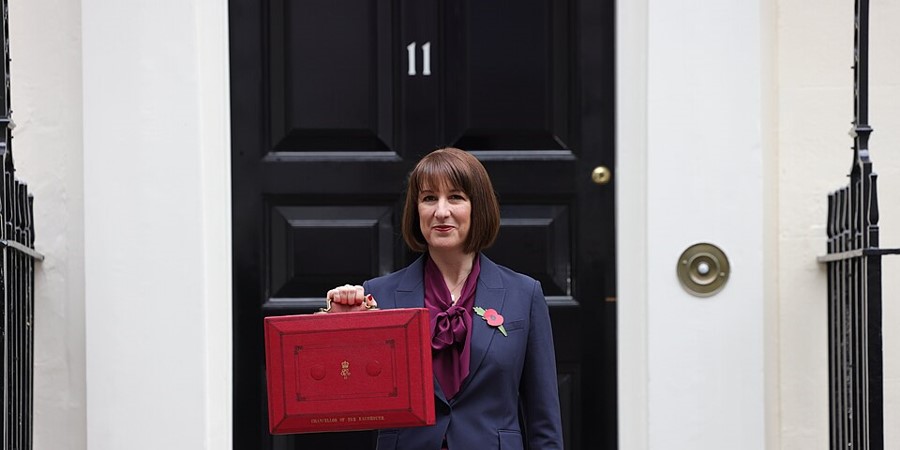
The UK’s Labour government, just a year into its term, is heading towards a perilous fiscal cliff. According to new projections from the National Institute for Economic and Social Research (NIESR), Chancellor Rachel Reeves is facing a £51.1 billion shortfall in the public finances – an existential threat to both the government’s manifesto promises and its fiscal credibility.
The warning couldn’t be starker: if Reeves wants to meet her flagship pledge of balancing day-to-day spending with revenues by 2029–30, something has to give – either politically sensitive tax rises, public spending cuts, or both. The NIESR forecast goes further than previous estimates by other economic bodies, some of which have pegged the hole at nearer £20 billion.
It suggests the Office for Budget Responsibility (OBR) has been overly optimistic about the UK’s long-term growth prospects and that the government is facing a more urgent and structural problem.
The institute’s findings arrive just as the government begins crafting its first Autumn Budget. This is a fiscal moment that will define the direction of Sir Keir Starmer’s administration, testing Labour’s ability to govern with economic seriousness while avoiding the political traps that have historically plagued centre-left governments on tax and spend.
The fiscal rules trap
At the heart of the problem is Labour’s self-imposed fiscal rule: to ensure that public sector net borrowing only covers investment spending by the end of the Parliament. That means day-to-day expenditure – including on health, schools, policing, welfare, and more – must be paid for through taxation or efficiency savings.
But with spending plans for the next three years already largely locked in and inflation continuing to apply pressure across all departments, Reeves has precious little wriggle room. If she sticks to existing budgets without raising revenues, she risks breaking her own rules. If she raises taxes, she risks alienating both voters and business.
The situation is complicated further by Starmer and Reeves’ repeated pledges not to increase taxes on “working people.” Chief Secretary to the Treasury Darren Jones recently indicated this might only apply to headline rates of income tax, national insurance, and VAT – but the ambiguity is telling.
Raising revenue: the options
NIESR’s central recommendation is politically fraught but economically direct: raise income tax rates. While extending the current freeze on income tax thresholds – introduced by the Conservatives and currently set to run until April 2028 – would yield an extra £5.8 billion, slower wage growth means this policy is increasingly regressive. According to NIESR, continuing the freeze would disproportionately affect poorer households already struggling with higher food and housing costs.
More radical changes – like lowering tax relief on pension contributions – could raise up to £15 billion but risk discouraging saving and weakening long-term economic resilience. The same applies to hikes in national insurance, corporation tax, or VAT: all have the potential to raise significant revenues, but come with adverse economic and social consequences. NIESR points out these could deter investment, stifle job creation, or fall heavily on those already worst off.
Council tax reform has been floated as another possibility, though the political cost of revisiting property tax bands remains high. NIESR concludes that if Reeves really wants to “shift the dial,” then income tax rises – though politically toxic – remain the most direct and equitable route.
Growth versus realism
The Treasury’s response to NIESR’s analysis has so far been non-committal, insisting that “growing the economy” remains the best route to restoring fiscal strength. But this optimism jars with the economic outlook.
The UK is barely out of recession, growth is anaemic, and business investment – while recovering – is still hampered by post-Brexit trade frictions, global uncertainty, and fragile consumer confidence. The OBR’s own growth forecasts may soon be downgraded, further tightening the noose around Reeves’ fiscal rule.
The £51 billion estimate also takes into account the reversal of welfare reforms and higher-than-expected government borrowing. In other words, this is not a problem that can be blamed solely on the Conservatives. Labour inherits a structurally weak set of public finances and will need to find answers fast.

The political stakes
This Autumn Budget will be the most consequential test of Rachel Reeves’ career and perhaps the defining moment of Keir Starmer’s premiership. If the government is seen as breaking promises, it could quickly erode the goodwill built up during the election campaign. If it resorts to stealth taxes or accounting tricks, it risks the same credibility trap that engulfed previous chancellors.
But equally, refusing to act boldly could deepen the structural deficit and expose the UK to a fresh round of market jitters – memories of Liz Truss’s “mini-budget” fiasco are still fresh in the minds of investors and civil servants alike.
As NIESR director David Aikman put it: “Something will have to give.” The political instinct may be to delay painful choices in the hope that growth rebounds or inflation recedes. But such a strategy could prove fatal. Autumn is approaching fast and with it, the government’s first serious economic test.
A narrowing path
The fiscal position Starmer and Reeves have inherited is fragile, and the political constraints around tax and spend are formidable. Yet the room for inaction is vanishing. The Autumn Budget won’t just be about balancing books – it will be a public demonstration of whether Labour is prepared to lead with honesty and discipline, or whether it will fall into the trap of wishful thinking.
Unless a political consensus is built around the need for sustained, responsible revenue-raising measures, the government may find itself unable to deliver its domestic agenda or to maintain public trust. With only months to go before the Budget is delivered, the Prime Minister and Chancellor must now choose between popularity and credibility. They will not be able to have both.