
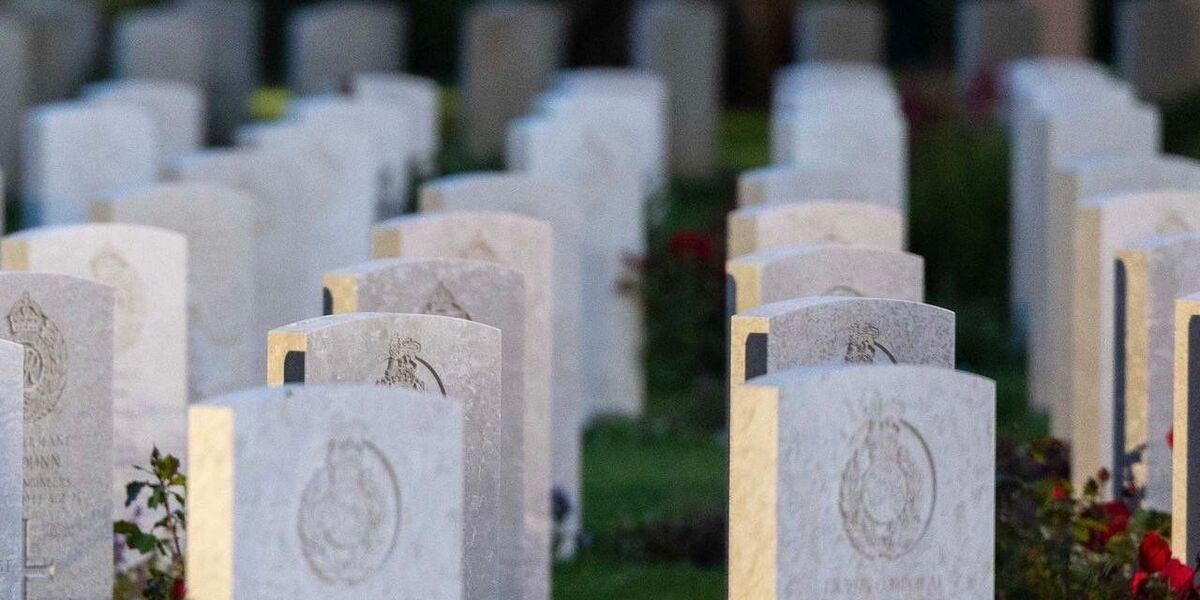
Each June the anniversary pulls us back to the same stark truth, and it should
The anniversary of D-Day (June 6, 1944) on Saturday just gone carries a gravity that does not fade with time. Each year it drags you back to the same stark truth: thousands of young men stepped into a situation they knew could end them. They went anyway. That is the centre of it.
We often talk about D-Day in the language of strategy, turning points, operations and outcomes. Strip all that away and what remains is far more personal. In the early hours of June 6, 1944, more than 156,000 Allied soldiers set out across the Channel.
They travelled in an armada of 6,939 vessels, warships, landing craft, merchant ships and support boats, the largest seaborne invasion force in human history. Around 132,000 of those men landed on the beaches that day, while more than 23,000 paratroopers dropped behind enemy lines in the dark.
These were ordinary men packed into boats that pitched and rolled through the night, heading for beaches they knew were defended, fortified and waiting for them. They had no promise they would return. They understood the danger. They understood the cost. They still moved forward because the alternative, a world shaped by tyranny, was something they refused to hand to the next generation.
Lives cut short before they could unfold
What stays with me is not just the scale of the operation, but the scale of what they gave up. Lives cut short before they had the chance to unfold. Families never built. Futures never lived. Years they never saw. They surrendered the ordinary things most of us take for granted so others could inherit a world with freedom at its core. In an age where people struggle to hold a line on even the smallest things, their resolve feels almost impossible to comprehend.
D-Day forces honesty. It strips away the comfortable distance we often place between ourselves and history. Freedom is not a backdrop to modern life. It is not a slogan. It was secured by people who absorbed the worst of history so others did not have to. Those beaches were not symbols then. They were places where young men paid the ultimate price for a principle they believed was worth more than their own lives.
The West Midlands connection
Here in the West Midlands, we carry our own deep connection to that generation. Many of the men who fought came from our streets, our factories, our communities. They were Black Country lads, Birmingham lads, Coventry lads. Apprentices, miners, toolmakers, clerks and labourers who swapped their everyday lives for a uniform and a mission that demanded everything from them. Their absence shaped families here for decades. Their courage shaped the region forever.
Lessons that are warnings, not relics
Lessons from their actions still matter. Conflicts unfolding today, and the ones that may come tomorrow, make that clear. Their clarity of purpose, their refusal to look away from hard truths, their understanding that freedom has a cost: these are not relics. They are warnings. They are guidance. They remind us that the world can turn quickly, and when it does, the character of a nation is revealed by how it responds.
Remembrance is a responsibility, not a ritual
My reflection is simple: we live in the shadow of their sacrifice. Remembrance is not a ritual. It is a responsibility. To acknowledge what they gave. To understand what they stood against. To live in a way that does not cheapen the cost they bore.
Their sacrifice demands something from us. Silence is not enough. Ceremony is not enough. Something deeper is required. The men who fell on those beaches did not do it so we could drift through life untouched by responsibility. They did it so we could stand upright in a world they never got to see.
The debt we never stop paying
The only repayment we can offer is how we choose to live now, with courage when it is easier to look away, with conviction when it costs us, with a standard that honours the price they paid. Their legacy is not carved only into headstones in Normandy. It lives in the choices we make here, in the Midlands, every day. It lives in the moments we choose integrity over convenience, duty over comfort, truth over noise.
That is how we keep faith with them. That is how we make sure their sacrifice is never reduced to a date on a calendar. We carry their memory forward by the way we live. That is the weight. That is the responsibility. That is the debt we never stop paying.