
An unstable moment in history
The past few weeks have felt like a blur of instability, a reel of violence, power plays, and eruptions of rage. It is as if the world has finally tipped into the fever it has been fighting for years.
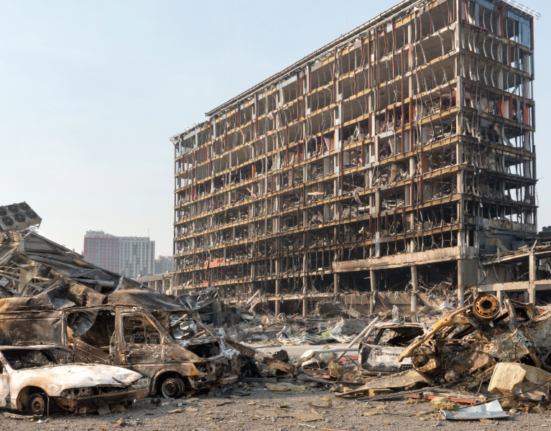
The assassination of Charlie Kirk, the unprovoked murder of 23-year-old Iryna Zarutska, and Israel’s calculated strike on Hamas leaders in Qatar have dominated the headlines. But the stories beneath those stories – the ones less flashy – are just as important. Russia’s reckless incursion into Polish aerospace, which forced NATO to invoke articles of defence, has reminded us how fragile the European peace really is. Meanwhile, in Beijing, China has been hosting a summit designed to harden an anti-West alliance, building a new world order that seeks to box us out.
The world we thought we knew – however imperfect – is dissolving in front of us.

Governments tightening the grip
What chills me most isn’t just the explosions of violence. It’s the way governments across the globe are responding.
In Britain, ministers push ever closer towards controlling what people say and think. In Nepal, protesters are being crushed with state muscle. The pattern is the same: governments tightening the grip, censoring, dictating, imposing new rules of obedience on their citizens. They wrap this in the language of safety or stability, but scratch the surface and you see fear – fear of losing control, fear of voices they cannot manage.
This is happening not in isolation, but everywhere at once.
Extremism taking root
And as the grip of governments tightens, extremism rises. We have seen 116 churches burnt down in Canada – acts of violent nihilism disguised as activism. Islamist extremists threaten to torch Notre Dame unless a murderer is freed. These are not small incidents. They are sparks on tinderboxes.
Add to that the social fissures created by waves of illegal immigration – people arriving into communities without integration, sometimes with values starkly at odds with their host countries. Instead of building cohesion, this too often stirs resentment, fear, and fracture.
We are left staring at communities where trust is evaporating, and where cohesion is cracking apart.
A world on the brink
The established world order is teetering at a tipping point. Each country seems one provocation away from mass civil unrest.
We are already seeing it in Nepal, where demonstrations threaten to spiral out of control. We are seeing the signs here in Britain – angry marches, riots simmering on social media before they erupt in the streets. And in the United States, you can feel the creaking of the system day by day, the thin threads holding democracy together pulling tighter and tighter.
This is not business as usual. This is the world fraying at the edges.
What are we going to do about it?
So I sit here and ask myself – what are we going to do about it?
It’s easy to scroll past headlines, to let the horror become another flicker on a screen. It’s easy to shrug and mutter, “That’s just the way things are now.” But if we do that, then we are complicit.
We cannot afford paralysis. We cannot allow fear to fracture us further. The answer cannot be retreating into our own corners, defending our own little tribes while the wider world burns.
We need, urgently, to pull together. Not in the shallow way of hashtags or empty slogans, but in the hard way – by holding our leaders to account for every decision, every action, every word. By refusing to be distracted by culture wars while the tectonic plates of global politics grind beneath our feet. By calling out corruption, cowardice, and incompetence wherever we see it.
The hard work of unity
Unity is not soft. It is not about singing hymns of togetherness while the flames rise. True unity is hard. It is about putting differences aside to confront the bigger threats.
It means demanding honesty from politicians, whether in Westminster, Washington, or Kathmandu. It means rejecting the false comforts of extremism – whether nationalist, religious, or ideological – that offer easy answers to complex problems. It means seeing immigration not just as a threat but as a challenge to be managed with fairness, firmness, and clarity – neither ignored nor exploited.
And above all, it means recognising that every act of silence, every moment we look away, strengthens the forces pulling us apart.
The cost of doing nothing
If we do nothing, the consequences will be drastic. Civil unrest will not remain confined to other countries. Violence will not remain someone else’s problem. The breakdown of trust in governments, institutions, and communities will hollow us out from within.
History is littered with examples of what happens when societies ignore the warning signs. The 1930s showed us how quickly democracies can collapse when extremist voices grow unchecked. The Arab Spring showed us how fragile order can be when governments overreach. Nepal today shows us how a small nation’s protests can ripple far wider than its borders.
If we choose to do nothing, we will find ourselves living in a world where freedom is an illusion, where violence is the default language, and where trust has been ground to dust.
Choosing to act
But it does not have to be this way.
We can choose to act. We can choose to demand accountability, to rebuild cohesion, to push back against both government overreach and extremist violence. We can choose to face uncomfortable truths about immigration, about extremism, about global alliances, without retreating into slogans or scapegoating.
We can choose to fight for a world that is stable, free, and just – not perfect, but better than this unstable cliff edge.
Final thought
The past few weeks have been a brutal reminder that nothing is guaranteed. The future is not inevitable.
We stand at a tipping point. One way leads to fracture, extremism, and unrest. The other requires courage, unity, and accountability.
The choice is ours – but we are running out of time.