By the West Midlands News Political Editor
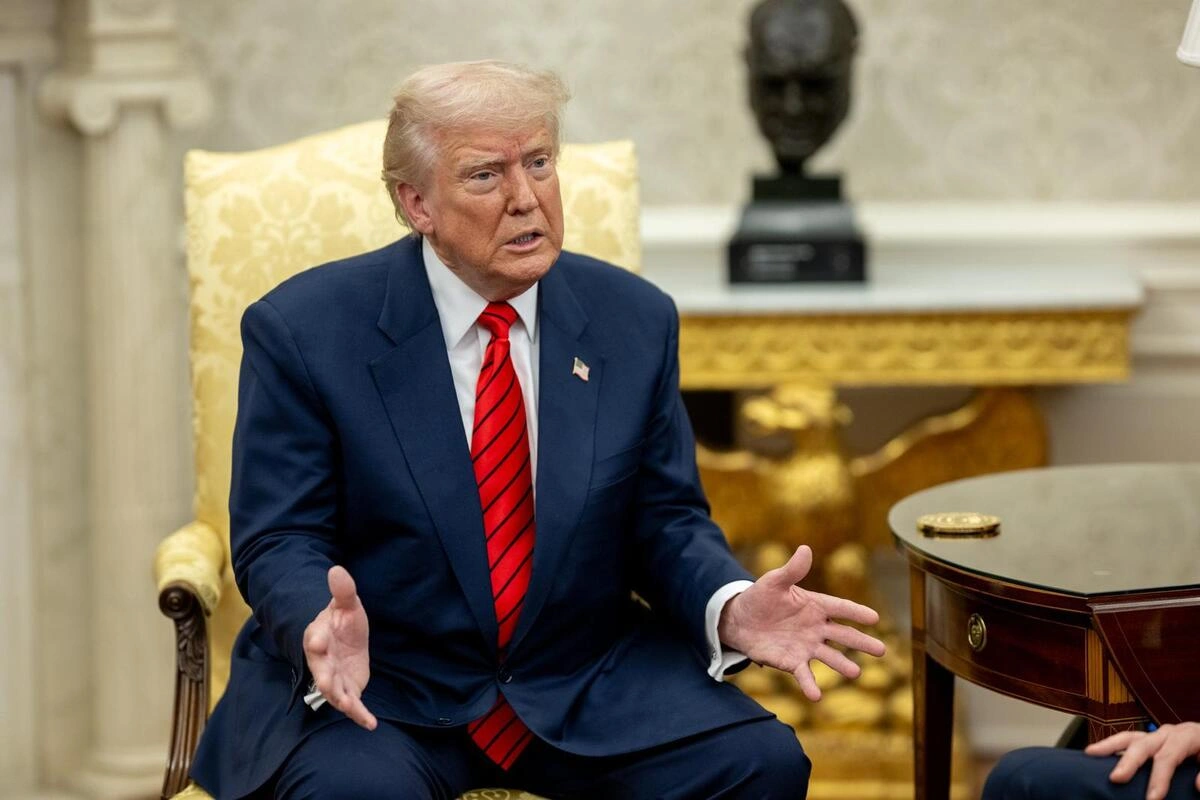
Three men sat around the table in Shenzhen. Between them they represent the world’s largest economy, the world’s second-largest economy and a nuclear power determined to remain geopolitically relevant.
The immediate headlines are about trade, artificial intelligence and diplomacy. The real story is about power. More specifically, who has it and who doesn’t.
As Donald Trump, Xi Jinping and Vladimir Putin discuss the future of trade, technology and global influence, Britain faces an uncomfortable reality. We are no longer helping to write the rules. Increasingly, we are adapting to decisions made elsewhere.
For decades, the UK benefited from a world where globalisation was largely taken for granted. Supply chains stretched across continents, manufacturing moved to lower-cost economies and Western governments focused more on regulating markets than actively shaping them.
That world is disappearing.
The United States is pursuing economic nationalism. China is pursuing economic self-sufficiency. Russia is building alternative alliances wherever it can. Governments across the world are intervening directly in strategic industries, protecting supply chains and investing heavily in technologies they believe will determine future economic strength.
This is no longer a battle over trade. It is a battle over who controls artificial intelligence, semiconductor production, critical minerals, energy security and advanced manufacturing. The countries that dominate those sectors will dominate economic growth over the next generation.
The challenge for Britain is that while Washington and Beijing are thinking twenty years ahead, British politics remains trapped in a cycle of short-term firefighting.
That is where the implications become politically uncomfortable.
If figures such as Andy Burnham are serious about shaping the future direction of the Labour movement, or even one day leading the country, events such as the Shenzhen summit expose the scale of the challenge they would inherit.
The debate in British politics remains overwhelmingly focused on distribution. How do we divide public spending? How do we fund public services? How do we tackle inequality?
All important questions.
The countries succeeding in the modern economy are focused on creation. How do we create strategic industries? How do we attract investment? How do we build globally competitive companies? How do we secure economic resilience?
That conversation is still largely missing from British politics.
Burnham has built his political reputation on devolution, local growth and giving regions greater control over their economic future. Those arguments have merit. Greater Manchester has attracted investment, strengthened its digital economy and developed a stronger civic identity under his leadership.
Devolution alone is not an economic strategy.
The real question is whether Britain has a credible plan for competing in a world increasingly dominated by artificial intelligence, automation and geopolitical competition.
At present, it is not obvious that it does.
China has an industrial strategy.
America has an industrial strategy.
The European Union has an industrial strategy.
Britain talks about growth.
Others are building it.
For Greater Manchester, the West Midlands and other regional economies, this matters enormously. Both regions have ambitions to become centres of advanced manufacturing, digital innovation and artificial intelligence. Both need international investment. Both depend on global trade. Both require access to advanced technologies.
Neither can escape decisions taken in Washington or Beijing.
When America restricts semiconductor exports, British businesses feel the consequences. When China slows, British exporters feel the consequences. When geopolitical tensions rise, investment decisions are delayed and growth slows.
That leaves future British leaders facing a stark choice.
Continue hoping international developments work in Britain’s favour.
Or build a serious national strategy that recognises the world has fundamentally changed.
The Shenzhen summit should be a wake-up call.
While politicians in Britain continue arguing over tax bands, planning disputes and departmental budgets, the world’s major powers are deciding who will dominate the technologies and industries that will drive economic growth for the next quarter-century.
That is the political lesson from Shenzhen.
The question is not whether Britain chooses between Washington and Beijing.
The question is whether Britain has the ambition to compete with either.
For politicians such as Andy Burnham, who are increasingly discussed in terms of national leadership rather than regional government, that challenge is impossible to ignore.
The next Prime Minister will not be judged solely on NHS waiting lists, policing numbers or public spending settlements. They will be judged on whether Britain can generate wealth, secure investment and compete in a world where economic strength is increasingly determined by technology, innovation and industrial capability.
The uncomfortable truth is that Britain has spent much of the past decade debating how to distribute prosperity while paying far less attention to how to create it.
Shenzhen demonstrates what happens when nations become focused on economic power. They think strategically. They invest heavily. They back industries that will matter decades from now.
Britain must decide whether it wants to do the same.
The future is not being debated in Westminster. It is being built in places like Shenzhen.
The risk for Britain is not that China wins or America wins.
The risk is that both move ahead while Britain congratulates itself on managing decline more efficiently.
That is the challenge confronting the next generation of British political leaders.
That is the challenge confronting Andy Burnham if he truly has ambitions beyond Manchester.
Most importantly, it is the challenge confronting a country that must decide whether it wants to shape the future or spend the next twenty years reacting to it.