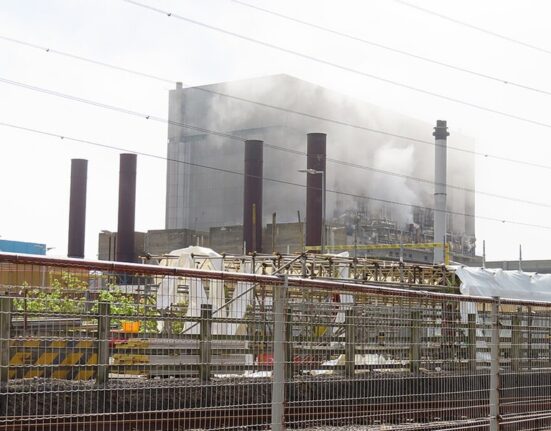
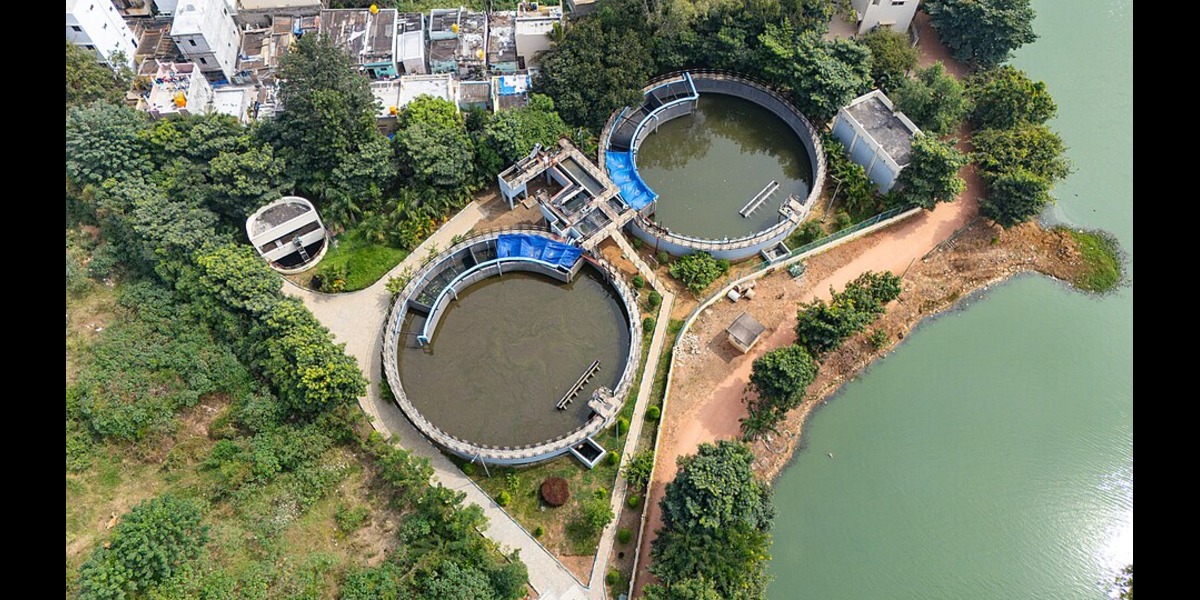
Water is one of the most essential resources in everyday life, yet Britain’s water industry has become the subject of growing public anger.
Concerns about sewage pollution, environmental damage, water bills and the financial performance of private water companies have created a debate about whether the current system is working.
For many people, the question is straightforward: if water is an essential public resource, why should companies responsible for supplying it and managing wastewater operate primarily for private commercial interests?
Others argue that private investment remains important for maintaining infrastructure and that changing ownership would not automatically resolve the industry’s problems.
The disagreement has become particularly significant as the government considers how water services should be managed in the future.
Why are water companies facing criticism?
Water companies in England and Wales are responsible for providing drinking water, managing wastewater and maintaining large networks of pipes, treatment facilities and reservoirs.
These responsibilities require substantial investment.
However, companies have faced criticism over sewage discharges, leaks, infrastructure failures and the environmental consequences of wastewater management.
Sewage pollution is particularly controversial because it can affect rivers, beaches, wildlife and recreational areas.
Communities that depend on clean waterways for tourism, fishing and outdoor activities can suffer economic consequences when water quality deteriorates.
Environmental campaigners have also questioned whether companies have invested sufficiently in maintaining infrastructure and preventing pollution.
These concerns have contributed to growing demands for stronger regulation and greater accountability.
Should water companies be nationalised?
One proposed solution is to bring water companies back into public ownership.
Supporters of nationalisation argue that water should be managed primarily in the public interest rather than for shareholder returns.
They believe public ownership could allow more money to be directed towards infrastructure improvements and environmental protection.
Another argument concerns accountability.
If a public authority operates a water company, supporters believe customers may have clearer ways to influence decisions and challenge poor performance.
Nationalisation could also make it easier to coordinate long-term investment across different regions.
However, critics question whether public ownership would actually improve performance.
They argue that government departments and publicly owned organisations can also suffer from poor management, inefficient spending and political interference.
Simply changing ownership would not automatically eliminate sewage pollution, repair ageing pipes or create additional water supplies.
The industry would still require experienced staff, investment and effective management.
The financial question
One of the biggest obstacles to nationalisation is cost.
Water companies own significant infrastructure and have financial obligations that would need to be considered in any transfer of ownership.
Buying companies or their assets could require substantial public borrowing or other financial arrangements.
Critics argue that taxpayers should not be expected to pay large sums to take control of businesses that could potentially be improved through stronger regulation.
Supporters respond that the existing system has also created financial problems, including concerns about debt, investment and the relationship between company profits and infrastructure spending.
The debate therefore involves competing ideas about how essential public services should be financed.
Would it be better to spend public money taking ownership of water infrastructure, or should the government concentrate on forcing existing companies to meet higher standards?
What is the government doing?
On 5 November 2026, the government announced plans to establish eight new regional water councils.
These councils are intended to give local communities, businesses and leaders greater influence over investment decisions involving sewage, flooding, drought and future water supplies.
The proposals recognise that different areas face different challenges.
Some communities experience problems involving sewage pollution, while others face concerns about drought, water availability and infrastructure capacity.
For example, water supply pressures can affect development and economic growth in areas where demand is increasing.
The government believes regional involvement could help ensure investment decisions better reflect local priorities.
However, questions remain about how much actual authority these councils will have and whether their recommendations will translate into measurable improvements.
Is regulation strong enough?
Another major argument concerns the effectiveness of regulation.
Supporters of stronger regulation believe companies should face significant consequences when they fail to meet environmental or operational requirements.
They argue that financial penalties should be substantial enough to discourage misconduct and that customers should not ultimately bear the cost of repeated failures.
Companies, however, may argue that improving infrastructure requires long-term investment and that regulatory requirements must be realistic and properly funded.
There is also a question about how investment costs should be distributed.
If companies are required to spend billions improving infrastructure, those costs may eventually influence customer bills.
Customers already facing household financial pressures may struggle to accept significant increases.
This creates a difficult situation in which the public wants cleaner rivers and better infrastructure but may be reluctant to pay more for the improvements.
Should customers have more control?
Some people believe water customers should have a greater role in deciding how their money is spent.
Regional water councils could provide one opportunity for greater public involvement.
However, participation is not necessarily the same as decision-making power.
If customers can express concerns but companies retain control over investment decisions, critics may question whether the system has genuinely changed.
There are also questions about transparency.
Customers should be able to understand how water companies spend money, what improvements are being delivered and why particular investment decisions are being made.
Clear reporting could help rebuild public confidence.
What would happen if water companies were nationalised?
Nationalisation could create opportunities for a different approach to investment and accountability.
However, it would also create significant responsibilities for the government.
Public ownership would mean that decisions about infrastructure, borrowing, staffing and environmental priorities would become more directly connected to public finances.
The government would need to demonstrate that the new system could operate efficiently and deliver improvements.
A poorly managed publicly owned water industry could simply replace one set of problems with another.
Equally, a well-regulated private industry could potentially deliver improvements without the expense of changing ownership.
The most important measure should therefore be the quality and reliability of the service rather than the ownership structure alone.
Conclusion
Britain’s water industry faces a major challenge in restoring public confidence.
People expect clean drinking water, reliable infrastructure and rivers that are protected from unnecessary pollution.
Whether these objectives are best achieved through public ownership, stronger regulation or a combination of both remains open to debate.
What should not be in question is the importance of accountability.
Water companies must demonstrate that they are investing in the infrastructure and environmental protection required to provide an essential service.
The debate question: Should Britain’s water companies be returned to public ownership, or should private companies remain responsible under much stricter government regulation?
Article 7. Is Britain’s transition to renewable energy worth the cost? The battle between climate targets and household bills
Published: 26 November 2026 | Topic: Climate change, energy, renewable power and household costs
Britain is undergoing a major transformation in how it produces and consumes energy.
For decades, the country has relied heavily on fossil fuels, particularly natural gas, alongside nuclear power and other sources of electricity.
However, climate commitments, international energy uncertainty and technological developments have increased pressure to move towards cleaner energy.
The transition has created a significant political and economic debate.
Supporters argue that renewable energy is essential for reducing emissions, improving energy security and protecting future generations.
Critics question whether the transition is happening too quickly, whether it is affordable and whether Britain can maintain a reliable electricity supply while reducing its dependence on traditional energy sources.
The issue has become particularly important following renewed international energy price pressures during 2026.
How much renewable energy does Britain currently produce?
Britain has made considerable progress in expanding renewable electricity generation.
Government figures published in 2026 show that renewable technologies provided approximately 52.1% of UK electricity generation during 2025.
Wind and solar alone accounted for approximately 36.3% of electricity generation.
This represents a significant change from previous decades.
The last remaining coal-fired power station in Britain closed in September 2024, marking the end of domestic coal-fired electricity generation.
However, the transition is not complete.
Natural gas remains an important source of electricity, particularly when renewable generation is insufficient to meet demand.
Nuclear power also continues to play an important role in the electricity system.
The challenge is ensuring that cleaner energy sources can provide reliable electricity throughout the year, including periods when weather conditions are less favourable.
Why do supporters want renewable energy?
One of the strongest arguments for renewable energy concerns climate change.
Burning fossil fuels releases greenhouse gases, which contribute to global warming.
Reducing emissions is therefore an important part of international efforts to limit climate change.
Renewable technologies such as wind and solar generate electricity without the same direct fuel-burning emissions associated with conventional gas-fired power stations.
Supporters also argue that renewable energy could improve Britain’s energy security.
When a country relies heavily on imported fuels, international conflicts, supply disruptions and changes in global markets can influence domestic energy costs.
Producing more electricity domestically could reduce some of these vulnerabilities.
There are also economic opportunities.
The renewable energy industry supports jobs in engineering, construction, manufacturing, maintenance and infrastructure development.
Investment in offshore wind, solar generation and electricity storage could create opportunities for British businesses and communities.
Why are some people concerned?
Despite these advantages, renewable energy has attracted criticism.
One of the biggest concerns involves reliability.
Wind and solar generation depend on environmental conditions.
Wind turbines generate less electricity when wind speeds are unsuitable, while solar panels produce less electricity during darker periods and at night.
This means that renewable generation must be supported by other parts of the electricity system.
These can include energy storage, flexible electricity generation, nuclear power, interconnectors and improvements to the national grid.
Critics argue that Britain must ensure these supporting systems are developed quickly enough.
Without sufficient infrastructure, the country could face difficulties balancing electricity supply and demand.
The argument about energy bills
Household energy bills are another important part of the debate.
Some people believe the transition towards renewable energy will eventually reduce electricity costs because wind and sunlight do not require the purchase of fuel.
However, renewable energy projects require significant initial investment.
Wind farms, solar installations, electricity networks and storage facilities all involve construction and maintenance expenses.
These costs must be financed through some combination of private investment, public policy and consumer payments.
Another concern involves the relationship between electricity and gas prices.
The Climate Change Committee’s June 2026 report highlighted that electricity prices remain relatively expensive compared with gas in Britain, making it harder for some households to benefit financially from technologies such as heat pumps.
This creates a difficult situation.
The government wants households to move towards cleaner technologies, but the financial incentives are not necessarily attractive to everyone.
Supporters argue that electricity pricing should be reformed to make cleaner energy more affordable.
Critics believe households should not be pressured into purchasing expensive equipment before the financial benefits are clear.
Should nuclear power play a bigger role?
Nuclear energy is another major point of disagreement.
Supporters argue that nuclear power can provide consistent electricity regardless of weather conditions.
It can therefore complement renewable sources and help maintain a stable electricity supply.
Nuclear power also produces very low operational greenhouse gas emissions compared with fossil-fuel generation.
However, nuclear projects can be expensive and take considerable time to develop.
They also require careful management of radioactive waste and strict safety regulation.
Opponents argue that money spent on nuclear projects could potentially be invested in renewable energy, storage and electricity network improvements instead.
Supporters respond that a reliable electricity system should not depend on a single technology.
A combination of nuclear power, renewables and other supporting infrastructure may provide greater resilience.
What does the science say about climate change?
The scientific evidence that human activities are warming the climate is extensive.
The Intergovernmental Panel on Climate Change has concluded that human influence is unequivocally responsible for global warming.
This does not mean every individual weather event can automatically be attributed to climate change.
Weather varies naturally, but long-term climate patterns demonstrate a clear increase in global temperatures.
The UK Climate Change Committee’s report published on 24 June 2026 warned that Britain was not reducing emissions quickly enough to meet all its climate commitments.
It also highlighted the importance of improving energy efficiency and reducing dependence on fossil fuels.
The disagreement is therefore increasingly about how the transition should happen rather than whether climate change is occurring.
Should households be expected to change?
The transition towards cleaner energy will affect everyday decisions.
Some households may consider electric vehicles, solar panels, improved insulation or alternative heating systems.
However, not everyone has the financial resources or suitable property to make these changes.
For example, someone living in rented accommodation may have little control over heating improvements or the installation of solar panels.
People without private parking may also face greater difficulties accessing convenient electric vehicle charging.
This raises questions about fairness.
Should governments provide financial assistance to help households make the transition, or should individuals and businesses be expected to cover more of the costs themselves?
A successful energy strategy must consider these differences rather than assuming everyone has the same opportunities.