A Russian missile striking Polish territory would normally dominate international headlines for days. This week, however, it arrived against the backdrop of growing diplomatic pressure for a settlement in Ukraine and renewed debate over how far NATO should go in deterring Russia.
The incident has immediately raised three critical questions.
Was the strike an accident or a deliberate provocation?
How should NATO respond?
And does it change the political calculations surrounding efforts to force a peace settlement between Kyiv and Moscow?
Polish authorities say two Russian KH-101 cruise missiles and a drone entered Polish airspace, with one missile reportedly impacting around 50 kilometres inside Polish territory. Air raid sirens sounded across southeastern Poland while NATO aircraft were scrambled in response.
The significance lies not simply in what crossed the border but where it landed.
Fifty kilometres is not a minor navigational error.
It is deep enough inside NATO territory to trigger serious questions about the effectiveness of existing warning systems and the risks posed by a conflict that continues to push against the borders of the Western alliance.
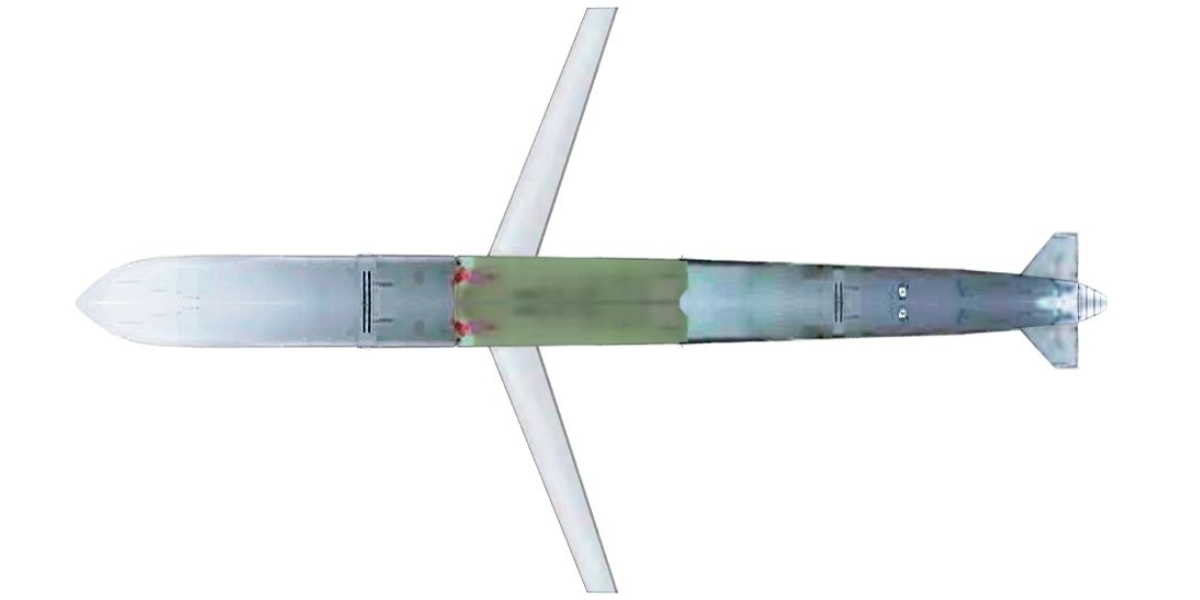
Military analyst Mikey Kay explained that the weapon involved appears to be a KH-101 cruise missile, one of Russia’s principal long-range precision strike weapons.
The missile is approximately 7.5 metres long, weighs around two and a half tonnes and carries a warhead of roughly 400 kilograms. It can travel between 2,500 and 2,800 kilometres and is launched exclusively from Russia’s strategic bomber force, including the Tu-95 Bear, Tu-160 Blackjack and Tu-22 Backfire aircraft.
In simple terms, this is not an improvised weapon or a battlefield rocket drifting over a border.
It is one of Russia’s most sophisticated conventional strike systems.
That immediately makes the incident more serious.
The central debate now concerns intent.
There are essentially two competing explanations.
The first is that the missile strayed into Poland accidentally.
Electronic warfare has become one of the defining features of the conflict in Ukraine. Both Russian and Ukrainian forces routinely attempt to jam GPS signals, interfere with guidance systems and disrupt communications.
Cruise missiles rely on a combination of navigation technologies to reach their targets, and analysts have occasionally pointed to electronic interference as a factor in missiles going off course.
Supporters of this theory note that Russia has no obvious strategic interest in deliberately striking Poland.
A direct attack on a NATO state carries enormous risks and offers limited military benefit.
The second interpretation is more troubling.
Polish Prime Minister Donald Tusk described the incident as a deliberate provocation. Former NATO Deputy Supreme Allied Commander Europe Sir Richard Shirreff went further, arguing that the strike formed part of a wider pattern of Russian attempts to probe NATO’s resolve.
That argument rests on historical context.
This is not an isolated incident.
Since the invasion of Ukraine began, NATO countries have experienced repeated airspace violations, drone incursions and navigation disruptions linked to the conflict. Individual events can be dismissed as accidents. Taken together, critics argue they resemble a pattern of increasingly aggressive testing of NATO’s reactions.
Shirreff believes Russia is exploiting hesitation within the alliance.
His view is that Moscow repeatedly pushes boundaries, measures the response and adjusts its behaviour accordingly.
From that perspective, failing to respond robustly risks encouraging further incidents.
His solution is significantly more assertive than current NATO policy.
He argues that the alliance should move towards implementing versions of operations sometimes described as “Sky Shield”, using NATO aircraft to intercept Russian missiles and drones over parts of western and central Ukraine before they can threaten alliance territory.
Supporters believe such a policy would strengthen deterrence.
Critics point out that it would represent a major escalation and increase the risk of direct confrontation between NATO and Russian forces.
That dilemma sits at the heart of Western strategy.
Since February 2022, NATO has attempted to achieve two objectives simultaneously.
The first has been supporting Ukraine militarily.
The second has been avoiding direct war with Russia.
Those objectives have so far been compatible, but incidents such as this inevitably increase tensions between them.
A missile striking Polish territory is precisely the type of event Western leaders have spent years trying to avoid.
The location of the strike has also drawn attention.
According to reports discussed by military analysts, the missile landed relatively close to a major multinational exercise involving members of the so-called Coalition of the Willing.
The exercise includes around 2,800 personnel from 11 countries and focuses on potential post-conflict security arrangements for Ukraine.
President Volodymyr Zelensky was due to visit Poland in connection with those discussions.
No evidence has emerged suggesting the training exercise itself was the intended target.
Indeed, many analysts regard the idea as highly unlikely because of the risks involved.
Nevertheless, the proximity inevitably adds another layer of sensitivity.
Even if accidental, the strike occurred close to military personnel from multiple NATO countries.
In diplomatic terms that makes the incident much harder to dismiss.
The broader strategic context is equally important.
The missile incident comes at a moment when political pressure is building around possible peace negotiations.
According to reports from Reuters, the Trump administration has informed European and Ukrainian officials that it would like to see a peace agreement reached between Kyiv and Moscow by early January.
Even without further details, that timeline is striking.
It reflects growing impatience within Washington over a war that is now approaching another winter with no decisive military outcome in sight.
Yet the reported position also highlights one of the largest challenges facing Western diplomacy.
There remains no public evidence that Russia is preparing significant concessions.
Moscow continues to control occupied territory.
Russian forces remain active across the front.
The Kremlin’s public objectives have changed little.
Against that backdrop, many Ukrainian officials fear that pressure for negotiations is falling disproportionately on Kyiv rather than Moscow.
That concern is likely to intensify following incidents such as the one in Poland.
For many governments in Central and Eastern Europe, Russian military actions reinforce the argument that Moscow remains committed to coercion and pressure rather than genuine compromise.
For others, they highlight the dangers of allowing the conflict to continue indefinitely.
This creates a difficult balancing act.
European leaders increasingly recognise that public support for prolonged military and financial assistance cannot be assumed forever.
At the same time, many remain deeply sceptical of any settlement that rewards aggression or leaves Ukraine vulnerable to future attacks.
The missile strike underlines why finding a diplomatic solution remains so complex.
The war is no longer confined neatly within Ukraine’s borders.
Its consequences are increasingly being felt across Europe.
Energy markets have been disrupted.
Defence spending has risen sharply.
Military exercises have expanded.
And now once again a NATO member finds itself dealing with the fallout from a Russian missile crossing its border.
Whether the incident ultimately proves to have been the result of electronic interference, a technical malfunction or a deliberate act may take days or weeks to establish.
What is already clear, however, is that it has sharpened debate inside NATO about deterrence, defence and escalation.
For Poland and other frontline states, the event reinforces concerns about the proximity of the conflict.
For NATO commanders, it raises questions about how future incursions should be handled.
For diplomats seeking a peace settlement, it serves as a reminder that every week the war continues carries the risk of an incident with wider consequences.
And for Western leaders attempting to balance support for Ukraine against the dangers of escalation, the events in Poland are another illustration of a conflict that remains as unpredictable and potentially dangerous as at any point since the full-scale invasion began.