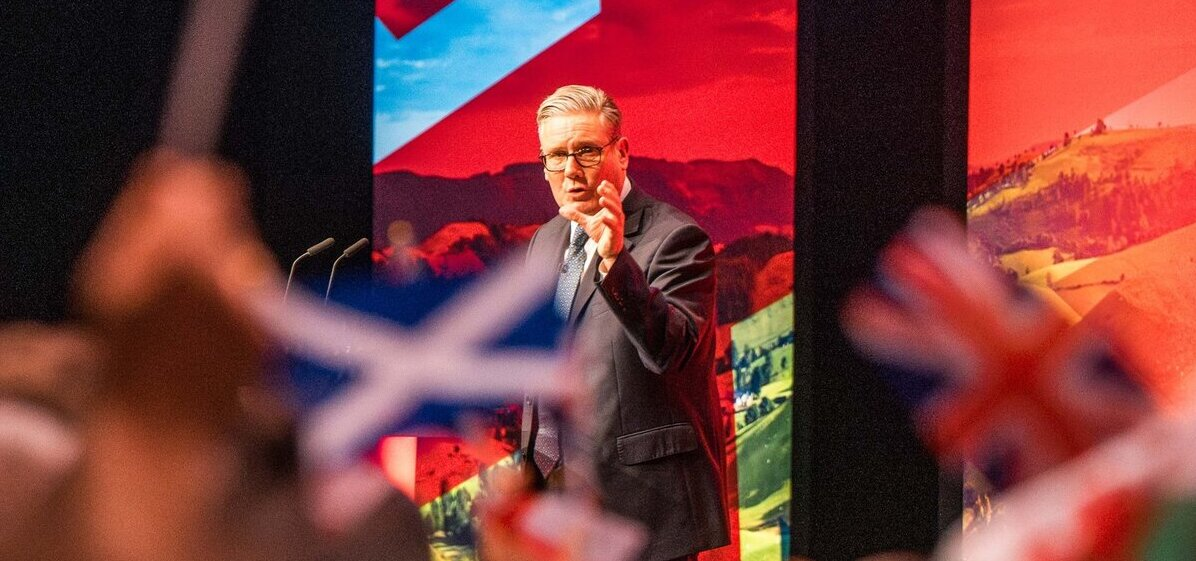
‘Rumours of my political demise have been greatly exaggerated – for now’
For Keir Starmer, there was only one serious measure against which this Labour Party Conference would be judged: did the Prime Minister leave Liverpool in a stronger or weaker position than he began it?
Against that criterion, the Labour conference must be deemed a success.
Gone are the days when mid-term party conferences move public opinion in any meaningful way. Expectations of the Conference season are now far more modest.
One message landed is a win
If a Party achieves just one objective from its conference it has done a good job: a new policy that lands well, a soundbite that makes a few headlines, a moment that can be shared on social media, or simply an absence of gaffes.
And when a Leader goes into their Conference amidst a whirlwind of speculation about their future, there’s but one objective: secure their position.
The lead-up could barely have been worse: U-turns on winter fuel payments, botched welfare reforms, ministerial resignations, losing both a Deputy Leader and US Ambassador, speculation over tax rises, and a pre-Conference poll suggesting that Starmer is the most unpopular Prime Minister in decades.
Against that backdrop, the Prime Minister achieved a few key objectives:
First, the most high-profile threat to his leadership was neutralised – at least for now.
Andy Burnham for leader?
Andy Burnham made the time-honoured mistake of potential leadership challengers: allowing rumours to gather a head of steam, stoking the flames, only to stub them out at the crucial moment.
In the absence of a seriously formed plan for how he would mount a leadership challenge without even a seat in Parliament, Burnham chose retreat. Reportedly withdrawing from scheduled events and eventually stating Starmer should remain Prime Minister.
Starmer strengthened
Allowing this speculation to run away with itself has harmed Burnham’s credentials as a potential leader – and in the process strengthened Starmer. The PM’s team will be forgiven for feeling some schadenfreude-laced satisfaction at seeing off this threat.
Second, the Prime Minister created much sharper dividing lines with Reform – characterising it as a “fight for the soul of the country.”
Labelling Reform’s immigration policy as “racist” may have been unplanned – and is undoubtedly controversial. But it forms part of a more muscular approach by Labour towards taking on Reform.
Taking on Reform
Whether it was a misstep that plays into Reform’s hands is debated. In truth, it is likely to simply harden pre-existing positions. Those who support Reform will feel it shows a Government out of touch; those who fear Reform will back the Prime Minister’s words.
What it does reveal is the difficulty Labour is grappling with trying to triangulate on the issue of immigration – taking tougher steps to tackle the issue on one hand, with rhetoric to shore up its left flank on the other.
Starmer steadied the ship
Ultimately Starmer may need to choose one path over the other – but for now, Number 10 is unlikely to be perturbed by the reaction to the Prime Minister’s words.
Thirdly, the Prime Minister’s speech was received well – at least in the conference hall.
It was more confident, assured and relaxed than previous performances. He even appeared to be enjoying it at times. And while light on detailed policy, crowd-pleasing passages listing Government achievements and attacking Reform landed well with the hall.
Nobody would say this was a classic speech that challenged the party faithful and spoke over their heads to the wider public – but when a Leader’s back is against the wall, their first priority is survival.
Galvanising the membership
Touting minimum wage rises, employment rights, rail nationalisation, fighting racism and doubling down on labelling opponents as “enemies” of renewal. Starmer’s goal was to galvanise the membership. In that, it achieved its aim.
So for now at least, the Prime Minister will return to Downing Street feeling more secure than at any time in recent months.
Actions speak louder than words
But a word of warning. When a Party is under fire, conference is often the time when the faithful rally and support their Leader. But it’s the aftermath – actual delivery, the day-to-day grind of leadership – that matters.
History is littered with besieged Leaders who are cheered to the rafters, only to be deposed months later – just ask Sir Iain Duncan Smith. Keir Starmer will be hoping this is not one of those occasions.
Rocky road ahead
So for now, rumours of Starmer’s imminent demise have been quashed. But unless the Government can deliver its elusive economic growth and be seen to get control of immigration, the road ahead remains littered with political landmines.