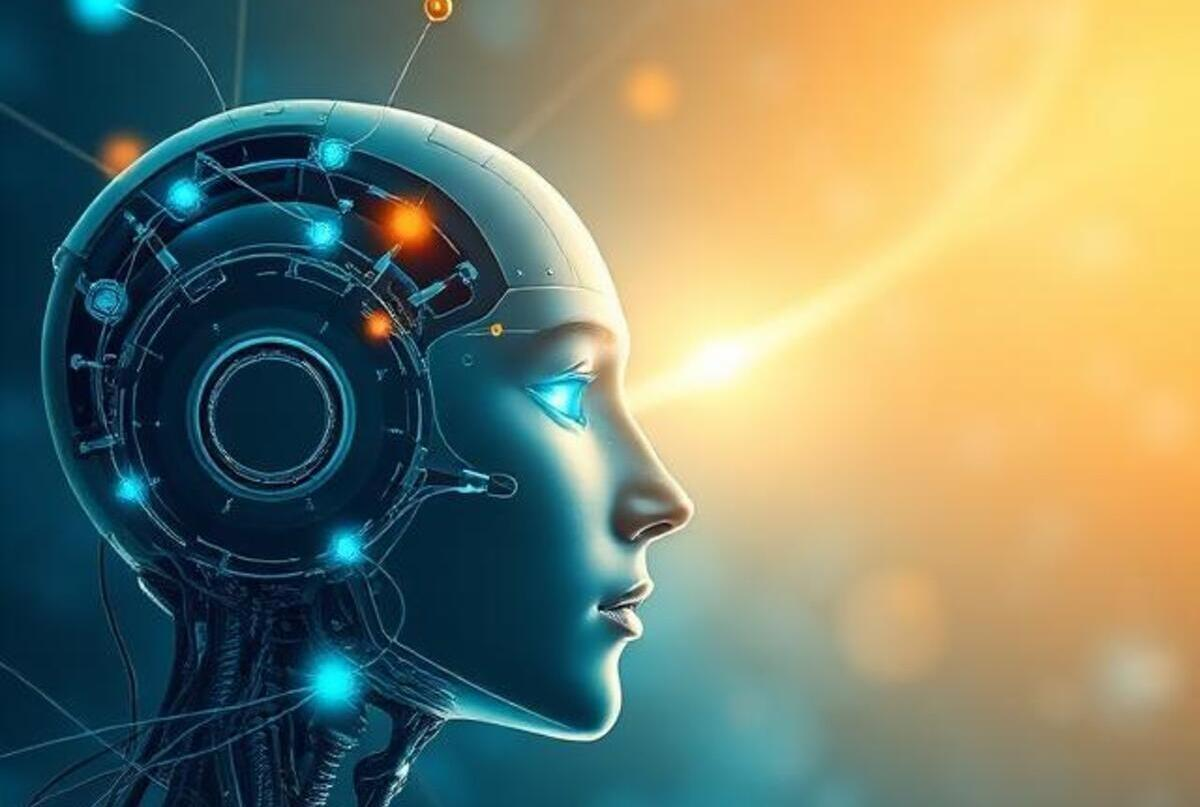
Ethical awareness must move at the same rapid pace as AI as it reshapes our world
The world is changing faster than we know. Artificial Intelligence (AI) is no longer a distant idea or a laboratory experiment. It writes essays, paints pictures, designs buildings, composes music, drives cars, diagnoses diseases and even offers companionship.
Machines can learn, predict and sometimes seem to understand us better than we understand ourselves. Amid this marvel, a quieter question arises. What do we lose as we teach machines to think, imagine and replicate human creativity and emotion?
Algorithms go quicker than we can
AI promises efficiency, accuracy and convenience. Algorithms can process information at speeds our minds cannot match. Predictive systems anticipate behaviour, recommend decisions and shape what we see and do. In medicine AI analyses scans, predicts illness and assists in surgery. In business, it manages supply chains, detects fraud and personalises customer experiences. On the surface it feels like progress itself, a sleek, inevitable wave sweeping through every part of life.
Beneath the surface, complexity grows. AI does not simply perform tasks. It absorbs culture, patterns and biases embedded in the data we provide. Every search, purchase, movement and conversation feeds its algorithms, teaching it to reflect the world as we have made it with all its flaws. AI becomes a mirror. It is a mirror that highlights inequalities, blind spots and stereotypes we often fail to notice in ourselves.
Language AI models often carry unhelpful biases
Language is one of the clearest examples. Large language models can compose essays, poetry and dialogue by learning from archives of human writing. These archives contain centuries of bias, discrimination and selective narratives. When AI generates text, it carries these imprints. It can reinforce harmful stereotypes, perpetuate social hierarchies and misrepresent communities.
AI mirrors not just knowledge but the subtleties of culture, including the parts we might rather ignore.
AI can now create a Van Gogh swirl
Art has faced the same reckoning. Machines can generate paintings, music and writing in the style of any artist who has ever existed. A machine can create a Van Gogh swirl, a Chopin nocturne or a Shakespearean sonnet in moments. The creations are convincing, but the question remains: Can a poem generated by code carry grief, joy or lived experience? Does it matter if the audience believes it does? AI reduces creativity to pattern recognition, stripping away the messy human essence that makes art alive.
But can AI really know what it is to be human?
The consequences are not limited to philosophy. Entire industries, professions and cultural practices are being reshaped. Journalism can now be assisted or partially replaced by AI-generated reporting. Graphic design, coding, music and literature face similar disruptions. While innovation is exciting, so is the threat of displacement. People now work alongside machines that can replicate much of what they do in seconds. The challenge is understanding what is uniquely human in a world where machines imitate so convincingly.
AI also challenges privacy, ethics and autonomy. Machine learning thrives on data. Our online lives, our patterns of consumption and our personal histories feed systems that predict behaviour and influence decisions. Recommendation engines shape what we read, watch and hear, subtly influencing culture on a massive scale. We may feel free, but choices are quietly guided by algorithms we cannot see. Echo chambers and polarisation are reinforced not by intention but by the way the systems learn from human behaviour.
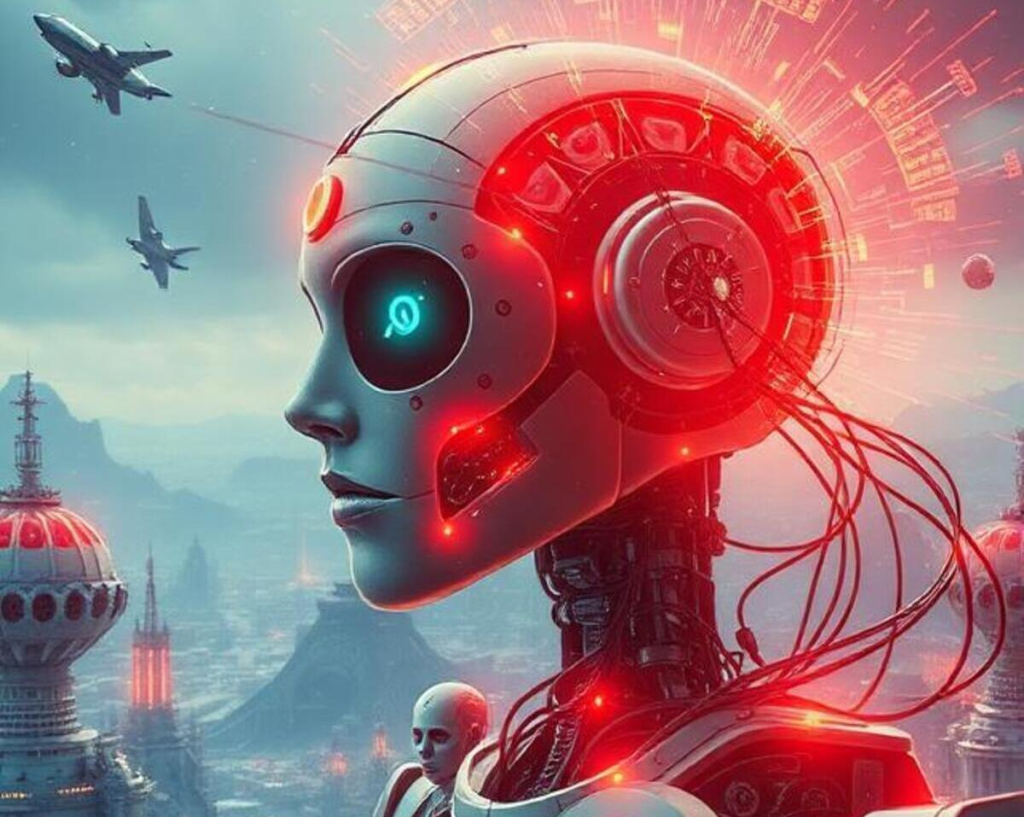
AI does not have human intentionality, as it is not human
Despite these challenges, there is hope. AI does not have intention in the human sense. It mirrors what we give it. Responsibility falls on us to guide it ethically and thoughtfully. We can ensure diversity in training data, transparency in decision-making and accountability when mistakes occur. AI can amplify human potential rather than replace it. But it requires vigilance, empathy and imagination to keep it in service of society rather than let it drift unchecked.
Machines imitate but cannot experience
There is also a deeper opportunity in AI’s rise. Confronted with machines that mimic intelligence and creativity, we are forced to reflect on what it means to think, feel and create. What parts of existence are uniquely human? Machines imitate but cannot experience consciousness, empathy or moral reasoning. Their presence compels us to examine the parts of ourselves we might take for granted, to value imagination, care, ethical reflection and the complexity of human life.
Education is already experiencing this reckoning. Students can use AI to draft essays, solve problems and explore knowledge in ways that were unimaginable a few years ago. Teachers face the task of guiding them to use it as a tool for understanding rather than a shortcut. Memorising facts is no longer enough. Critical thinking, interpretation, ethical judgement and originality define value in a world where machines can replicate knowledge instantly.
Ethical awareness must keep pace with AI
The political implications are immense. Lawmakers must create frameworks for use and oversight. Issues of bias, surveillance, accountability and access demand attention. AI is neither liberating nor oppressive in itself. It becomes what society makes it. Humanity is under scrutiny in how it shapes the intelligence it has created. The challenge is ensuring that technology grows alongside ethical awareness and cultural understanding.
AI also reshapes emotional life. People respond to it as if it were conscious, attributing feeling and thought to chatbots, virtual assistants and social robots. Some confide in machines, others find comfort in their presence. The lines between human and machine blur and with them our understanding of companionship, trust and intimacy. These are not trivial concerns. They touch the way we experience connection, loneliness and empathy.
Coexisting with AI is exhilarating and unsettling. The tools we have created may evolve faster than our cultural frameworks. Art, creativity, work and social interaction are all being reshaped. The question is no longer whether AI will change the world. It already has. The question is how we navigate that change, ensuring humanity, empathy and culture are not casualties but guides.
AI is a mirror for humanity
AI holds up a mirror to human life. It reflects brilliance and bias, innovation and prejudice, hope and fear. Technology and culture are inseparable. In teaching machines to learn, we are forced to examine ourselves. We must ask what we value, what we fear and how we understand human life.
Perhaps the most urgent lesson is simple. Intelligence, artificial or human, is meaningful only when it serves life, empathy and society. Machines learn us and now are teaching us to learn ourselves. Let that sink in.
The question is whether we will rise to meet the reflection or ignore it. Technology can shape the future, but the story of that future is written in our choices, in the care we take with culture, ethics and human understanding.
The rise of AI is not distant. It is now. And in this moment, humanity faces its own mirror. Machines can imitate almost everything. What we choose to protect, nurture and celebrate in ourselves is what defines the world we will live in tomorrow.